
Blog
The 21st Century ROAD to Housing Act: Investor Purchase Limits, Supply Tools, and What Comes Next
7 min read
July 13th, 2026
What changed (and when)
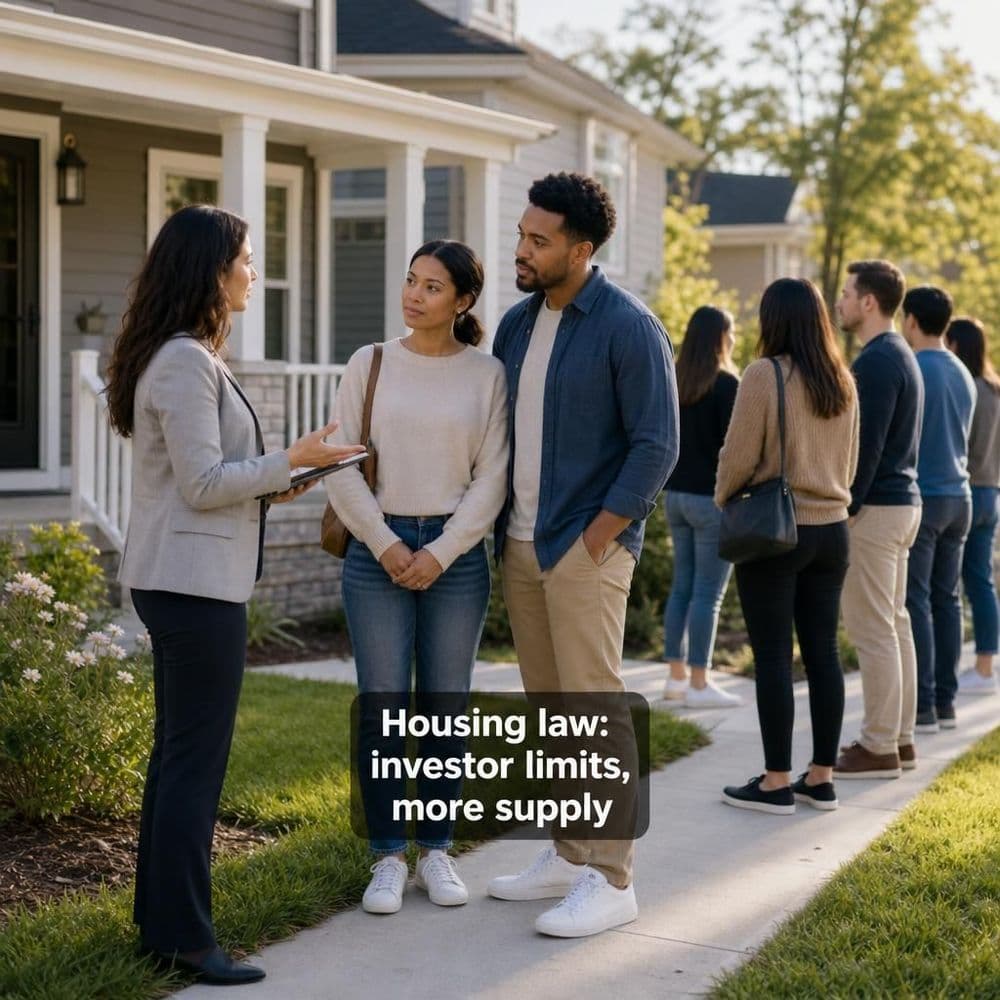
The 21st Century ROAD to Housing Act is now law, and early coverage frames it as a broad affordability package built around two levers: reduce barriers to building and limit incremental purchases by the biggest institutional buyers in single-family housing. [bizjournals.com]
Even with a new law on the books, affordability rarely improves overnight. Existing-home prices and monthly payments are still primarily set by inventory, financing costs, and local supply constraints.
Investor purchase limits: who is covered
A headline provision restricts additional single-family purchases by corporate investors above a certain ownership size. In local TV coverage summarizing the law, the threshold cited is corporate investors owning more than 350 homes. [abc7news.com]
If the rule is implemented and enforced tightly, it could reduce some “all-cash, fast-close” competition in certain entry-level neighborhoods. But the real-world reach will depend on definitions (how “ownership” is counted across affiliates and funds) and on the compliance/enforcement mechanics that follow.
Supply-side levers: permitting, zoning, and lower-cost home types
A supply-first approach shows up in multiple provisions. Business Journals’ summary emphasizes new grants and programs alongside efforts aimed at zoning barriers. [bizjournals.com]
Another lever mentioned in reporting is manufactured housing: Deseret News describes provisions intended to lower manufactured-home costs, including by eliminating a chassis requirement. [deseret.com] If that reduces costs and expands feasible production, it could add attainable inventory over time—especially in markets that allow siting and permitting.
Financing: why small-dollar mortgages are a big deal
Affordability is partly about which homes can be financed. The law also aims to expand access to small-dollar mortgages for lower-income buyers, which matters most in markets where attainable homes often imply smaller loan balances that lenders may be less eager to originate. [abc7news.com]
The bottleneck is participation: expanded authority or guidance won’t translate into closed loans unless lenders originate these products at meaningful scale and buyers can find properties that qualify.
What to watch next
In the next 6–18 months, the best indicators will be measurable milestones:
- **Program rollout details:** when new grants/programs open, eligibility, and how funds are allocated. [bizjournals.com]
- **Entry-level inventory:** whether listings and months’ supply improve in segments where institutional competition has been concentrated.
- **Price and payment trends:** whether affordability improves because prices cool, rates fall, or inventory expands.
Bottom line: the direction is clear—more supply tools, modest rebalancing of competition at the investor margin, and better access to smaller mortgages—but magnitude and timing will depend on implementation and local constraints. [bizjournals.com] [abc7news.com]
Comments