
Blog
AI-era wealth is amplifying Bay Area housing: luxury up, lower tiers lag
6 min read
May 10th, 2026
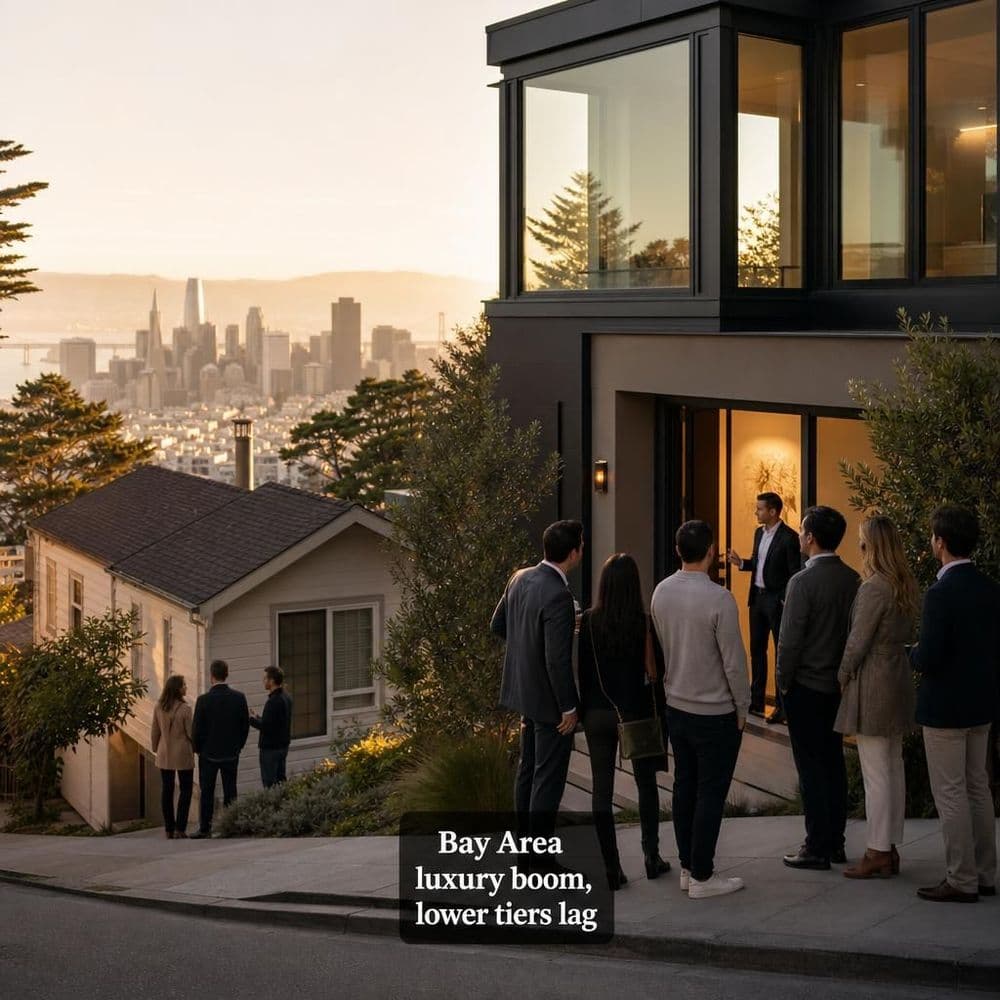
What the newest ZIP-code data shows
A recent Redfin analysis breaking the Bay Area into price tiers highlights a growing gap between the top of the market and the most affordable areas. In the two years after the public launch of ChatGPT (using 2023–2025 as the post period), Bay Area luxury ZIP codes—defined in the analysis as roughly $3.1M to $7.6M—saw average prices rise 13.4%. The next tier down (about $1.5M to $2.8M) rose 6.3%. Meanwhile, the most affordable tier in the report (about $535K to $615K) fell 3.8% on average from 2023 to 2025. [indexbox.io] [foxbusiness.com]
The headline isn’t just “prices moved.” It’s that the direction and magnitude differ by segment—making it harder to talk about “the Bay Area market” as one unified thing.
San Francisco is behaving like a different market at the top
Sales velocity is another signal that the high end is operating on different rules. TechCrunch, citing Redfin, reports that San Francisco luxury home sales jumped 22% year over year in March, while non-luxury sales rose less than 4%. It also notes the median time for homes to go under contract in the luxury segment was 12 days, down from 28 days a year earlier—suggesting buyers are acting quickly when the right listing hits the market. [techcrunch.com]
Faster deal flow matters because it can tighten already-thin inventory at the top end: when high-income buyers compete for a limited set of “A” homes, prices can overshoot comparables and create appraisal and financing friction for anyone not paying all-cash.
Why the split is widening
One practical explanation is interest-rate sensitivity. Entry-level and mid-market buyers are more likely to rely on higher-leverage mortgages, making monthly payments a binding constraint. By contrast, upper-tier buyers may use larger down payments, equity from prior homes, stock-based compensation, or cash—dampening the effect of rates on their purchasing power. [foxbusiness.com]
The other mechanism is demand concentration. When high-paying tech roles and liquidity events increase the pool of buyers who can shop comfortably above conforming limits, competition can intensify in a narrow band of neighborhoods and home types, even if the broader metro feels “meh.” [foxbusiness.com]
Implications for buyers, sellers, and investors
**For buyers:** Segment matters more than ever. If you’re shopping outside the luxury tier, you may find more negotiation room than the headlines imply. If you’re competing for top-tier homes, plan for compressed timelines, pre-underwriting, and potential appraisal gaps.
**For sellers:** Pricing strategy should reflect your true comp set. In a split market, “nearby” isn’t always “comparable” if demand is concentrated in specific school zones, view corridors, or neighborhoods.
**For investors:** Be cautious extrapolating luxury momentum to the entire rent-and-resale stack. A two-speed owner-occupied market can coexist with more tempered fundamentals elsewhere, and micro-markets can diverge for extended periods.
Finally, broader competitiveness metrics also show the Bay Area can be hot in certain pockets. Zillow’s Market Heat Index ratings (as summarized by Fast Company) put San Francisco among the hotter large metros in spring 2026, alongside other high-scoring markets—another reminder that “power balance” can vary sharply by location. [fastcompany.com]
Comments