
Blog
AI and Tech Wealth Are Reheating Luxury Housing—While Much of the Market Stays Stuck
7 min read
May 29th, 2026
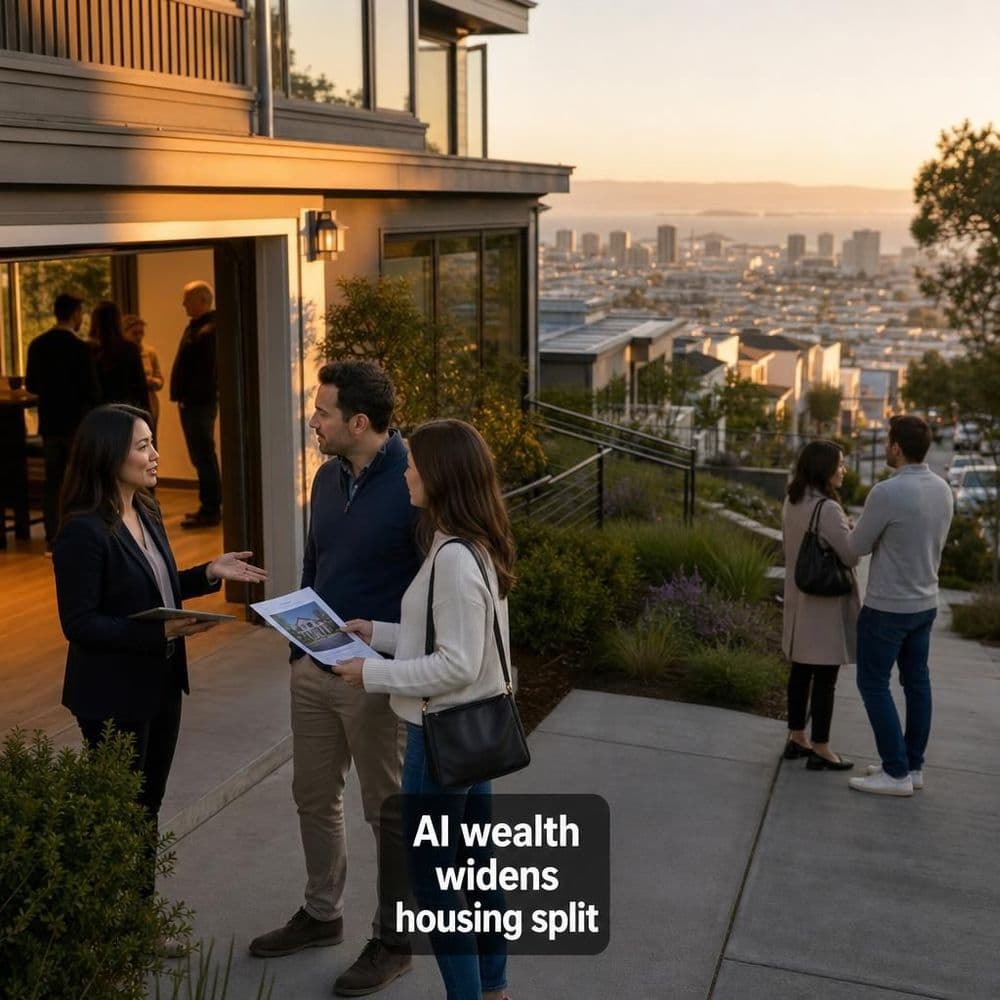
Luxury demand is moving first
A growing share of momentum is concentrated at the top of the market. A recent luxury-focused roundup highlighted that luxury home prices have been rising faster than nonluxury prices, consistent with a market where higher-income buyers can better absorb today’s financing costs (or avoid them with larger down payments and cash) [morningbrew.com].
That gap matters because it changes what “the housing market” feels like depending on where you sit. If you track mainstream affordability, conditions still feel tight. If you watch luxury neighborhoods, activity can look surprisingly strong.
San Francisco: AI-adjacent demand meets limited supply
In the San Francisco Bay Area, high-end activity has been repeatedly cited as a clear example of the split, with demand linked to AI-driven wealth and competition for proximity to the region’s tech ecosystem [morningbrew.com].
Even if parts of the broader Bay Area remain rate-sensitive, the very top end can behave differently: fewer buyers are required to move prices, and limited inventory amplifies the impact of each high-dollar transaction.
Seattle: a tech hub where buyers gained leverage
Not every tech hub is seeing the same heat. Realtor.com reported that Seattle home prices have been falling faster than any other big city, describing a market where buyers are refusing to overpay as inventory rises [realtor.com].
The takeaway: tech-driven demand doesn’t automatically translate into runaway home prices if resale supply and new listings arrive faster than buyers can absorb them.
National measures look flatter than local reality
A national index can look relatively calm even when local outcomes diverge. A recent First American index update described spring price gains edging the national measure toward last year’s peak, while also emphasizing widening regional gaps [mpamag.com].
Affordability is still the limiter for the middle
Affordability remains the binding constraint for the middle of the market. One recent analysis argued it could take years to return to broadly affordable conditions, even with more favorable assumptions about price growth and mortgage rates [realestatenews.com].
Mortgage rates are the immediate pressure point. Freddie Mac’s Primary Mortgage Market Survey (PMMS) showed the 30-year fixed rate averaging 6.53% as of 2026-05-28 [freddiemac.gcs-web.com].
What to watch next
- Whether luxury price growth continues to outpace nonluxury [morningbrew.com]
- Inventory trends in metros that are cooling faster [realtor.com]
- Rate direction and volatility, which can quickly change payment math [freddiemac.gcs-web.com]
In short, AI and tech wealth are adding fuel to the luxury segment—but the broader U.S. market still runs on monthly payments, not headlines.
Comments