
Blog
Assumable Mortgages in 2026: How Buyers Can Get Sub-3% Rates—and the Tradeoffs
6 min read
February 16th, 2026
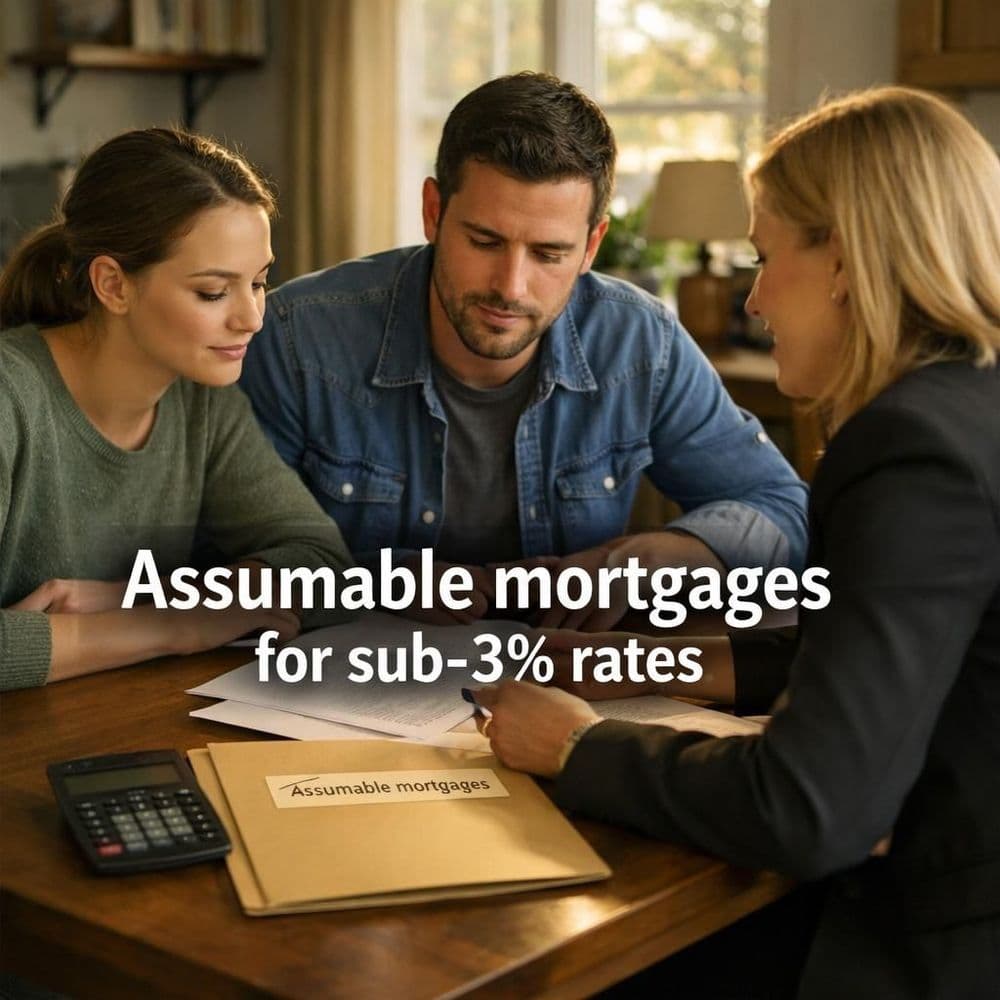
Assumable mortgages: a rare path back to pandemic-era rates
In a market where new mortgage rates are still miles above the 2020–2021 lows, *assumable mortgages* are getting a second look. An assumption lets a buyer take over a seller’s existing mortgage—keeping the same interest rate and remaining term—if the buyer qualifies and the loan type allows it. [npr.org]
1) What loans are actually assumable?
Most conventional mortgages are not designed to be assumed by a new buyer. In practice, assumptions are most commonly associated with government-backed loans—especially FHA and VA—where the program rules allow a qualified borrower to step into the existing note. [npr.org]
That’s why many homeowners don’t realize they have a “feature” they can market: if their loan is assumable and the rate is far below today’s prevailing rates, the financing can become part of the listing’s value proposition. [npr.org]
2) Why the strategy is showing up more in 2026
The appeal is simple: if a seller has a 2–3% rate, assuming it can lower the buyer’s payment versus taking a brand-new mortgage at prevailing rates. But that advantage only matters if the buyer can qualify and bring enough cash (or secondary financing) to cover the seller’s equity. [npr.org]
3) The biggest obstacle is usually the equity gap
Even if a home’s mortgage is assumable, the buyer generally must pay the seller for the seller’s equity—the difference between the sale price and the remaining loan balance. When home prices rise quickly, that gap grows.
One NPR-reported example illustrates the issue: if a home sold for $500,000 in 2021 and is selling for $700,000 today, that’s a $200,000 difference before you even account for principal paydown. In many cases, the cash needed to assume a low-rate loan is far larger than a typical down payment. [npr.org]
This hurdle is especially tough for first-time buyers, who may have income to support the payment but not the liquidity to write a six-figure check at closing. [npr.org]
4) The second obstacle: time, servicing, and process uncertainty
Assumptions can also take longer than a standard purchase, because the loan servicer must review the buyer and process the transfer. The NPR story notes that servicers have 45 days by law to evaluate the buyer’s credit for an assumption, yet in practice the process can stretch for months. [npr.org]
That delay can matter in competitive markets where sellers want certainty and fast closings. It can also create negotiation tension: who pays which fees, what happens if the assumption drags on, and whether the deal needs a backup financing plan. [npr.org]
5) What to do if you’re considering an assumption
**For buyers**
- **Start with the loan type.** Ask whether the current mortgage is FHA/VA/USDA and assumable, and get the servicer’s process and timeline in writing if possible. [npr.org]
- **Request the key numbers early.** Remaining balance, rate, remaining term, and monthly payment.
- **Model your cash-to-close.** Compare (a) equity buyout + closing costs + any second loan vs (b) a new first mortgage at today’s rate.
- **Plan for a longer closing.** Build extra time into the contract and keep documentation ready. [npr.org]
**For sellers**
- **Treat the assumable rate like a feature, not magic.** It can widen interest, but the equity gap will narrow the pool of buyers who can execute.
- **Expect more due diligence.** Buyers will ask for payoff info, servicer contacts, and confirmation of assumability.
The bottom line
Assumable mortgages can be a real affordability tool in 2026—especially when the assumed rate is dramatically below current market pricing. But they’re not a universal fix: the strategy tends to work best for buyers with strong credit, patience, and enough cash (or secondary financing) to bridge the equity gap. [npr.org]
Comments