
Blog
How NYC’s New Broker-Fee Rules Could Reshape Rents, Leasing, and Affordability
7 min read
December 28th, 2025
What NYC’s new broker-fee rules actually do
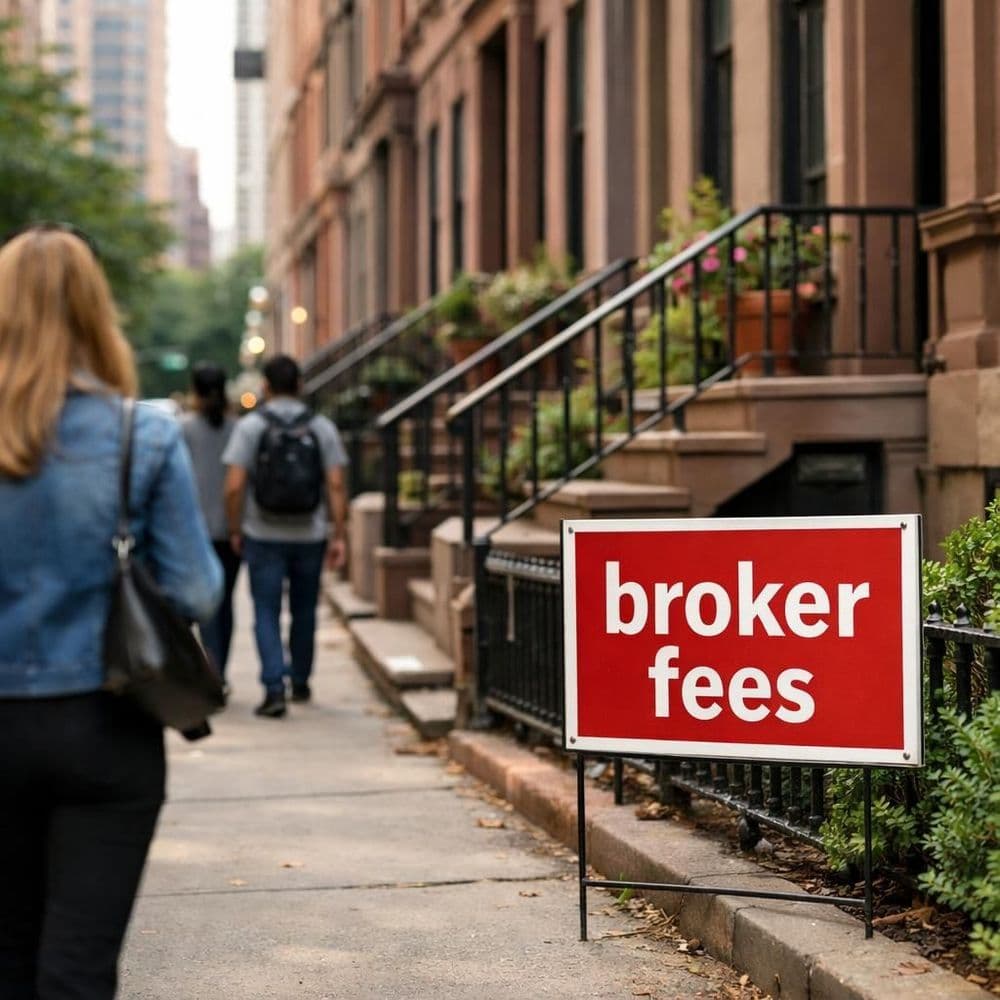
In many U.S. cities, especially New York, renters have long been expected to pay a hefty broker fee – often 12–15% of the annual rent – even when they never chose the agent. Recent reforms flip that script by tying the fee to the party who actually hires the broker. In New York City, the Fairness in Apartment Rentals Act generally requires landlords to pay the commission for agents they hire to lease their units, instead of passing that bill to tenants.[curbed.com]
The logic is simple: if an owner hires a professional to market and show an apartment, that service is primarily for the owner’s benefit. Requiring the hiring party to pay aligns the economic incentives more closely with who is receiving the service. For renters, this can sharply reduce move-in cash, since a fee that once equaled more than a full month’s rent is no longer due at lease signing.
Other jurisdictions are moving in a similar direction. Massachusetts guidance, for example, clarifies that a rental broker may only charge the party who actually hired them, not both sides of the transaction.[mass.gov] That doesn’t eliminate fees, but it changes how they’re allocated and increases transparency about who is paying what.
How landlords are responding: rent hikes, longer leases, and DIY leasing
Higher leasing costs don’t disappear just because tenants are no longer paying them. Curbed’s reporting on the New York rules shows how some landlords are adjusting.[curbed.com] One Harlem and Brooklyn owner with 33 apartments said he raised a $3,200 one-bedroom to $3,600 – roughly an 11% jump – explicitly to cover the new broker cost. He also started offering two-year leases so he could spread the commission over a longer period.
Other owners interviewed described more modest rent bumps: roughly 5–7% annual increases versus around 3% in prior years, with the landlord acknowledging that broker-fee changes were only one factor among many. Persistently low vacancy rates and strong demand for centrally located apartments are still major drivers of rent.
A different group of landlords is avoiding the fee by avoiding brokers altogether. Curbed highlights owners who now plan to fill vacancies through word of mouth, social networks, or their own advertising rather than hiring a traditional agent.[curbed.com] That saves the commission but shifts more work onto the landlord, which may be easier for small portfolios in tight-knit neighborhoods than for larger, professionally managed buildings.
Early data on whether broker-fee changes push rents higher
The big question is whether these reforms will meaningfully raise rents citywide. Early evidence from a StreetEasy report suggests the impact so far is noticeable but limited.[streeteasy.com] The platform found that listings that switched from tenant-paid broker fees to no-fee status recorded an annual asking-rent increase of about 5.3% in April. Comparable listings that continued to charge tenant-paid fees saw rents rise 4.6% over the same period.
If landlords had fully passed a typical 12% broker commission into the rent all at once, StreetEasy estimates that the annual increase for converted no-fee units would have been closer to 10.3%.[streeteasy.com] Instead, the observed gap – less than 1 percentage point – implies partial pass-through at most. Some landlords appear to be absorbing part of the cost, especially where competition remains strong or where long-term tenant relationships are a priority.
This doesn’t mean rents won’t drift higher over time as leases renew. Broker-fee changes interact with many other forces: construction levels, job growth, population shifts, and local regulations on rents and security deposits. But the early numbers undercut simple claims that forcing landlords to pay commissions will automatically translate into matching rent spikes.
What this means for renters: strategies to compare deals
For renters, the clearest win is lower upfront cash. Eliminating a large fee on a high-rent apartment can be the difference between being able to move and being stuck. But the tradeoff is that some of that cost may now be embedded in the monthly payment. The key is to compare the total cost of a lease, not just whether a listing is labeled "no fee."
A practical approach is to calculate how long you expect to stay and spread any former broker fee over that period. If a one-bedroom used to rent for $3,200 with a 15% fee (about $5,760) and now advertises for $3,450 with no fee, staying two years means your total housing cost could actually be similar or even lower than before. If you expect to move after 12 months, a higher rent matters more.
Renters should also ask explicit questions before applying: Who hired the broker? Who is paying the commission under the new rules? Are there alternative units in the same building or neighborhood with different fee structures? Understanding the answers can help you negotiate rent or lease length, especially if you’re willing to sign a longer term in exchange for a lower monthly price.
Takeaways for landlords and investors
For landlords and small investors, the new rules require a fresh look at leasing budgets. Owners who continue to use brokers need to decide whether to treat the commission as a one-time cost of doing business or to spread part of it into higher asking rents, longer leases, or smaller renewal increases down the line. In highly competitive submarkets, absorbing more of the cost may be necessary to avoid extended vacancies.
Paying a broker can still make sense for owners who lack time or expertise to market units, run screenings, and comply with local rules. But others may find that self-managing leasing, using online platforms, or relying on existing tenant networks can substitute for some traditional brokerage functions. Over time, that could reshape the role of rental brokers and how much pricing power they have in high-cost cities.
The broader lesson from New York and states like Massachusetts is that policy changes often reallocate housing costs more than they eliminate them. Shifting broker fees from tenants to landlords reduces move-in barriers and clarifies who is paying for professional services, but it doesn’t erase the underlying expense. For both renters and owners, the challenge is to adapt strategies – whether in budgeting, pricing, or lease design – to a system where commissions are more transparent and, at least in theory, better aligned with who benefits from the work.
Comments