
Blog
Cooling and Appliance Requirements Are Redefining Rental Habitability Standards
6 min read
January 10th, 2026
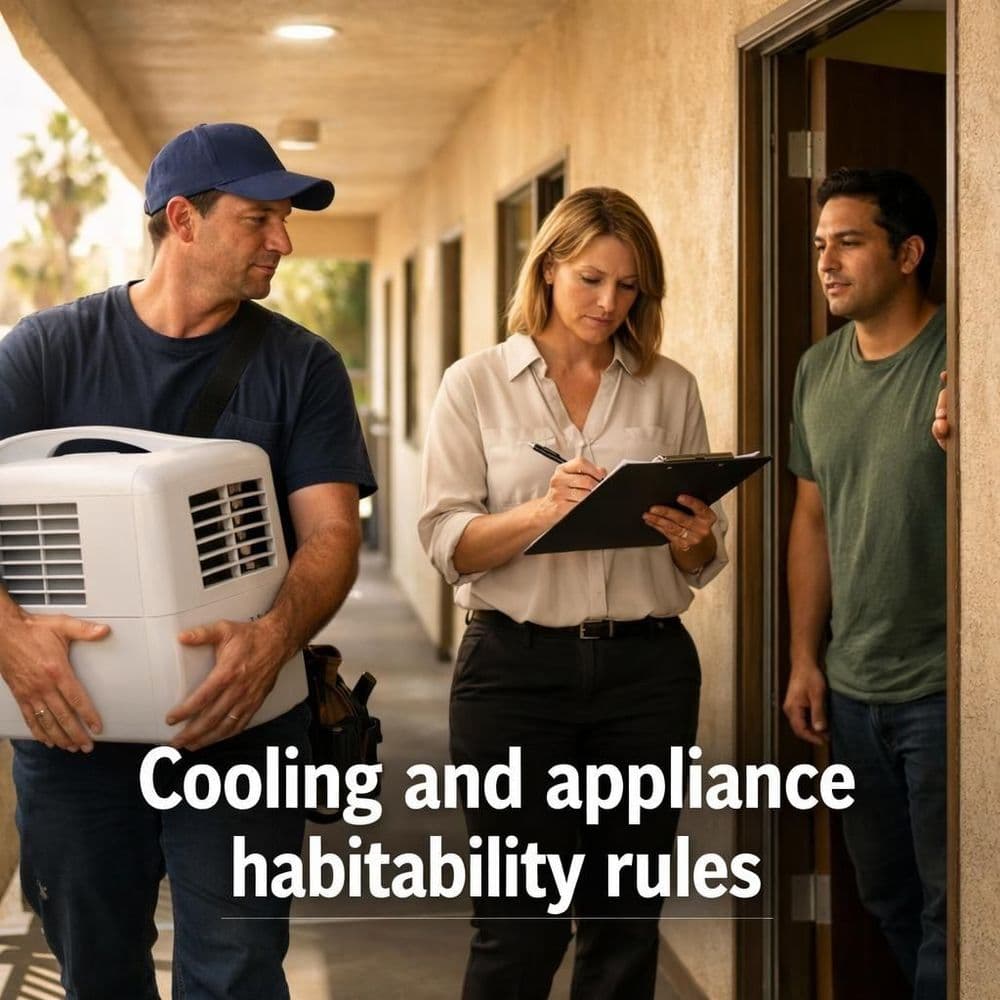
Why “habitability” is getting more specific
Across many U.S. markets, habitability used to be discussed mostly in terms of essentials: water, sanitation, structural safety, and heat. Increasingly, local and state rules are spelling out additional minimum conditions tied to health—especially as extreme heat becomes a more common stress test for older housing stock. [laist.com]
When these standards are written into code or statute, disagreements shift from subjective disputes to compliance checks: *Is the required item provided? Is it working? Does the unit meet the temperature standard?*
California: rentals must provide and maintain a working stove and refrigerator
California has enacted a requirement that certain rental units include a stove and refrigerator, and that they be maintained in good working order. That turns appliances that were sometimes treated as negotiable amenities into a baseline obligation. [caanet.org]
Operationally, this pushes owners toward clearer appliance lifecycle planning (repair vs. replace), tighter vendor relationships, and faster service response times—because a broken appliance is no longer just a customer-service issue; it can become a habitability issue. [caanet.org]
Los Angeles County: maximum indoor temperature and cooling compliance
Los Angeles County is moving toward a rule that would require rentals to remain below a defined maximum indoor temperature, effectively creating a cooling performance standard. That’s a different compliance framework than “provide equipment,” because it focuses on outcomes during the hottest conditions. [laist.com]
Depending on final rule language, owners may need to evaluate multiple pathways to compliance—ranging from mechanical cooling to building measures that materially reduce indoor heat. Documentation (work orders, inspection notes, and maintenance records) can become especially important when compliance is evaluated around indoor conditions. [laist.com]
Practical takeaways for owners and operators
A few near-term implications to plan for:
- **Capex sequencing:** Older buildings may need electrical upgrades before adding cooling at scale.
- **Opex reality:** More equipment means more maintenance, more failure points, and more after-hours calls during heat events.
- **Turnover process:** Unit condition checklists should explicitly verify appliances and any required cooling equipment.
What to track next
The details that most affect cost and feasibility are often in implementation: effective dates, inspection standards, and definitions of compliant cooling. Owners and investors should monitor guidance as it’s published, because small definitional changes can drive big differences in retrofit scope and ongoing operating expense. [caanet.org] [laist.com]
Comments