
Blog
How LA’s New 82°F Cooling Mandates Could Rewrite Rental Housing Standards
8 min read
December 26th, 2025
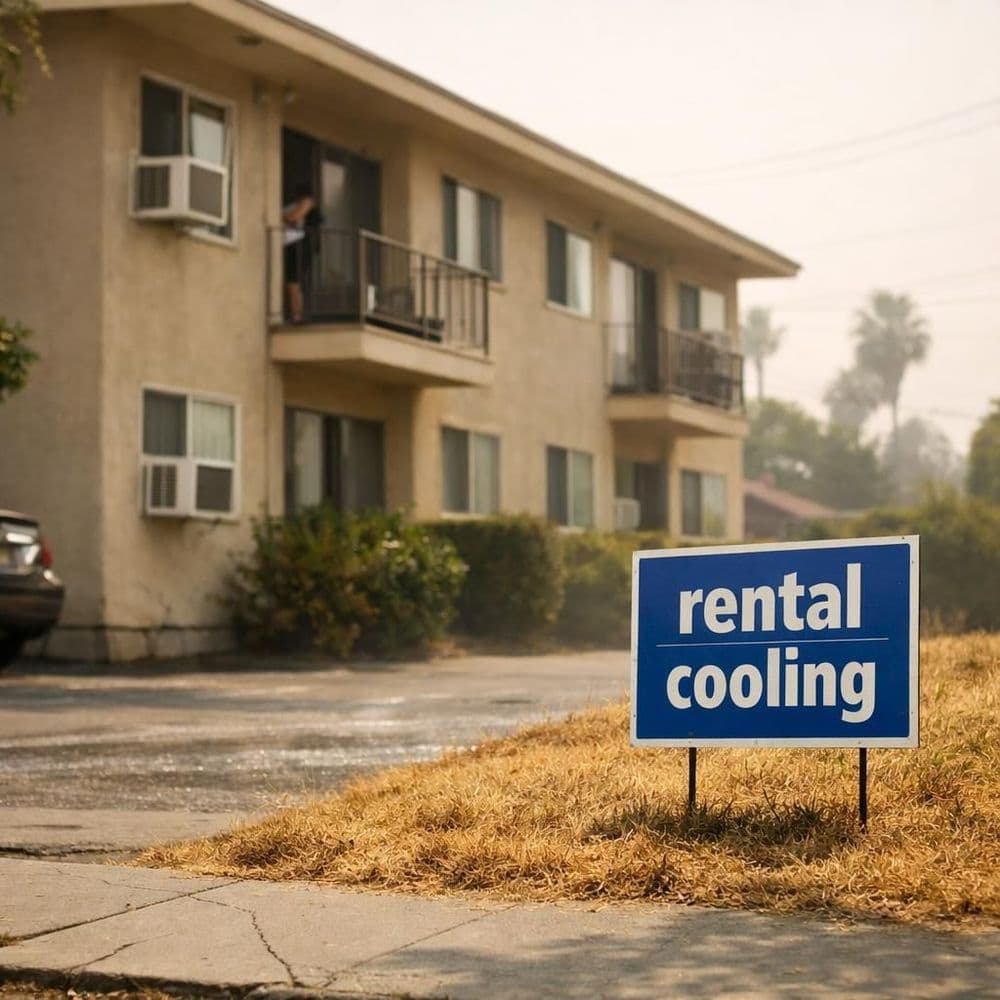
A new kind of habitability rule: maximum indoor temperature
For decades, rental codes in Los Angeles focused on keeping homes warm enough in winter. Cooling was treated as an amenity, not a basic requirement. That is now changing.
Los Angeles County has approved a first-of-its-kind cooling mandate that requires most rental units in unincorporated areas to stay at or below 82°F indoors. Enforcement will run through the county’s Rental Housing Habitability Program, transforming extreme heat from a background risk into a compliance issue for landlords.[laist.com] At the same time, the City of Los Angeles is advancing a measure that would hold city landlords to the same 82°F standard.[abc7.com]
County officials and tenant advocates frame the shift as a life-safety response to more frequent and intense heat waves. A 2025 report from the California Department of Housing and Community Development notes that heat is the leading cause of weather-related death nationwide and recommends 82°F as a safe indoor maximum.[hcd.ca.gov] In California alone, seven heat events between 2013 and 2022 caused hundreds of deaths and thousands of hospitalizations, according to the state Department of Insurance.[insurance.ca.gov]
What LA County’s 82°F rule actually does
Under the ordinance described by LAist, landlords in unincorporated LA County must keep habitable rooms in rental units at or below 82°F.[laist.com] The rule applies broadly but does not automatically cover incorporated cities; those jurisdictions have to opt in by adopting their own cooling mandates aligned with the county standard.
The county’s protections begin in stages. Thirty days after the Board’s vote, renters gain protection from eviction or retaliation when they install their own cooling devices, such as window AC units or portable systems, to meet the temperature cap.[laist.com] Landlords remain ultimately responsible for ensuring compliance, but there is a long runway before strict enforcement.
County enforcement is scheduled to start on Jan. 1, 2027, through complaint-driven inspections within the Rental Housing Habitability Program.[laist.com] If a unit is found out of compliance, owners are given a two-year grace period to carry out retrofits and upgrades needed to meet the standard. This structure aims to balance urgent health concerns with the reality that many older buildings will need time — and capital — to add cooling or improve their envelopes.
Small landlords get an additional carve-out. Owners with no more than 10 rental units can comply initially by cooling at least one habitable room per unit until 2032, as long as the cooled space is usable as a living or sleeping area.[laist.com] After 2032, those owners must meet the same whole-unit standard as larger operators.
Cooling doesn’t always mean central AC
A common misconception is that a cooling mandate automatically requires full-building air conditioning. LA County’s ordinance is more flexible. Officials emphasize that the rule is about outcomes — keeping indoor temperatures at or below 82°F — rather than prescribing specific technologies.[laist.com]
In some coastal or milder microclimates, passive and low-energy strategies may be enough: reflective or “cool” roofing, added insulation, upgraded windows, shading devices, and blackout curtains can all reduce indoor heat gain.[laist.com] In hotter inland valleys, however, county staff acknowledge that AC units or heat-pump systems will likely be necessary to reliably stay under the cap during extreme heat.
The City of LA proposal is similarly technology-neutral. Reporting from ABC7 notes that landlords could meet the standard with AC, fans, or other types of cooling equipment, as long as the unit stays below 82°F in summer months.[abc7.com] That gives owners some flexibility to right-size solutions based on building age, electrical capacity, and tenant needs.
For landlords, the main financial hit is expected on the capital side rather than month-to-month operations. Installing new electrical panels, wiring, and AC or heat-pump systems can require substantial upfront investment, especially in older buildings. Industry groups warn that projects may be complex, invasive, and costly, and caution that owners who mis-estimate scope could face surprise overruns and extended vacancies during retrofits.[laist.com]
On the other hand, certain upgrades — like better insulation and high-efficiency heat pumps — can reduce overall energy use and utility costs over time, particularly in buildings that already have some form of cooling. With California’s power mix steadily moving toward carbon-free sources, utility leaders quoted in LAist also argue that meeting the mandate should not strain the grid beyond manageable levels.[laist.com]
Tenant protections, enforcement, and edge cases
The cooling rules come with explicit protections for renters. Shortly after adoption, tenants in covered areas cannot be evicted or penalized for adding their own cooling appliances to meet the 82°F limit, as long as they follow safety guidelines.[laist.com] This is especially significant in older buildings where landlords have previously cited outdated electrical systems to forbid window AC units.
Complaints about high indoor temperatures will trigger inspections under the Rental Housing Habitability Program. Inspectors will evaluate whether indoor conditions exceed the 82°F threshold and whether the landlord is taking reasonable steps to comply within the allowed timelines.[laist.com] Repeated or willful non-compliance could lead to fines or other enforcement actions, though details will be shaped by implementing regulations.
Practical disputes are likely. Questions may arise over how and when temperatures are measured, what happens during short-term outages, and how to treat rooms like kitchens that tend to run hotter. Industry representatives have already flagged scenarios where a landlord cools bedrooms and living rooms but a kitchen occasionally spikes above 82°F — raising questions about whether the entire unit is technically out of compliance.[laist.com] Clear guidance on measurement methods, averaging periods, and exceptions will matter for both owners and tenants.
Why LA’s move matters beyond Southern California
LA’s cooling mandate is not happening in a vacuum. LAist notes that other U.S. cities, including Palm Springs and Dallas, already cap maximum indoor temperatures at different levels — 80°F and 85°F, respectively — creating an emerging patchwork of heat standards.[laist.com] As more jurisdictions confront deadly heat waves, the 82°F benchmark recommended by California housing officials could become a de facto reference point for future codes.[hcd.ca.gov]
For landlords and investors, these developments signal that climate-driven health protections are beginning to show up directly in building-level obligations. Just as smoke detectors, carbon monoxide alarms, and winter heating became non-negotiable over time, keeping homes safely cool during heat waves is moving from best practice to legal duty.
Owners with portfolios in hotter markets may want to start stress-testing assets today: mapping which units already have reliable cooling, where electrical systems can support upgrades, and how future mandates might affect capital planning, insurance costs, and rent strategies. Tenants and advocates, meanwhile, are likely to see LA’s ordinance as proof of concept — an example they can point to when pushing for stronger protections in other regions.
How quickly those ideas spread will depend on local climate risk, housing capacity, and the ability of jurisdictions to design and enforce nuanced standards. But the direction of travel is clear: in more of the country, staying cool enough indoors is on its way to being treated as a basic condition of habitable housing, not a luxury amenity.
Comments