
Blog
What a Dallas Fed Working Paper Says About Immigration-Driven Housing Demand (2021–2024)
7 min read
July 6th, 2026
What the Dallas Fed actually studied
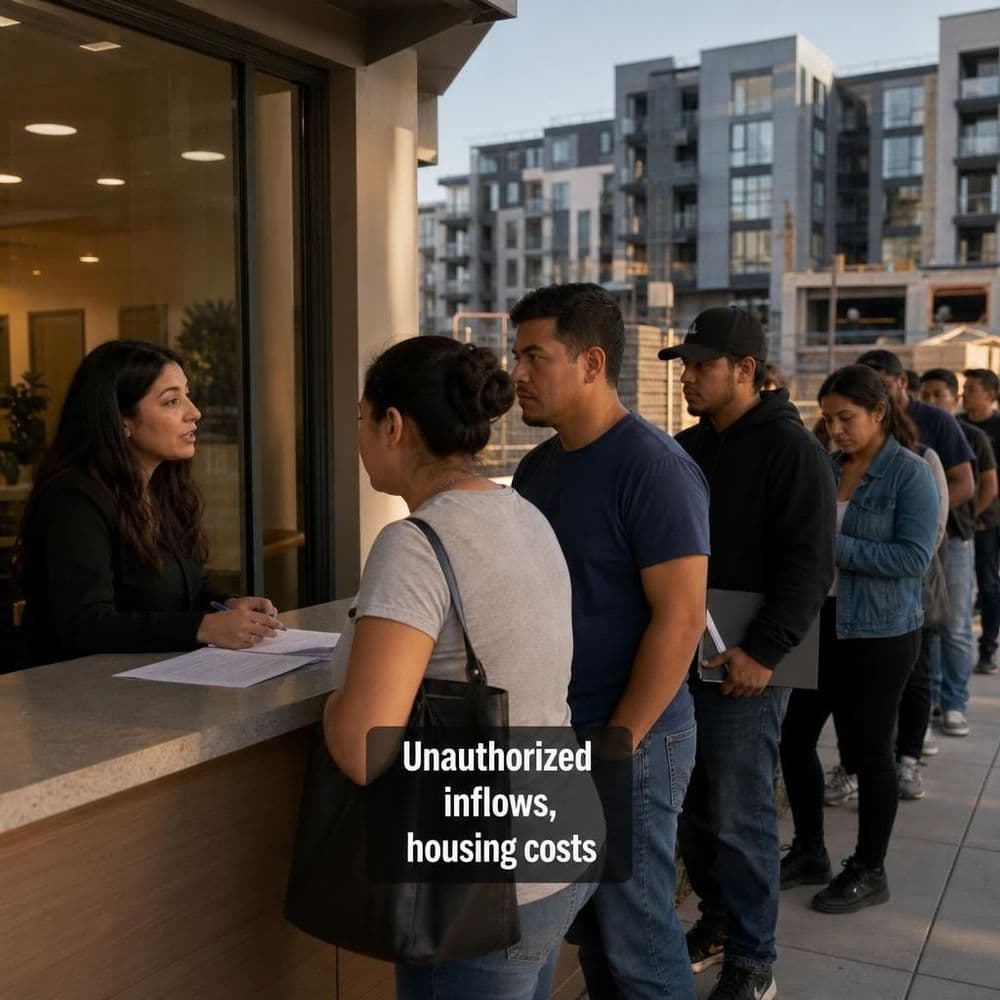
A Federal Reserve Bank of Dallas working paper (Working Paper No. 2607) examines how unauthorized immigrant worker flows during the March 2021 to March 2024 period relate to local labor and housing outcomes across metro areas.[dallasfed.org] The authors describe the draft as preliminary and intended for professional comment.[dallasfed.org]
What the paper estimates for rents and home prices
The paper’s housing story is straightforward: when population-driven demand rises faster than the housing stock can expand, markets tend to clear through higher rents and prices.[dallasfed.org]
In the average metro, the paper reports that a 1% increase in unauthorized workers relative to the local labor force corresponds with about a 2.2% increase in home prices and a 1.4% increase in rents over the boom period.[foxbusiness.com]
The authors also present contribution-style estimates for the average metro over March 2021–March 2024, attributing a share of local employment growth and a portion of rent and home-price growth to these worker flows (as estimated in their model).[foxbusiness.com]
What it implies for affordability in tight markets
For housing readers, the practical implication is less about the exact coefficient and more about the mechanism: demand shocks are most painful where vacancies are low, permitting is slow, and construction can’t scale quickly. In those markets, rents often react first, and home prices can follow as households compete for a limited number of units.[dallasfed.org]
If supply responds—more completions, more turnover, higher vacancy—pressure can ease even if demand stays elevated. The paper’s framing reinforces why tracking local inventory and the new-supply pipeline matters for affordability.[dallasfed.org]
Limitations and how to read the findings responsibly
This is a working paper with a specific measurement approach and a specific window (March 2021 to March 2024). The authors caution that the draft is preliminary, and results could change with revisions, alternative specifications, or updated data.[dallasfed.org]
Also, the estimates are presented as metro-level averages; real-world effects will differ by market depending on household formation, crowding, and how quickly housing supply adjusts locally.[dallasfed.org]
Comments