
Blog
Why the U.S. housing market feels frozen in 2026 (and what it means for buyers and housing-adjacent businesses)
7 min read
April 10th, 2026
A stall in price growth is becoming the story
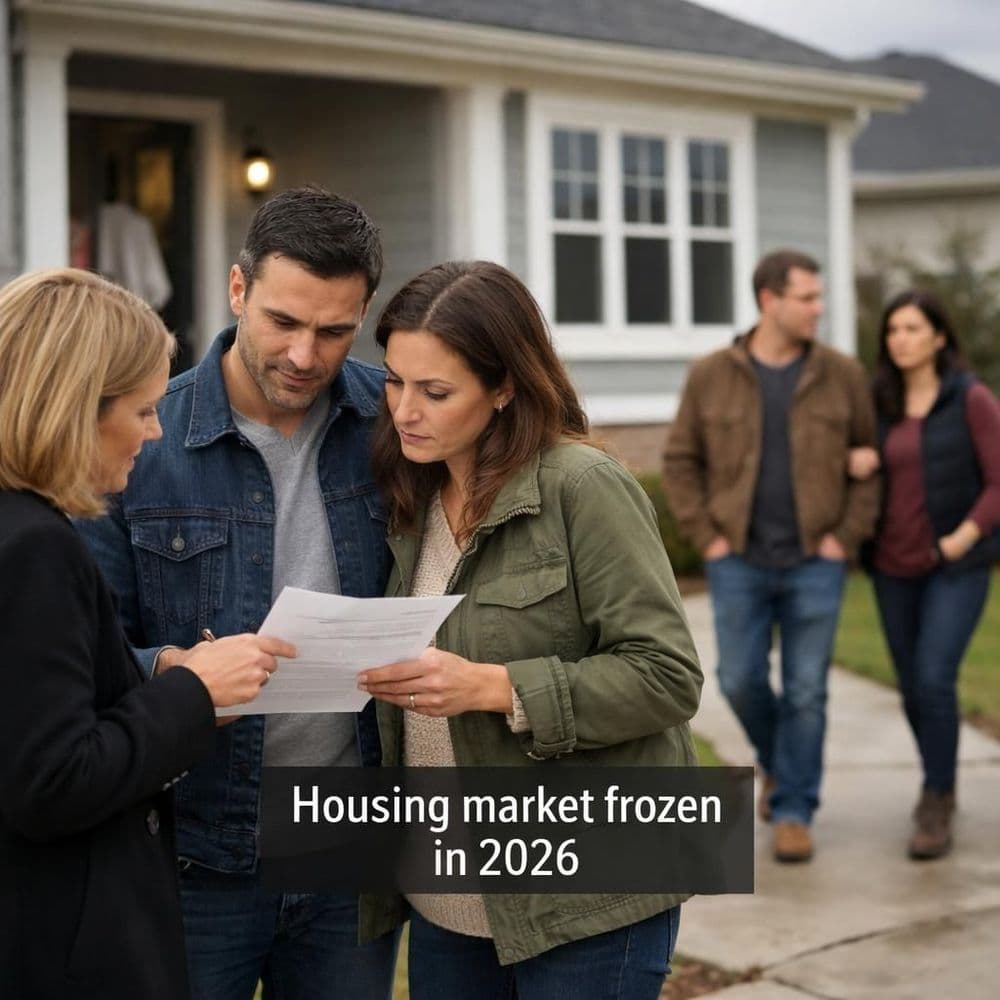
Early-2026 home-price readings suggest the market has moved from ‘cooling’ to ‘nearly flat.’ Cotality data cited by National Mortgage Professional show annual home-price growth at 0.9% in January 2026 and 0.5% in February 2026, alongside negative month-to-month prints (-0.11% in January and -0.16% in February).[nationalmortgageprofessional.com]
This combination—weak year-over-year gains plus negative monthly movement—doesn’t automatically mean a broad downturn is underway. But it does indicate that appreciation is no longer acting as the ‘tailwind’ it was in prior years. In practice, buyers and sellers have to meet each other on price, and that takes time in a high-rate environment.
Mortgage rates are still steering the spring market
Rates remain the biggest lever for near-term demand because they change the monthly payment immediately. Freddie Mac’s weekly survey showed the average 30-year fixed rate at 6.46% for the week of April 2, 2026, then 6.37% for the week of April 9, 2026.[freddiemac.com]
In a market where many owners are reluctant to give up older, lower-rate mortgages, even small rate moves can affect how many buyers show up—and how aggressive they can be.
Local markets are diverging—and that’s the point
National averages hide the reality that housing is behaving very differently by region and by price tier. In the same Cotality/NMP coverage, some Midwest and Northeast markets are highlighted as stronger while parts of the South and West are softer.[nationalmortgageprofessional.com]
A separate SmartAsset analysis using Zillow’s Home Value Index data for February 2026 found that typical home values in large U.S. cities declined 1.04% between 2025 and 2026, with values dropping in 70% of cities.[smartasset.com]
Even within that broad ‘softening’ frame, there are pockets of tight supply and competitive bidding. For example, The Real Deal reports that San Francisco listings fell 28% year over year in March, homes sold an average of 23% above asking price, and average time on market was 20 days.[therealdeal.com]
Ownership costs can keep rising even if prices cool
Home prices are only one part of the monthly cost equation. Property taxes can rise due to local budget needs and assessment mechanics—even during periods when home values aren’t moving much.
ATTOM’s 2025 property tax analysis (released April 9, 2026) reports $396.8 billion in property taxes levied on more than 89.6 million single-family homes, up 3.7% from 2024. It also reports an average tax bill of $4,427 (up 3%) and a nationwide effective tax rate of 0.9%.[attomdata.com]
For buyers doing affordability math, that matters: taxes are a recurring cost that can compete with the mortgage payment for ‘room’ in a monthly budget.
The ripple effects: when turnover slows, related spending slows
A semi-frozen market doesn’t just affect agents and lenders. It can also squeeze categories that depend on people moving—furnishing new homes, paying for delivery/installation, or tackling large projects right after a purchase.
The practical implication is that businesses tied to housing turnover may see softer demand even if home prices don’t fall much. Watch for signals like:
- bigger promotion calendars (to pull demand forward)
- more financing incentives
- consumers choosing smaller, phased projects instead of large remodels
What to watch next
If rates ease meaningfully and inventory improves, the market can thaw—but the path looks uneven and metro-specific. For now, the data point to a standoff: hesitant sellers, payment-sensitive buyers, and a set of ownership costs (taxes, insurance, repairs) that keep affordability front and center.
Comments