
Blog
Frozen housing market: prices stay high even as sales soften, squeezing younger buyers
7 min read
August 18th, 2026
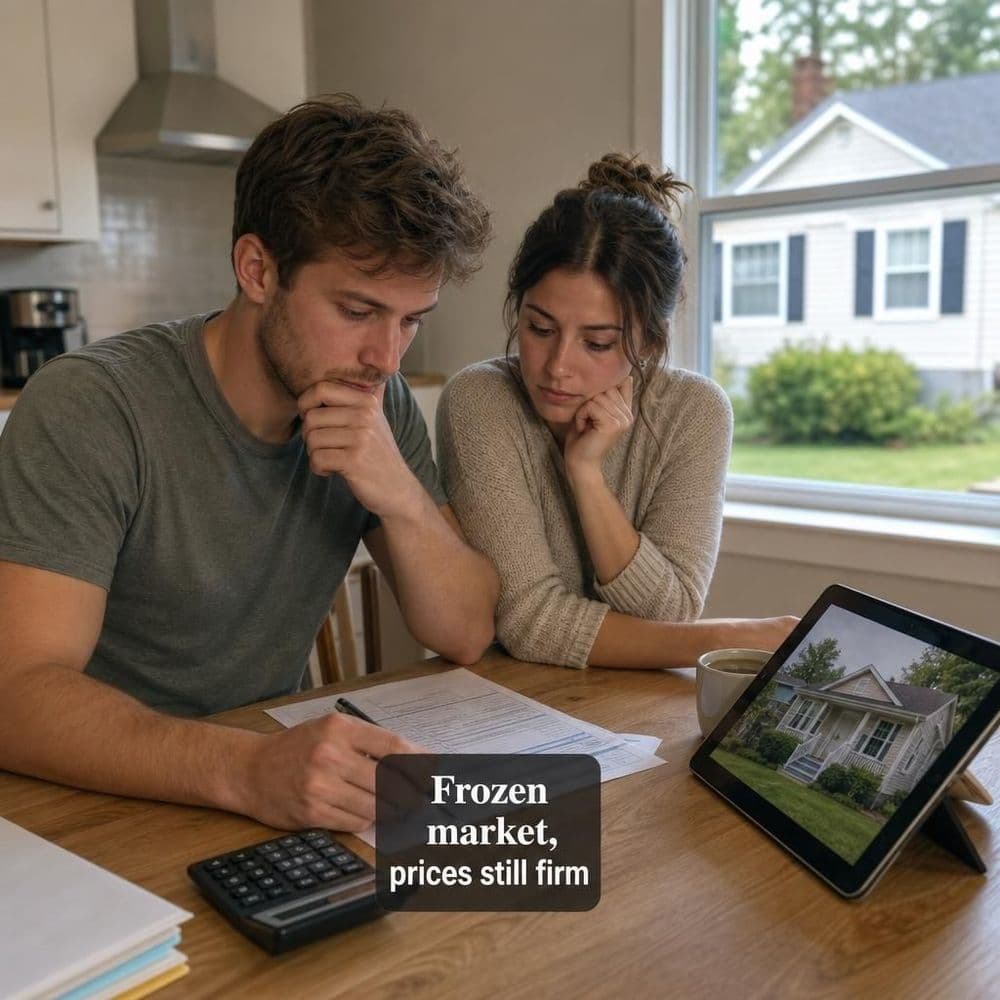
What ‘frozen’ looks like in 2026
A ‘frozen’ housing market doesn’t mean nothing is happening—it means the market is moving, but slowly, and in ways that don’t deliver broad affordability relief. High prices and high borrowing costs reduce demand, while many owners stay put, keeping resale supply constrained. The result is fewer transactions and persistent frustration for first-time buyers.
Prices: flat month to month, still up year over year
Redfin’s Home Price Index shows U.S. prices increased 0.27% in July (seasonally adjusted), essentially unchanged from June’s 0.28%. On a year-over-year basis, prices were up 3.4%, even with softer demand. [prnewswire.com]
That combination—limited month-to-month movement but positive annual growth—helps explain why the market can feel sluggish without actually getting cheaper in a meaningful way.
Rates: the monthly payment constraint
Even when prices cool, the payment can remain punishing if rates stay elevated. Freddie Mac’s Primary Mortgage Market Survey shows the average 30-year fixed rate was 6.67% as of 2026-08-13. [freddiemac.com]
High rates also reinforce the ‘lock-in effect’: many owners with older, lower-rate mortgages are reluctant to sell and take on a much higher payment, which can keep resale inventory tighter than buyers expect.
Builders: confidence low, incentives doing the work
Builder sentiment remains subdued. NAHB/Wells Fargo’s Housing Market Index was 35 in August 2026, well below the 50 threshold that indicates more builders view conditions as good than poor. [eyeonhousing.org]
NAHB’s release also notes a meaningful share of builders are cutting prices and using sales incentives—evidence that new-home demand is being supported through concessions rather than broad, outright price declines. [eyeonhousing.org]
What this means for Gen Z and other first-time buyers
Coverage of a recent survey found many Gen Z respondents say they want a housing market crash, but the experts quoted emphasized that affordability is driven by more than list prices alone—especially when rates, insurance, taxes, and income growth don’t cooperate. [inc.com]
Practical takeaway: treat affordability as a total-monthly-cost problem. In a slower market, negotiation may be more effective when it targets rate buydowns, closing-cost credits, repairs, or (for new homes) builder incentives—particularly if headline prices remain sticky.
Bottom line
Right now the market looks slow, tight, and expensive: prices are still rising year over year, rates remain elevated, and builders aren’t signaling a rapid rebound in demand. That’s why the market can feel frozen—especially for younger buyers—without delivering the price reset many are hoping for. [prnewswire.com]
Comments