
Blog
How New Health and Safety Standards Are Raising Operating Costs for Landlords
8 min read
December 20th, 2025
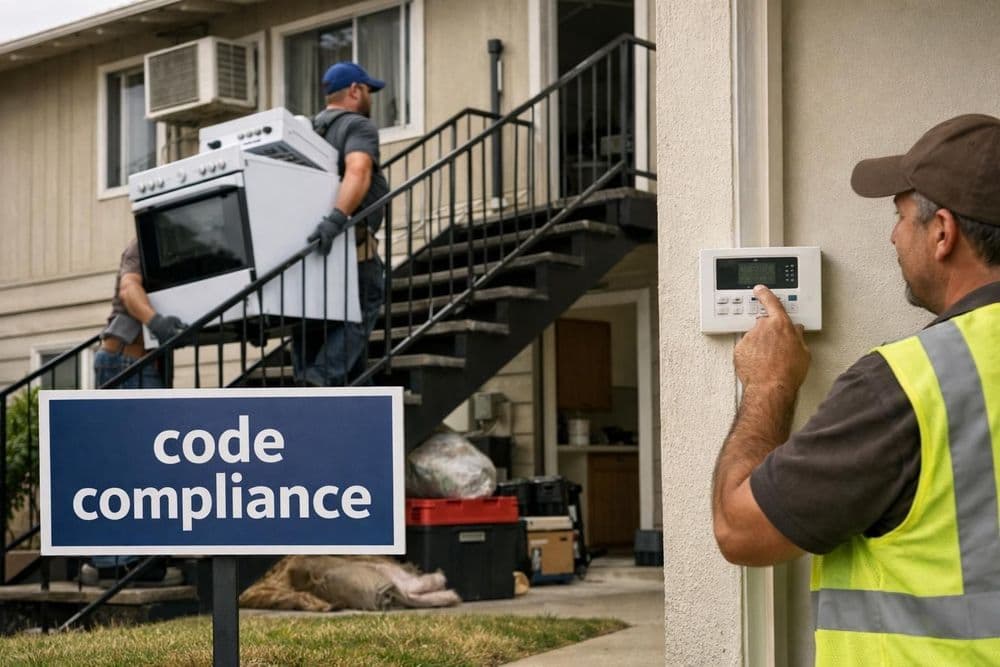
The new wave of rental habitability standards
Across the country, local and state agencies are quietly tightening health and safety standards for rental housing. The broad goal is to ensure that tenants have access to basic appliances, safe indoor temperatures and protection from known hazards like lead paint – but those upgrades come with real costs for property owners.
Taken together, these rules are redefining what counts as a "habitable" unit, especially in older buildings and bare-bones rentals that historically offered few amenities in exchange for lower rents. For landlords, the key question isn’t whether standards are changing, but how fast – and how to budget for compliance without wiping out cash flow.
California: Stoves, fridges and the end of bare-bones rentals
California is moving to make working stoves and refrigerators part of baseline habitability for most rental homes. A law taking effect for leases entered into or renewed on or after Jan. 1, 2026 will require landlords to provide and maintain these appliances in virtually all residential rentals, with limited exceptions for some mobile homes and RVs.[kqed.org][hoodline.com]
That’s a significant shift for owners who used to rent units with just gas or electric hookups and language in the lease saying tenants must bring their own appliances. Under the new rule, landlords will be responsible not only for supplying a stove and refrigerator up front but also for repairing or replacing them when they fail, just as they do today with essential systems like plumbing and heat.[kqed.org][hoodline.com]
Reporting from KQED and Hoodline notes that policymakers expect the change to hit older, lower-rent apartments hardest, because many higher-end units already come with full kitchens built into their pricing.[kqed.org][hoodline.com] Small landlords operating on thin margins may feel pressure to raise rents, convert units to other uses or sell rather than invest in appliances and ongoing maintenance.
Cooling requirements in hot markets: LA County as a case study
Heat is another emerging health standard for rentals. In Los Angeles County, a new cooling rule will require landlords to keep indoor temperatures in apartments at or below a set threshold – reported as roughly 82 degrees – during the hottest periods.[laist.com] The measure is a response to rising heat-related illness and deaths and is expected to phase in over several years.
For landlords, the most immediate impact will be on buildings that lack air conditioning or have aging, inefficient systems. Meeting the standard may require installing new AC units, upgrading electrical panels and wiring, or improving insulation and weatherization so that existing systems can actually keep units below the temperature cap.[laist.com]
These are capital-intensive projects. Owners of small multifamily buildings may need to plan for multi-year upgrade schedules, temporarily vacating units for work or coordinating retrofits between turnovers. Even where some cooling already exists, documenting that systems are capable of maintaining the required indoor temperature could introduce new inspection and repair costs.
Lead-safety rules and older housing stock: Delaware’s approach
On the East Coast, Delaware is moving toward stricter lead-safety requirements for rental housing. WHYY reports that legislation passed in 2025 would require landlords with properties built before the 1978 federal ban on lead paint to certify that their rentals are either lead-free or lead-safe.[whyy.org]
Under the proposal, owners of covered rentals would need inspections and, where hazards are found, remediation work such as paint stabilization, thorough cleaning and in some cases more extensive repairs. The measure also directs state agencies and stakeholders to produce a feasibility study by March 2026 to guide implementation and timelines, signaling that details on phasing and enforcement are still being worked out.[whyy.org]
Because lead-based paint is most common in older housing, these rules concentrate costs in precisely the segment of the rental market that often provides more affordable units. Landlords with small portfolios of pre-1978 homes may face difficult choices about whether to invest in remediation, seek financial assistance where available or exit the market altogether if required upgrades exceed the property’s income potential.
Local inspection and enforcement: Altadena and beyond
Even where new rules are still being finalized, local enforcement programs are expanding. Los Angeles County’s Rental Housing Habitability Program, for example, conducts inspections of rental units in unincorporated communities such as Altadena to verify compliance with health, safety and habitability standards. While details vary by jurisdiction, these programs typically check for issues like working utilities, safe electrical systems, adequate heat and, increasingly, cooling and environmental hazards.
For landlords, more frequent or more detailed inspections mean fewer opportunities to defer maintenance. Items that might once have been handled informally after a complaint are more likely to be cited proactively, triggering deadlines for repairs and potential fines if problems aren’t corrected.
What this means for investors and mom-and-pop landlords
For investors and small landlords, the throughline across these policies is clear: providing a legally compliant rental will increasingly require more equipment, more documentation and more proactive maintenance than in the past. That raises both operating expenses (repairs, inspections, utility impacts) and capital expenditures (appliances, AC systems, lead remediation).
To adapt, owners can start by mapping which properties fall under new or pending rules – for example, California rentals that will be subject to the 2026 appliance requirement, Los Angeles County units likely to need cooling upgrades, or Delaware homes built before 1978. From there, landlords can build multi-year capital plans, spreading big-ticket items like appliance packages, HVAC retrofits and lead abatement over several budget cycles rather than reacting all at once.
Underwriting new acquisitions should also change. Investors evaluating older, lower-rent properties in affected areas may need to model higher reserves for health and safety compliance, stress-test returns with realistic upgrade budgets and consider whether planned rents can support both debt service and the coming wave of standards.
While these policies aim to improve tenant health and safety – and may ultimately protect asset values by reducing severe deterioration – they also risk shrinking the supply of the very lowest-cost rentals if some owners choose to exit rather than invest. Market participants who get ahead of the requirements, however, may find opportunities in repositioning older buildings into safer, more resilient housing that can justify modestly higher rents over time.
Comments