
Blog
Why U.S. housing affordability is staying brutal—despite record home equity
7 min read
October 10th, 2026
Affordability is the choke point
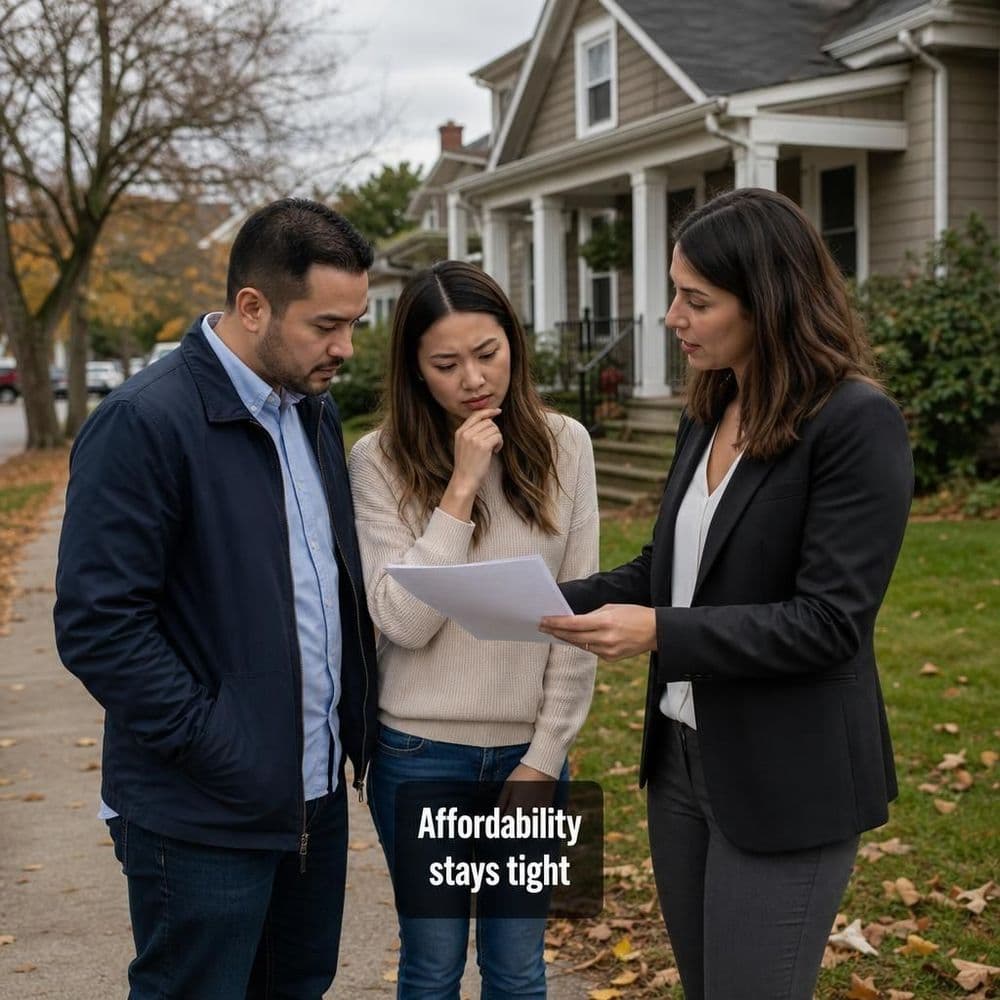
The U.S. housing market’s central problem isn’t a lack of interest from buyers—it’s the math of the monthly payment. With 30-year fixed mortgage rates pushing above 7% in recent weeks, buyers need meaningfully lower prices (or higher incomes) to get back to pre-2022 affordability levels. Instead, prices have been unusually resilient, leaving many households sidelined and keeping transaction volume historically depressed. [businessinsider.com] [realestatenews.com]
Why prices remain sticky
A big reason prices haven’t reset is that inventory relief is limited. Many homeowners are still sitting on mortgages well below today’s market rates, which reduces the incentive to list and trade into a higher payment. That rate lock-in dynamic keeps resale supply tighter than it would be in a normal slowdown. [businessinsider.com]
Sticky pricing is also reinforced by equity. When sellers have substantial home equity, they can often wait longer or choose not to sell at all rather than accepting a deep price cut—especially if the move isn’t necessary. [businessinsider.com]
Turnover is also constrained by aging-in-place behavior. Analysts cite a large share of older homeowners who expect to stay put, which means fewer homes recycle into the market each year. [businessinsider.com] Separately, HousingWire reports senior housing wealth (ages 62+) reached $15.34 trillion in Q2 2026—an illustration of how much capacity many older owners have to hold rather than sell. [housingwire.com]
A divided market: local winners and losers
Regional data increasingly point to a split market rather than a single national story. On the one hand, some Midwest and Northeast metros are still projected to post modest price gains over the next year. One Veros forecast ranks Rockford, Illinois among the top MSAs, with projected appreciation of 4.7%. [mpamag.com]
On the other hand, markets with more inventory pressure look more likely to be flat-to-down. In the same Veros outlook, multiple Texas metros are among the weakest, including Corpus Christi (-1.1%), Tyler (-1.0%), and Austin (-0.9%). [mpamag.com]
County-level map views can also be misleading if they don’t account for market size. Recent mapping work emphasizes sizing counties by active inventory, which helps show where price shifts occur in places with meaningful for-sale supply. [resiclubanalytics.com] [fastcompany.com]
What it means for first-time buyers
First-time buyers feel the affordability squeeze most directly—yet the starter-home segment isn’t giving much relief nationally. A Realtor.com analysis reported by Fox Business found that starter homes made up 36.2% of active inventory in August 2026 versus 38.1% in August 2019, while starter-home prices rose 30.8% over that span (from about $260,000 to about $340,000). [foxbusiness.com]
That said, starter affordability hasn’t disappeared everywhere. The same analysis notes a short list of major metros where starter homes remain comparatively attainable. [foxbusiness.com]
Practical watchlist for the next 6–12 months
If you’re tracking whether affordability is truly improving (not just headlines), focus on a short list of signals:
- **Mortgage-rate trend:** Even small rate moves can change the monthly payment meaningfully at today’s price levels. [realestatenews.com]
- **Active inventory and time on market:** More inventory and longer marketing times usually increase price cuts and buyer concessions. [businessinsider.com]
- **Entry-level vs high-end splits:** Some data providers report different momentum by price tier, which matters for first-time buyers. [mpamag.com]
Bottom line: until rates fall materially or inventory rises enough to pressure prices, affordability is likely to remain the market’s binding constraint—and the path back to normal could take years rather than quarters. [businessinsider.com]
Comments