
Blog
Local Rent Control Is Entering a New Phase: Tighter Caps, Tougher Enforcement, and Bans on Rent Algorithms
8 min read
December 27th, 2025
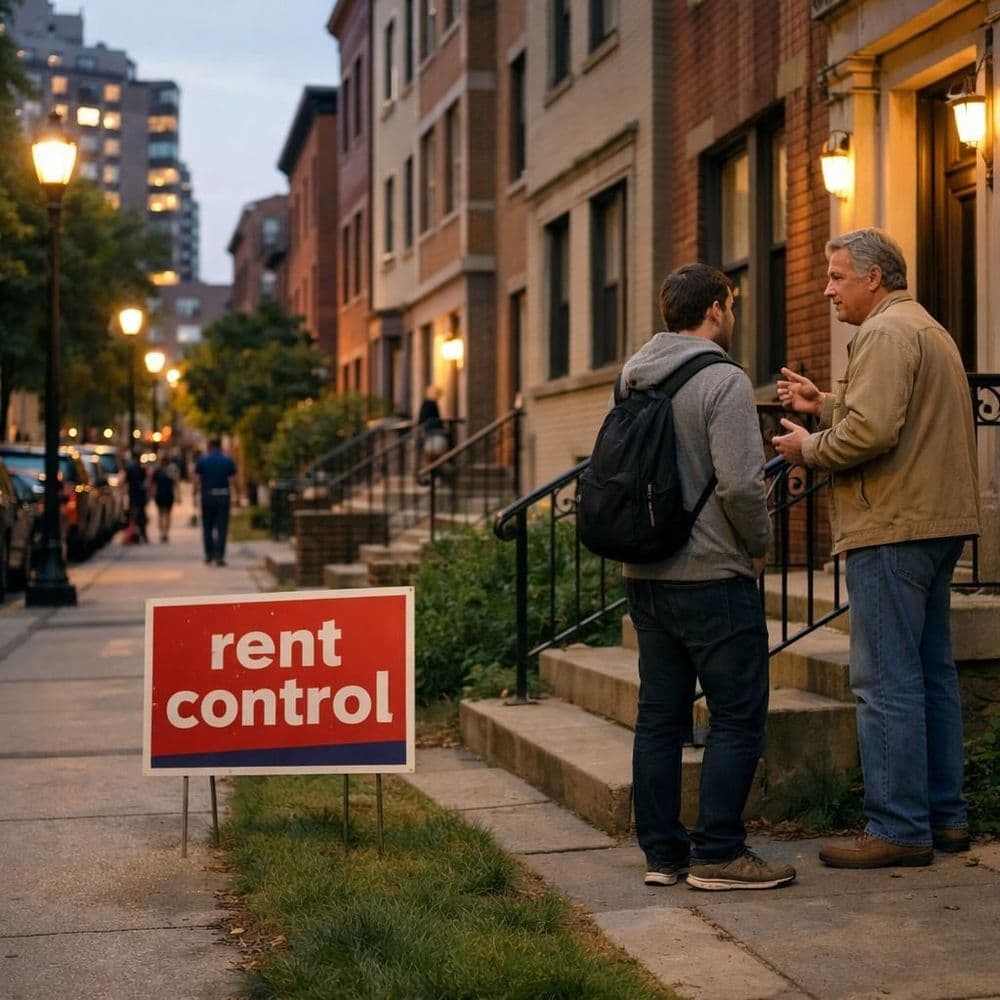
A new wave of local rent limits
Across the country, local officials are testing how far they can go to slow rent growth without freezing new investment. Instead of classic 1970s-style rent freezes, today’s debate is about caps on annual increases, enforcement of those caps, and new guardrails on how landlords set prices in the first place.
Three trends stand out:
- statewide or citywide limits on annual rent hikes, often tied to inflation;
- targeted exemptions for small owner-occupied buildings and new construction; and
- fresh scrutiny of algorithmic rent-setting tools that rely on competitors’ data.
Massachusetts, Los Angeles, New York, and Oregon offer a useful cross-section of how these battles are playing out in policy and in court.[newbedfordlight.org][citylimits.org][portlandtribune.com]
Massachusetts: a proposed 5% statewide cap
In Massachusetts, a proposed 2026 ballot initiative would cap annual rent increases for most residential units at the lower of the Consumer Price Index (CPI) or 5% during any 12-month period.[newbedfordlight.org] Base rents would be set as of January 31, 2026, and the measure would apply to all municipalities if voters approve it.
The proposal includes several notable carve-outs:
- **Owner-occupied buildings with four or fewer units** would be exempt.
- **New apartment buildings would be exempt for 10 years**, with the exemption applying to both recently built units and those constructed after adoption.[newbedfordlight.org]
Supporters frame this as a stabilization tool: Massachusetts has some of the highest rents in the country, and more than half of renters in cities like New Bedford pay over 30% of their income on housing.[newbedfordlight.org] Advocates say caps can give households predictability while the state works to add supply.
Small-property owners counter that the cap is among the most restrictive they’ve seen. With utilities, insurance, and property taxes rising, they argue that limiting annual rent growth to at most 5% could leave many operating at a loss and ultimately push "mom and pop" owners to sell or exit the business.[newbedfordlight.org] Developer groups warn of a chilling effect on new projects, even with the 10-year exemption.
Los Angeles: overhauling a 40-year-old formula
Los Angeles has taken a different path: updating its existing rent stabilization ordinance for the first time since the 1980s. Under current rules, landlords in covered units can raise rents by at least 3% annually, and up to 10% in high-inflation years, with an extra 2% bump when they pay for tenants’ gas and electricity.[#4]
After a multi-year review, the city approved a new cap:
- **Annual increases limited to 4%**, tied to 90% of local CPI.
- **The additional 2% utility surcharge eliminated.**
- **A 1% floor** in years of very low inflation, so rents can still rise modestly.[#4]
Roughly three-quarters of the city’s rentals are in buildings covered by local rent control, and city estimates suggest about 42% of all Los Angeles households live in rent-controlled units.[#4][laist.com] That means the new formula will directly shape housing costs for a large share of residents.
Tenant advocates argue that the old system allowed rent growth to outpace wages and contributed to an eviction-to-homelessness pipeline.[#4] Some renters told LAist they could not absorb another 3%-plus increase without risking displacement. Landlord groups say the new cap ignores rapidly rising insurance premiums and maintenance costs and will make it harder to finance needed repairs or add units on small sites.
Lower caps meet stronger enforcement
Caps on paper do little without enforcement. That’s where some of the newest rent-control battles are emerging.
In Los Angeles, the lower cap will interact with new state and local rules taking effect in 2026. California legislation will require landlords to provide basic appliances like working refrigerators and stoves, clarify that owners must remediate smoke and ash damage after disasters, and upzone areas near major transit lines to allow taller apartment buildings.[laist.com] Together, those changes raise baseline habitability standards and aim to increase longer-term supply even as short-run rent hikes are constrained.
Elsewhere, agencies are beginning to fine landlords that ignore rent caps, and some cities are sending noncompliance letters to owners that fail to register rent-stabilized units before raising rents.[#7] Those steps turn what used to be lightly enforced guidelines into real regulatory risk for portfolio owners.
Algorithms and alleged rent fixing
Another frontier is how landlords set starting rents and renewal offers. Regulators are increasingly skeptical of software that uses detailed, non-public data from multiple landlords to recommend prices across a market.
In 2025, New York adopted a law banning property owners and managers from using certain algorithm-based rent-setting software that relies on private competitor information.[citylimits.org] City Limits reports that the law targets tools like RealPage, which aggregate data such as lease-renewal rates to generate pricing recommendations. Lawmakers argue that, in effect, this allows landlords to coordinate prices in ways that would be illegal if done in person.
At the same time, a coalition of several states has proposed a $7 million settlement with Greystar, the country’s largest landlord, over its use of RealPage’s rent-setting tools.[portlandtribune.com] Under the deal, which still requires federal court approval, Greystar would stop using algorithmic software to set rents, cease sharing or receiving sensitive competitor data, and avoid landlord meetings hosted by the vendor.[portlandtribune.com]
Critics say these algorithms can push rents higher than a competitive market would support, particularly in tight, high-demand metros. For renters, the concern is that every building in a neighborhood could start moving in lockstep. For regulators, these cases are a test of how antitrust law applies to data-driven pricing.
What it means for landlords, investors, and renters
For landlords and investors operating in jurisdictions with or considering rent control, several practical implications are emerging:
- **Underwriting must assume tighter rent growth.** Deals that only pencil with 7–10% annual rent increases are increasingly hard to justify where caps of 3–5% are on the table.
- **Operating cost risk is shifting to owners.** When insurance, utilities, and taxes outpace allowed rent growth, owners must either absorb the squeeze or look for efficiencies elsewhere.
- **Compliance risk is rising.** Non-registration of rent-stabilized units, use of banned pricing tools, or improper pass-through fees can now trigger fines, refunds, or litigation rather than quiet warnings.[#7][portlandtribune.com]
For renters, the headline number – a 4% cap here, a CPI-or-5% cap there – is only part of the story. Key questions include:
- Is your building covered, or is it exempt due to age, size, or owner occupancy?
- Does local law reset caps when a tenant moves out, or keep protections tied to the unit?
- Are there clear enforcement mechanisms and agencies that actively pursue violations?
The road ahead
None of these measures, on their own, solve the underlying shortage of homes. Even critics of rent control and supporters of price caps often agree that expanding supply is essential. But the current wave of local action signals that many jurisdictions are no longer waiting for new construction to bring relief.
Instead, they are trying to buy time and stability for renters through tighter caps, clearer standards for landlord responsibilities, and new limits on data-driven pricing. For anyone invested in or relying on rental housing, understanding the local rulebook – and how quickly it’s evolving – is becoming as important as tracking interest rates or construction costs.
Comments