
Blog
Landlords Face a New Squeeze: Cooling Rent Growth Meets Rising Operating and Compliance Costs
7 min read
January 12th, 2026
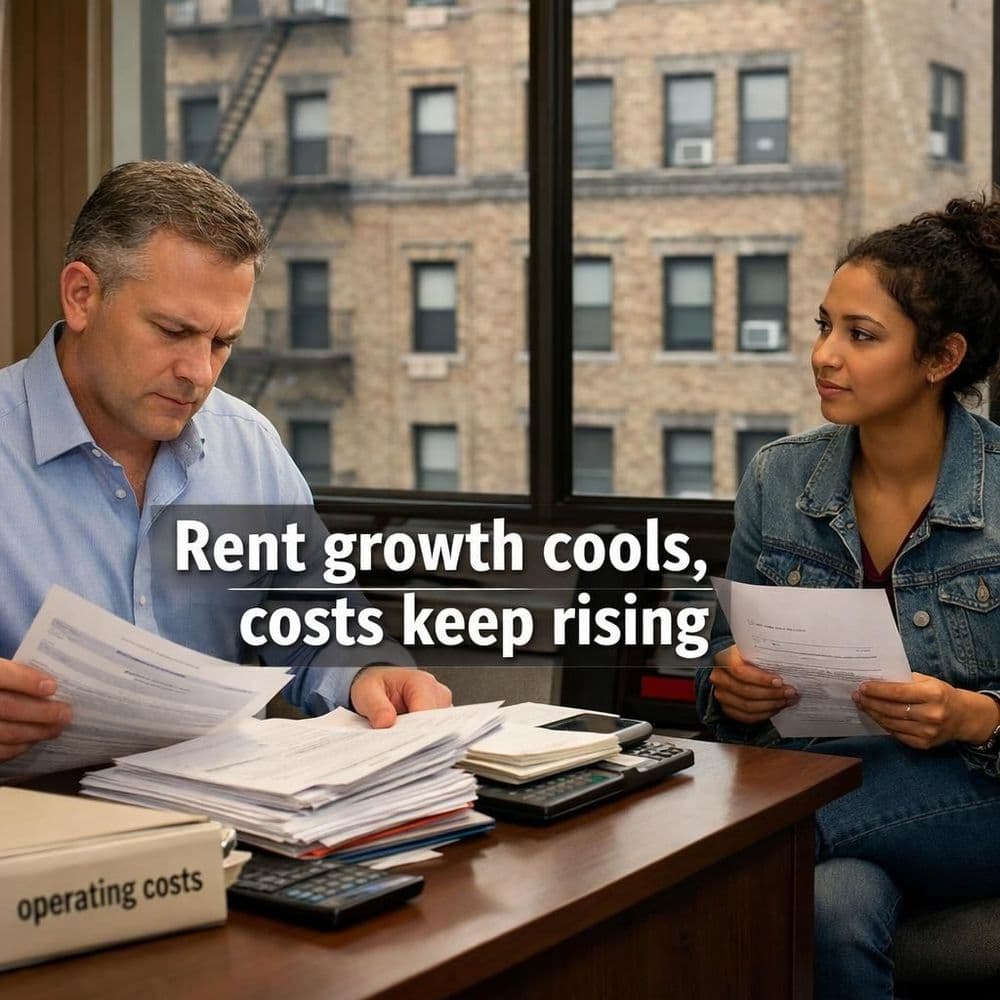
What the national rent cooldown looks like
After the rapid run-up of 2021–2022, the national rent story has shifted toward stability—sometimes even small declines—depending on which dataset you follow. Apartment List reported that the national median rent fell 0.8% in December and closed 2025 at $1,356, down 1.3% from a year earlier, alongside a record-high multifamily vacancy rate of 7.3% in its index. [apartmentlist.com]
Meanwhile, CPI-based rent measures can look hotter than market asking-rent trackers because CPI reflects a mix of existing leases and renewals, which tend to adjust with a lag. NerdWallet notes that, in the CPI, rent alone was up 3.5% over the 12 months ending in September, and it highlights the lag between market shifts and CPI’s shelter components. [nerdwallet.com]
Expenses are rising faster than many landlords can raise rents
Slower rent growth would be easier to manage if costs were also cooling. But in many markets, owners report the opposite: insurance premiums, utility bills, labor, and building materials remain elevated, and those increases can be difficult to fully pass through—especially where rent caps or tenant protections limit renewal increases.
A San Francisco Chronicle report captured the math: even as rents have gotten more competitive again, market participants described revenue still below 2019 while expenses are meaningfully higher, with insurance and utilities repeatedly cited as key drivers. [sfchronicle.com]
The practical impact is a tighter margin band. When revenue growth is capped by competition (high vacancy or heavy new supply) or by regulation, every cost category matters more—turnover costs, maintenance response times, and capital planning for building systems that are approaching replacement cycles.
Local rules shift the rent math for regulated units
In regulated segments, the rent formula itself can change the operating playbook. In Los Angeles, LAist reports the city approved reforms that would cap annual increases at 4% and eliminate an additional 2% increase for landlords who cover utilities; the annual increase would be tied to 90% of the change in the region’s CPI, with a 1% floor in low-inflation years. LAist also reports the rules generally cover apartments built before October 1978 and affect about 42% of all L.A. households. [laist.com]
For owners, that matters in underwriting and asset management. If expense growth runs at or above CPI while allowable rent increases are capped below typical cost inflation in certain years, NOI can compress even without a demand shock.
Habitability and climate-related standards add new capex risk
Beyond rent math, habitability standards can drive direct capital costs. LAist reports Los Angeles County will soon require many landlords to maintain a maximum indoor temperature of 82°F, a rule that may force upgrades in older buildings that lack cooling or adequate electrical capacity. [laist.com]
Even when owners support the intent, it changes budgeting: electrical panels, window upgrades, ventilation, and HVAC can turn into mandatory capex rather than optional improvements—especially in older stock where adding cooling can be technically complex.
Algorithmic rent-setting scrutiny adds legal and compliance overhead
A separate pressure point is legal scrutiny around algorithmic rent-setting tools and data-sharing practices. ProPublica reported that Greystar agreed to stop using RealPage’s rent-setting software as part of a deal with the U.S. Department of Justice, and Greystar stated it entered settlements without admitting wrongdoing. [propublica.org] Greystar’s own press release describes an August 8, 2025 agreement with DOJ related to its use of RealPage’s revenue management software, again with no admission of wrongdoing. [greystar.com]
When rent growth is slowing, these compliance changes can matter more: any constraint that reduces pricing speed, increases governance requirements, or adds legal spend can feel like an added headwind to net operating income.
What to watch next
1) **Vacancy and lease-up times.** If the new-supply wave is absorbed, pricing power can return faster than headlines imply. If vacancy remains elevated, concessions and renewals will keep pressure on revenue. [apartmentlist.com]
2) **Operating cost inflation.** Insurance and utilities have become first-order underwriting variables in many markets, and they can move faster than rent caps or market rent growth. [sfchronicle.com]
3) **Compliance timelines.** Local rules (rent formulas, temperature standards, reporting requirements) can convert what used to be discretionary upgrades into required expenditures—with very different implications for older buildings than for new construction. [laist.com] [laist.com]
Comments