
Blog
Housing affordability experiments: preapproved plans, middle housing zoning, and starter-home enforcement
7 min read
May 24th, 2026
Why ‘soft costs’ are the new focus
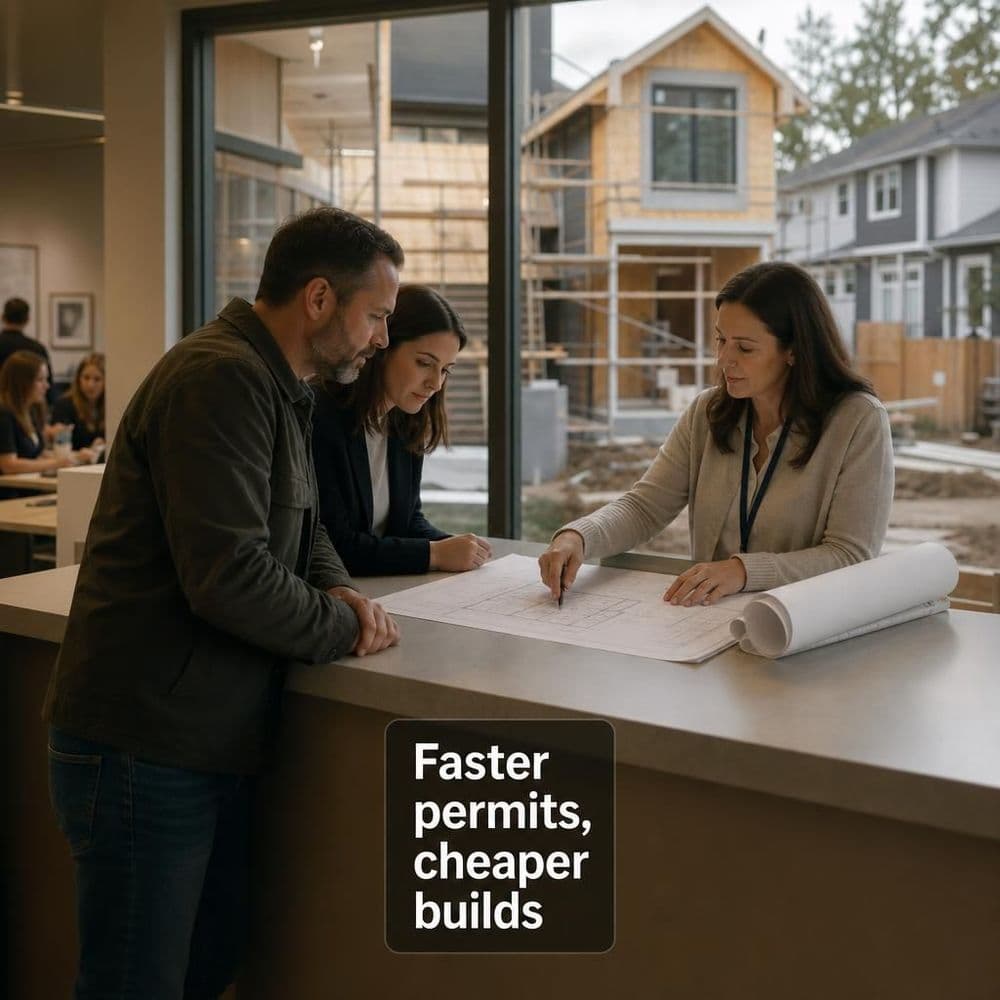
Affordability debates often center on mortgage rates and home prices, but a growing share of policy experimentation is aimed at the costs that accumulate before a shovel hits the ground: discretionary reviews, redesign cycles, and months of permitting uncertainty. One emerging tool is **preapproved building plans**—reusable designs that a local agency has already vetted for code compliance. Pew’s 2026 review found these programs are spreading, with roughly 40 jurisdictions offering some form of preapproved plans, and estimated that they can reduce overall development costs by about 1%–2%—often translating to roughly $5,000–$10,000 on a $500,000 home—while also cutting preconstruction timelines by months in the best-run programs. [pew.org]
Illinois: a broad package aimed at supply and cost frictions
Illinois lawmakers described an eight-bill affordability package that bundles multiple “small levers” into one agenda: zoning flexibility, streamlined approvals, renter fee protections, and measures aimed at investor transparency and behavior. The proposals include a requirement that municipalities allow “middle housing” types (such as duplexes and townhouses) on lots currently limited to single-family use, plus a bill to create more transparent and uniform standards for plan review, permit issuance, and inspection deadlines. Other elements address tenant-paid broker fees and create a fee on private equity purchases of existing residential properties, with revenue directed toward housing grants. [illinoissenatedemocrats.com]
California: tightening the starter-home fast track
California’s starter-home framework is designed to speed approvals for small-lot, for-sale detached homes by limiting discretionary local review. HousingWire reports that SB 1116 passed the state Senate 37-0 and would tighten eligibility and development standards, limit certain setback practices, measure height in feet (not stories), and require local ordinances to be submitted to the state housing department for compliance review—aiming to reduce local workarounds that can effectively neutralize the law. [housingwire.com]
What the builder affordability index shows
Even with process reforms, affordability is still constrained by the basics: prices, incomes, and borrowing costs. NAHB’s May 21, 2026 release on the NAHB/Wells Fargo Cost of Housing Index (CHI) found that a family earning the national median income ($106,800) needed 32% of income to cover the mortgage payment on a median-priced new home in Q1 2026 (and the same share for a median-priced existing home). The release also noted the national median new home price ($403,200) and existing home price ($404,300) were nearly identical in Q1, and that the average 30-year mortgage rate edged down from 6.32% in Q4 2025 to 6.20% in Q1 2026. [nahb.org]
What to watch next
The common thread across these approaches is implementation: the details of local rulemaking, how quickly permitting staff can actually shorten timelines, and whether “by-right” pathways stay usable in practice. Preapproved plan catalogs won’t substitute for broader zoning capacity, but they can make infill and small projects easier to finance and execute—especially in places where time delays are a major cost driver. [pew.org]
Separately, household carrying costs like property taxes remain a wild card in affordability, particularly in high-tax jurisdictions. Even if supply-side reforms move forward, markets with heavy tax burdens may need parallel fixes to keep monthly payments within reach.
Comments