
Blog
How Local Landlord Registries and Inspection Mandates Are Reshaping U.S. Rentals
8 min read
December 20th, 2025
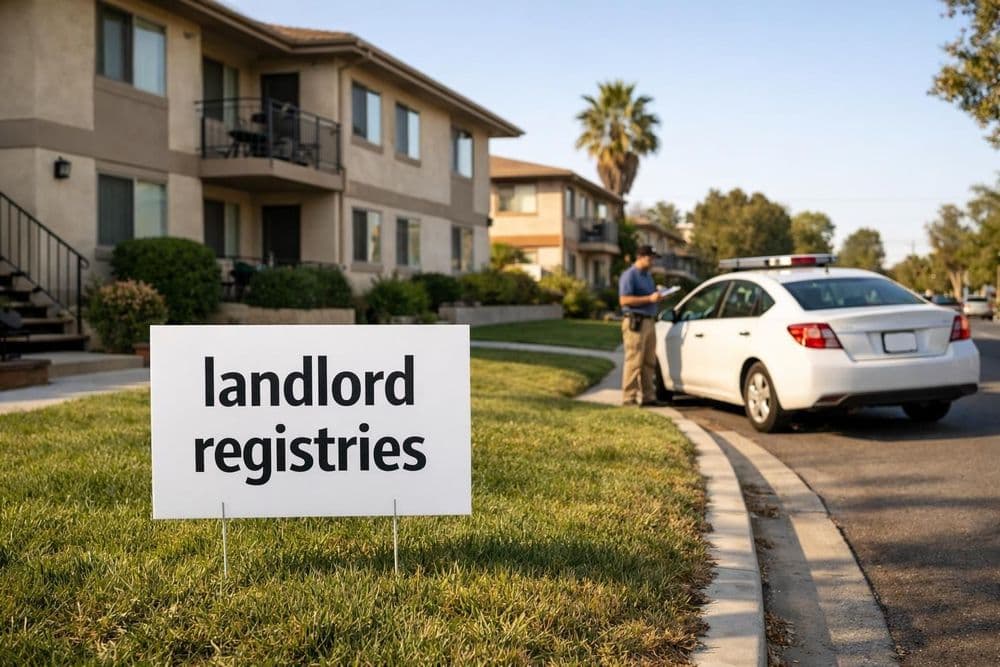
A quiet but widespread shift in local rental regulation
Across the country, cities and counties are moving from complaint-driven enforcement to structured registries that map who owns rental housing, where it is, and whether units meet basic standards. Instead of relying solely on tenant calls, local governments are increasingly requiring landlords to register units, pay per-unit fees, and submit to periodic inspections funded by those fees.[mississippitoday.org][stlouis-mo.gov]
The specific rules vary by city, but the direction is similar: make it harder for chronically unsafe properties to operate under the radar, and give code officials better data and revenue to sustain enforcement. For landlords and investors, this means new fixed costs, more paperwork, and greater scrutiny – all of which need to be factored into buy-and-hold strategies.
Jackson, Mississippi: From stalled rollout to self-funded inspections
Jackson’s rental market has long been lightly regulated, with more than 30,000 renter-occupied units and a history of substandard complexes.[mississippitoday.org] After a legal challenge slowed the city’s original rental registration program, the council approved an amended ordinance in December 2025 that lowered some fees and removed certain requirements while keeping the core registry and inspection framework in place.[mississippitoday.org]
Under the updated rules, the city’s rental registration manager oversees a small team of inspectors who conduct routine property reviews funded by landlord fees. The ordinance shifts away from inspections during tenant turnover and instead ties inspections to annual registration renewals. For smaller landlords, Jackson aims to inspect about 20% of each portfolio; for multifamily operators, no more than 20% of units in a complex are inspected, and if the first 10% pass, inspectors can deem the rest compliant.[mississippitoday.org]
To cover costs, Jackson charges $50 per single-family rental inspected and $25 per apartment unit. City officials specifically calibrated these fees to avoid generating surplus revenue that could be construed as a tax, responding to concerns raised in earlier litigation.[mississippitoday.org] Landlords who fail to register or whose units cannot pass inspection face fines, and the city is building systems to accept tenant complaints and track chronically troubled properties.
For small local owners already dealing with higher insurance, inflation, and slower courts, these fees add to operating costs. Some say they will have to push rents higher to cover the new requirements, especially in lower-income neighborhoods where margins are tight.[mississippitoday.org]
Pasadena, California: Late fees as a compliance lever
Pasadena offers a different model for influencing landlord behavior: escalating late fees on its rental registry. The city requires an annual rental registration and per-unit fee; for 2025, that base fee is $238 per unit, paid by an October 31 deadline.[pasadenanow.com][coloradoboulevard.net]
Owners who miss the deadline are automatically assessed late penalties. Unpaid registrations are subject to a 30% late fee, adding roughly $71 per unit. A second escalation brings total late fees to 50%, or about $119 per unit, for landlords who still have not paid by the next threshold.[pasadenanow.com][coloradoboulevard.net] Local coverage notes that these penalties are intended to motivate prompt compliance rather than to serve as a major revenue source.
Recognizing that many small landlords may be confused by the rules, Pasadena officials and local organizations have scheduled workshops ahead of deadlines to explain the registry, walk through the online portal, and highlight common filing errors.[pasadenanow.com] For owners, the message is that ignoring mail from the city now carries real financial consequences, even if a unit is well-maintained.
Fishers, Indiana, and other Midwestern experiments
In Fishers, Indiana, a proposed housing measure would create a landlord registry and cap the share of rental homes in many neighborhoods.[wfyi.org] Local leaders frame the move as an effort to track rental properties more accurately, address concerns about investor ownership, and preserve opportunities for owner-occupants in single-family subdivisions.
Under the proposal, landlords would need to register properties and meet new standards to continue operating. The registry would also help the city respond more quickly to complaints and monitor concentrations of rentals at the block or subdivision level.[wfyi.org] For investors, caps on neighborhood rentals could limit expansion strategies based on buying multiple single-family homes in one area, potentially supporting prices for existing holdings but reducing future flexibility.
Other Midwestern and smaller cities are adopting related tools. Sauk Rapids, Minnesota, recently passed a strengthened rental property ordinance that tightens limits on how many rentals are allowed and adds more conditions for operating them.[knsiradio.com] St. Louis launched a landlord inventory survey aimed at building a comprehensive list of vacant rental units, both to help tornado-impacted residents find housing quickly and to assemble a more detailed citywide rental database.[stlouis-mo.gov]
Inspection pilots and legal pushback in Isla Vista and beyond
Not every registry or inspection program rolls out smoothly. In Isla Vista, California, Santa Barbara County has launched a pilot rental inspection program that requires periodic checks of units in a dense student-oriented market.[independent.com][noozhawk.com] A group of local landlords and a property owners association sued to stop the program, arguing that it imposes unreasonable inspection burdens.
Court filings show that a judge denied a request for a preliminary injunction, allowing the inspection program to move forward while litigation continues.[noozhawk.com] For now, that means landlords in the pilot area must prepare for proactive inspections, maintain access for inspectors, and budget time and money for any required repairs to meet code.
Elsewhere, cities are strengthening code enforcement infrastructure to support similar efforts. Athens, Ohio, created a housing committee focused on rental code enforcement and landlord accountability, with an eye toward improving coordination across departments and making enforcement less reactive.[woub.org] In Philadelphia, a recent council hearing examined the condition of rental housing and how to better hold landlords accountable for habitability standards, including through licensing and inspection practices.[phlcouncil.com]
What this wave of local rules means for landlords, tenants, and investors
The emerging patchwork of registries, inspection mandates, and fee schedules is reshaping how rentals operate at the local level. Three themes stand out for market participants:
- **More predictable, but more complex, compliance.** Registries and codified inspection cycles make expectations clearer but require owners to track deadlines, fee schedules, and documentation. Missing a renewal date in Pasadena or ignoring a notice in Jackson can now generate material penalties.
- **New operating costs and capital needs.** Per-unit fees, fines, and required repairs add to the cost of doing business, especially for small landlords without scale. In markets with thin margins, some portion of these costs is likely to flow through to higher rents or reduced investment in non-mandated upgrades.
- **Better data and targeting for enforcement.** For tenants and cities, registries create a more accurate picture of who owns what and where problems are concentrated. That can make it easier to intervene in chronically neglected properties and to design support programs or financing tools for landlords who need help bringing units up to code.
For investors and housing stakeholders, the key is to treat local regulatory regimes as a core part of market analysis, not an afterthought. Understanding how a city funds inspections, structures late fees, and caps rental concentrations can matter as much to long-run returns as interest rates or property taxes – and those rules can change quickly, city by city.
Comments