
Blog
How Cities Are Responding to the Housing Shortage: Zoning Changes, Vacant-Lot Incentives, and Starter-Home Programs
6 min read
April 8th, 2026
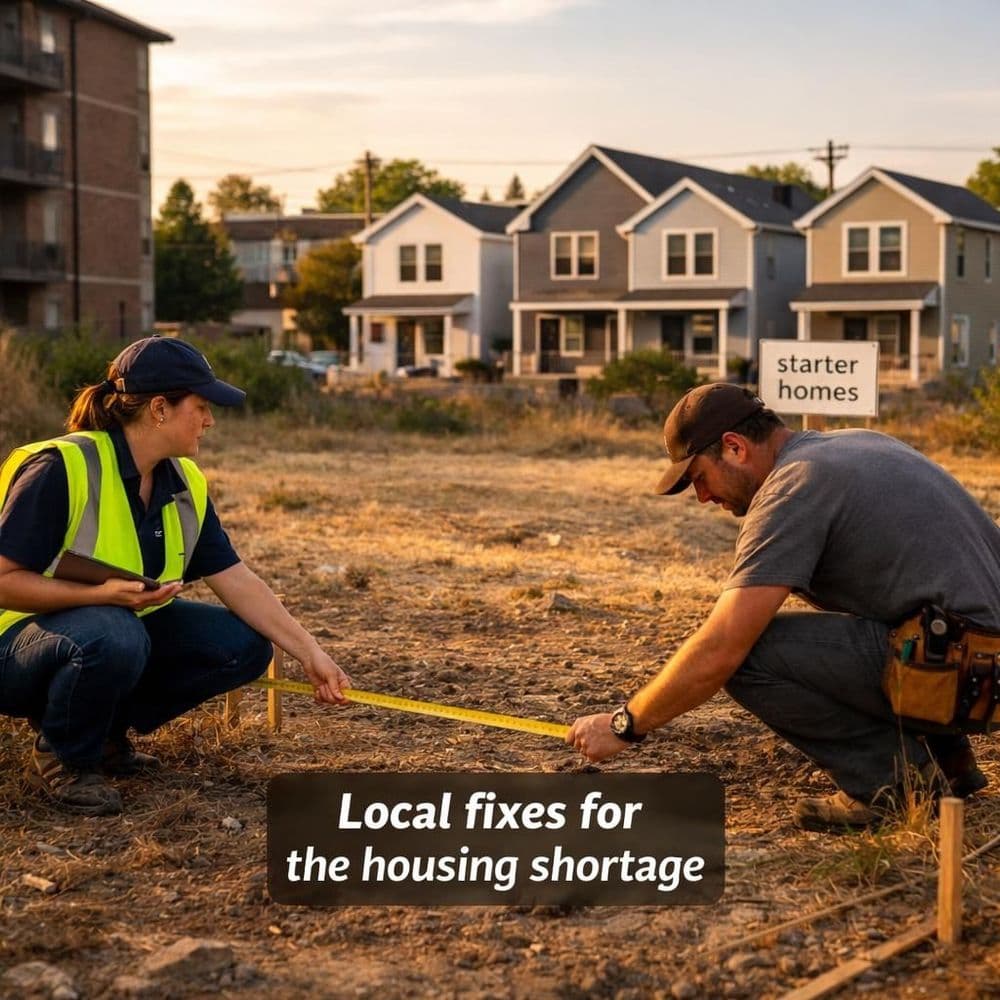
Why local policy is doing more of the near-term work
Housing shortages and affordability pressures show up differently block by block, so many of the most actionable responses are increasingly local: changing what can be built, where it can be built, and how quickly proposals can move from concept to permits.
National estimates of the shortage vary, but a commonly cited range is in the millions of homes—an indication that no single pilot program can close the gap by itself. Still, local pilots can matter if they create a repeatable model that private builders (and nonprofits) can scale. [patch.com]
Zoning code updates aimed at missing middle housing
One emerging pattern is using time-limited zoning amendments to test “missing middle” forms—homes that fit between detached single-family and large apartment buildings. In Overland Park, a short-term amendment to the city’s development rules is intended to support a Portfolio Homes pilot by allowing homes on some lots that don’t directly face a public street (so long as they’re reachable via shared driveway). The amendment also opens the door to cluster-style neighborhood layouts such as flag lots and cottage-court-type homes—approaches the city has historically barred. [johnsoncountypost.com]
The other takeaway isn’t just the design: it’s governance. Even within a pro-housing pilot, communities can debate how much gets streamlined versus how much remains under elected-body oversight, especially when pilots are new and neighbors worry about fit and transparency. [johnsoncountypost.com]
Vacant-lot starter-home pilots and revolving funds
A second approach focuses less on changing the map and more on building directly—often on vacant or underused parcels the city already controls. In Moline, a proposed “Build Moline” pilot would use underused and city-owned lots to construct a small number of starter homes, using standardized designs to control costs. The city’s proposal referenced roughly $1 million already allocated in the budget for housing efforts, with the potential to leverage additional funding. [kwqc.com]
Notably, Moline’s plan emphasizes who gets to buy the homes. City leaders described a structure where homes would be sold only to owner-occupants (not corporate buyers), with eligible buyers required to be preapproved for a loan and then selected through a lottery. Proceeds would be reinvested into the program as a revolving fund for future construction. [kwqc.com]
What to watch: scale, timelines, and who benefits
If you’re tracking whether these policies actually improve affordability (not just headlines), three practical questions matter:
- **Scale:** How many units do pilots realistically produce in 12–24 months?
- **Affordability:** Are sales prices or rents meaningfully below comparable new construction?
- **Targeting:** Do eligibility rules keep homes in the hands of households the program is meant to serve?
The encouraging signal is that local leaders are getting more precise about the bottlenecks—lot patterns, street frontage rules, standardized plans, and buyer constraints. The risk is that pilots remain too small, too slow, or too constrained to change market-level outcomes. [governing.com]
Comments