
Blog
Manufactured and modular homes are getting a policy and financing reboot — will it move the needle?
7 min read
September 1st, 2026
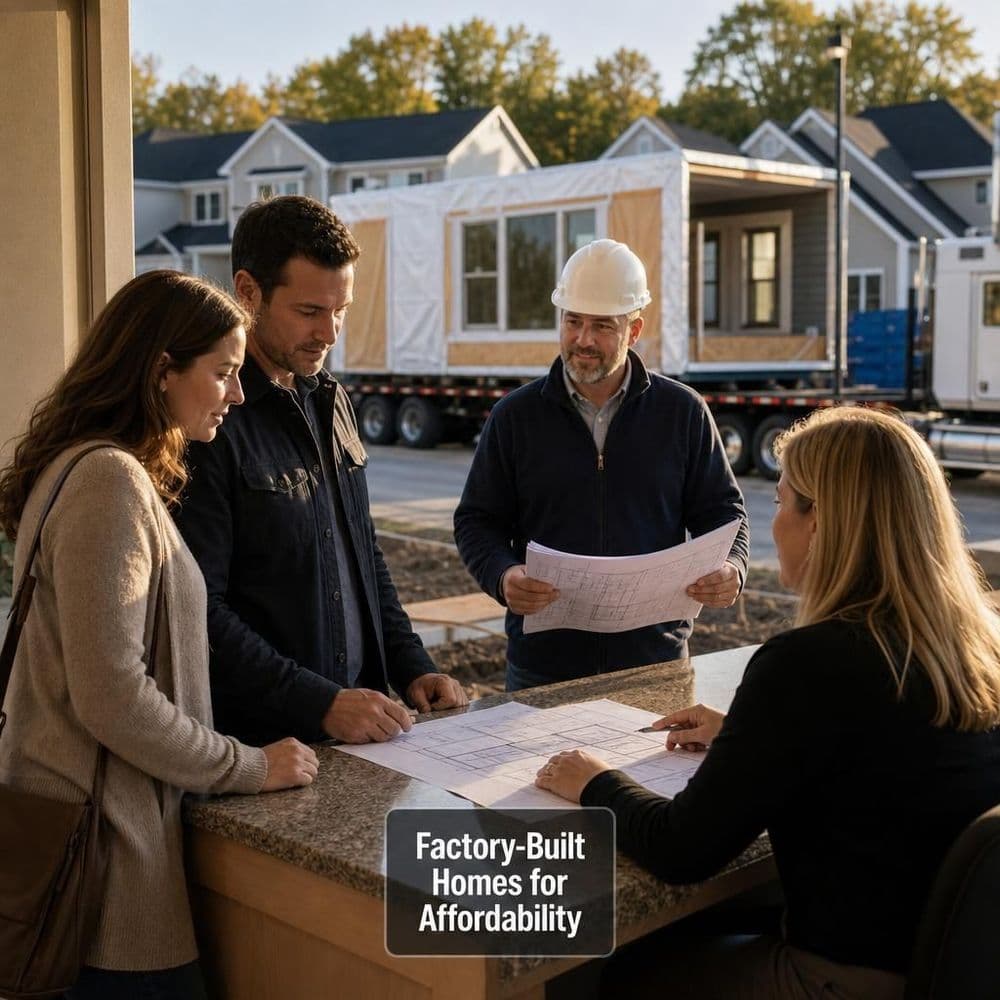
Why factory-built housing is back in focus
Manufactured and modular homes keep resurfacing in affordability debates for one simple reason: they’re designed for repeatable production. When factories can build the structure while the site is being prepared, timelines compress and carrying costs drop. Realtor.com described examples where off-site methods allow site prep and vertical construction to happen in parallel, with one modular project citing roughly six months for factory assembly versus ~18 months for a comparable custom build. [realtor.com]
What the latest federal changes actually do
A core change is removing the long-standing “permanent chassis” requirement for manufactured housing. The 21st Century ROAD to Housing Act updates the federal definition to allow manufactured homes to be built “with or without a permanent chassis,” and directs standards updates for homes built without one. [kaine.senate.gov]
Why it matters: multiple coverage notes that eliminating the chassis can reduce costs and broaden design options, including higher-density and potentially multistory configurations where allowed. Realtor.com reported estimates that removing the chassis requirement can cut up to $10,000 per home. [realtor.com]
Modular’s scaling problem: codes, inspections, and draw schedules
Even with more attention, modular has struggled to scale. HousingWire points to off-site construction representing about 3% of new single-family homes, underscoring how small the category remains. [housingwire.com]
The ROAD to Housing Act attempts to address bottlenecks that are specific to modular: inconsistent codes, inspection practices, and payment timing. A Bipartisan Policy Center breakdown says the Act directs HUD to review FHA construction financing programs to identify barriers for modular developers and initiate rulemaking, and allows a study on the utility of a standardized modular code. [bipartisanpolicy.org]
Financing and loan limits: the quiet make-or-break
Financing is often where “the deal dies” for factory-built homes. Realtor.com quoted industry participants arguing that manufactured housing hasn’t been a robust lending product, and that clearer federal standards and modernization could help legitimize financing conversations even if local rules still drive placement. [realtor.com]
The same BPC summary notes that the Act increases loan limits for FHA-insured manufactured housing loans and includes additional study language around off-site construction cost-effectiveness. [bipartisanpolicy.org]
What to watch next (without overpromising)
Policy changes can remove friction, but they can’t standardize every local zoning code. Multiple sources highlight that city-by-city rules and definitions still make it hard to build one module design across many jurisdictions, limiting the scale factories need. [realtor.com]
In practice, the near-term “tell” won’t be headlines—it’ll be whether lenders and builders see fewer appraisal/inspection surprises, faster draws, and more predictable approvals as programs and guidance update.
**Bottom line:** factory-built housing has a clearer path to mainstreaming than it did a few years ago, but the biggest constraints remain local rules and the plumbing of construction finance. [housingwire.com]
Comments