
Blog
Mortgage Rates Near 6.5%: Why the Housing Slowdown Is Lasting Longer (and What’s Still Moving)
7 min read
June 13th, 2026
Where mortgage rates are now (and why that matters)
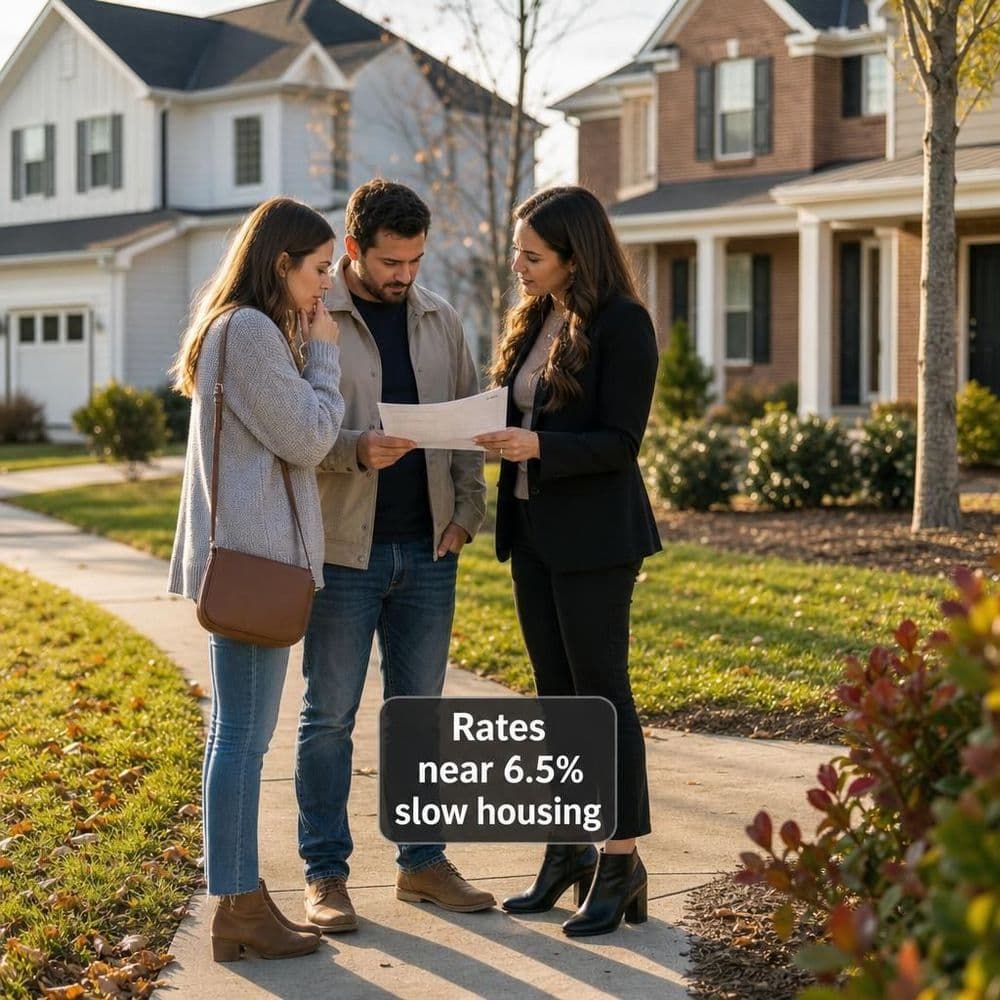
Mortgage rates continue to hover in the mid-6% range, which is high enough to keep payments—and qualification hurdles—elevated even when home prices aren’t accelerating. For the week ending June 11, 2026, Freddie Mac’s Primary Mortgage Market Survey (PMMS) showed the average 30-year fixed-rate mortgage at **6.52%**. [freddiemac.gcs-web.com][realtor.com]
In practice, that “stuck” feeling matters as much as the exact number. When rates don’t fall meaningfully, many households simply wait, shop less aggressively, or reduce budgets—so demand gets rationed rather than disappearing entirely. [realtor.com]
Demand isn’t gone—it’s being rationed
Recent reporting noted a stronger pace of existing-home sales in May even as rates ticked up. It’s a reminder that buyers can adapt—especially if they have strong incomes, large down payments, or flexibility on location—but the market still clears at a slower speed than in low-rate eras. [realtor.com]
The same reporting highlighted that household real estate wealth remains enormous, with total household real estate value estimated at **$48.7 trillion** in Q1 2026 and equity estimated at **$34.9 trillion**. That embedded equity is one reason prices can remain resilient even when affordability is strained: many owners don’t need to sell quickly. [realtor.com]
Builders adjust: volume, pricing, incentives
High rates don’t just hit resale. They shape new-home pricing, incentive budgets, and delivery expectations. Lennar lowered its full-year home-delivery target to **82,000–83,000** homes (from about 85,000 previously) and explicitly cited stubborn headwinds tied to high mortgage rates and low affordability. [realtor.com]
Lennar’s report also showed the tactical side of the new-construction playbook: deliveries of **20,519** homes in the quarter (up 2% year over year) but a lower average selling price (**$371,000** vs. **$389,000** a year earlier). That’s consistent with builders leaning into price points and incentives that clear financing constraints. [realtor.com]
Local markets: mixed price signals under the same rate ceiling
Even with the same national rate backdrop, local outcomes can differ sharply. In parts of New Braunfels, Texas, Community Impact reported six-month average list prices in the **$331,000–$594,000** range across two ZIP codes, with homes under contract up year over year in both—and nearly **50%** higher in 78130—while days on market increased year over year. [communityimpact.com]
That combination (more contracts, longer marketing times) is a good snapshot of the 2026 market: buyers are active, but they’re choosier, they negotiate more, and properties can take longer to match with the right financing profile. [communityimpact.com]
Practical takeaways for buyers, sellers, and investors
**For buyers:** In a mid-6% world, compare a seller-paid rate buydown against a straight price cut. The better deal depends on how long you expect to keep the mortgage, and whether the buydown meaningfully improves qualification.
**For sellers:** Expect buyers to be payment-sensitive. Clean inspection reports, flexible closing timelines, and realistic pricing often matter more than cosmetic upgrades when rate pressure is the main constraint.
**For investors:** Underwrite conservatively. Higher debt costs narrow cash flow, so focus on rent-to-price math, insurance/tax increases, and realistic vacancy assumptions.
The common thread: as long as mortgage rates stay elevated, the housing market can still “move,” but it tends to do so with more bargaining, more segmentation by affordability, and slower overall momentum than headline price indices alone might suggest.
Comments