
Blog
How the new federal housing law is playing out locally: permits, fee deferrals, and faster rebuilding
7 min read
July 12th, 2026
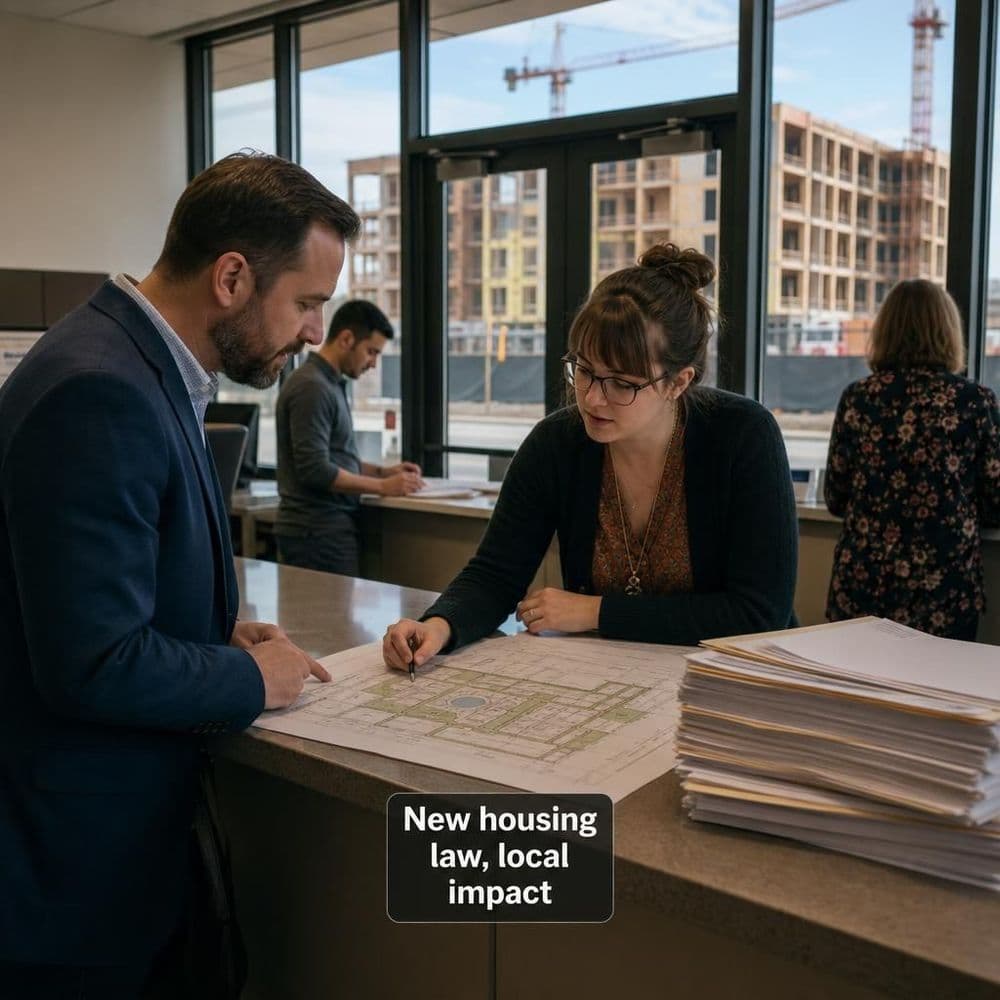
From law to local execution
A large federal housing law can read like a checklist of programs, grants, and rule changes. But the most important phase starts after enactment: when city councils vote, planning departments adjust workflows, lenders interpret new guidance, and developers decide whether a project finally pencils.
Early local coverage suggests the near-term impact will show up less in home prices and more in the plumbing of housing production — permitting pace, upfront fees, infrastructure readiness, and financing pathways for lower-cost housing types.
Permits and builder behavior: Kansas City as an early signal
Nationally, construction activity softened in May: U.S. privately owned housing starts fell 15.4% from April and 8.7% from a year earlier, with a sharp multifamily pullback. But the Midwest stood out, and some metros are showing permit strength even when broader sentiment cools. [kcur.org]
In the Kansas City metro, permits rose 5.7% in May and were up nearly 67% versus a year earlier. The reporting notes that local requirements — including energy-efficiency rules — can materially change costs in ways that developers respond to. [kcur.org]
That’s a useful frame for understanding the new law: in many markets, the constraint isn’t “demand,” it’s whether a feasible, financeable project can clear the local maze at a price renters or buyers can actually pay.
Cutting upfront costs: fee deferrals and infrastructure dollars
One of the fastest ways a city can influence the feasibility of an apartment or infill project is by reducing or deferring upfront charges. When fees move from “paid before a shovel hits the ground” to “paid later,” a developer’s capital stack can look meaningfully different — especially in a higher-rate environment.
In Laramie, Wyoming, the city approved a fee deferral for a planned apartment complex to lower the developer’s upfront costs. The same meeting included formal commitment of a $5 million fund for affordable-housing-related infrastructure, with city leadership describing an intent to “recapture” the dollars so they can be reused. [laramiereporter.substack.com]
These local tools matter because federal incentives often still require projects to move quickly through local approvals and be supported by viable site infrastructure.
Manufactured housing: removing appraisal and financing friction
A recurring theme in affordability is that “more supply” doesn’t only mean traditional site-built homes. Manufactured housing can be a lower-cost pathway, but it faces its own barriers — including appraisal issues and lender underwriting constraints.
In upstate New York coverage, a manufactured-housing operator said the law removes barriers tied to appraisal restrictions and bank financing, potentially widening consumer access. The operator also cited a cost comparison — living in a manufactured home community at about half the cost of traditional site-built housing — and discussed plans to add 50 to 75 homes around Rochester, Buffalo, and Syracuse in 2027. [whec.com]
Even if the exact policy details vary by agency guidance, the local implication is straightforward: if financing and appraisal friction eases, more buyers can transact, and more operators can justify expanding communities.
Disaster recovery: speeding long-tail rebuilding
Housing shortages can worsen sharply after major disasters — and not just for homeowners. Long timelines for rebuilding affordable rentals can push displaced households into longer commutes, overcrowding, or out-migration.
Grist reports that HUD’s Community Development Block Grant Disaster Recovery (CDBG-DR) program has provided more than $100 billion over the past few decades, but that the program’s ad hoc structure has contributed to delays that often stretch beyond five years. The new law includes provisions aimed at making disaster recovery funding more permanent and faster to deploy, potentially allowing HUD to start longer-term recovery spending sooner as FEMA’s role winds down. [grist.org]
For local housing markets, faster disaster-recovery rebuilding can mean fewer years of “missing units” — and less upward pressure on rents in the years after a catastrophe.
Bottom line: the metrics that will show results
If you’re tracking whether the new housing law is working in your market, focus on operational metrics first:
- **Permits and starts**: are more projects getting entitled and breaking ground?
- **Time-to-approval**: are review timelines actually shrinking?
- **Project feasibility**: are fee deferrals, infrastructure funds, or financing changes lowering upfront cash needs?
- **Delivered units**: are new units being completed, leased, and sold — especially at attainable price points?
National legislation can set the table, but the meal is cooked locally. The next 6–18 months of city-by-city implementation will likely determine how quickly supply can respond.
Comments