
Blog
Housing Is Splitting by Metro: Record Prices, Cooling Demand, and New Construction Pipelines
7 min read
August 17th, 2026
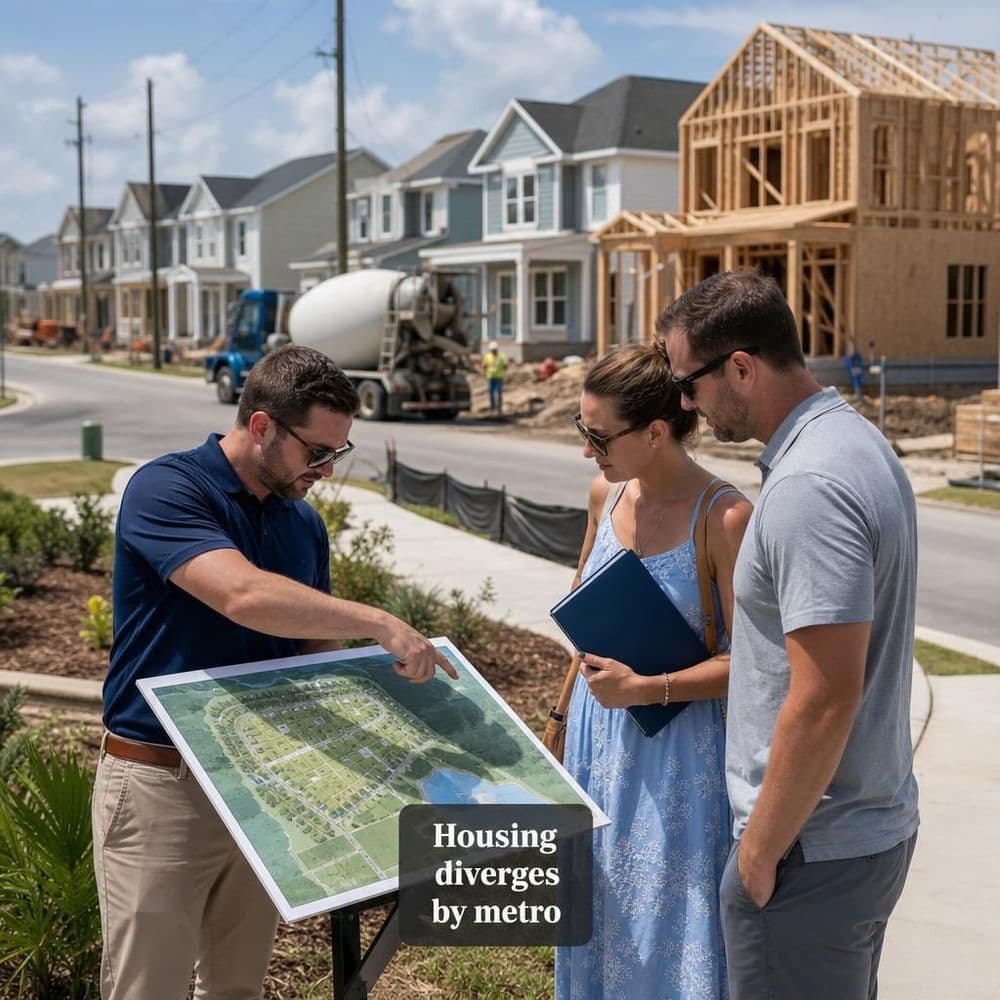
Why regional divergence is widening
Even when headlines are local, mortgage rates still set the baseline for affordability. Freddie Mac’s Primary Mortgage Market Survey (as reported by the Associated Press) put the average 30-year fixed rate at 6.67% as of 2026-08-13, a level that keeps monthly payments elevated and makes buyers more selective. [apnews.com]
When payments are high, turnover often slows: existing owners hesitate to sell, and buyers have less budget flexibility. That means two metros can react very differently depending on local job growth, migration, and—most importantly—how quickly supply shows up.
New Hampshire: record price but uneven county momentum
Local reporting says the statewide median sales price for a single-family home in New Hampshire reached an all-time high of $580,000 in July 2026, while also describing inventory as the highest in years. [nashua.inklink.news]
The same reporting highlights that momentum isn’t uniform across the state. Some counties showed softer activity—such as Merrimack County posting slightly fewer July closed sales year over year (148 vs 153)—and several counties reportedly had July pending sales declines versus the prior year. [nashua.inklink.news]
Separately, New Hampshire Public Radio described how the 21st Century ROAD to Housing Act includes changes intended to reduce costs and frictions for housing production and financing, including manufactured-housing provisions, streamlining certain review processes, and adjustments affecting Low-Income Housing Tax Credit-related bank investments. [nhpr.org]
Seattle: pending sales fall as buyers step back
A Seattle-area radio commentary reported that pending home sales were down nearly 15.6% year over year in July, citing Redfin. [mynorthwest.com]
Pending sales are a useful early indicator because they often move before closed-sales and pricing metrics. If that slowdown persists, the next signs to watch are longer days on market, a higher share of listings with price cuts, and more seller concessions.
Savannah: a visible building pipeline
In coastal Georgia, the story is less about resale inventory piling up and more about new supply. The Atlanta Journal-Constitution described a steady pipeline of large projects and approvals around the Savannah metro, including major master-planned communities and multi-phase subdivisions. [ajc.com]
That push is framed against a large estimated housing need: a Yahoo News summary of a Georgia Tech housing assessment cited nearly 41,000 units needed in the region between 2024 and 2030. [yahoo.com]
More supply in the pipeline can ease competition—but only if the delivery pace matches household growth and the market can absorb new inventory without incentives becoming the norm.
A practical checklist for readers
- **Rates:** the weekly 30-year fixed average provides the affordability ceiling. [apnews.com]
- **Demand:** use pending sales as the early signal; closed sales as confirmation.
- **Supply:** active listings, months of supply, and new-build deliveries.
- **Price behavior:** price cuts, concessions, and days on market.
The takeaway: 2026 housing is increasingly metro by metro. To understand leverage (buyer vs seller), pair rate direction with your local inventory trajectory and your local new-construction pipeline.
Comments