
Blog
Regional rebalancing is back: why some U.S. home prices are breaking records while others cool
7 min read
August 11th, 2026
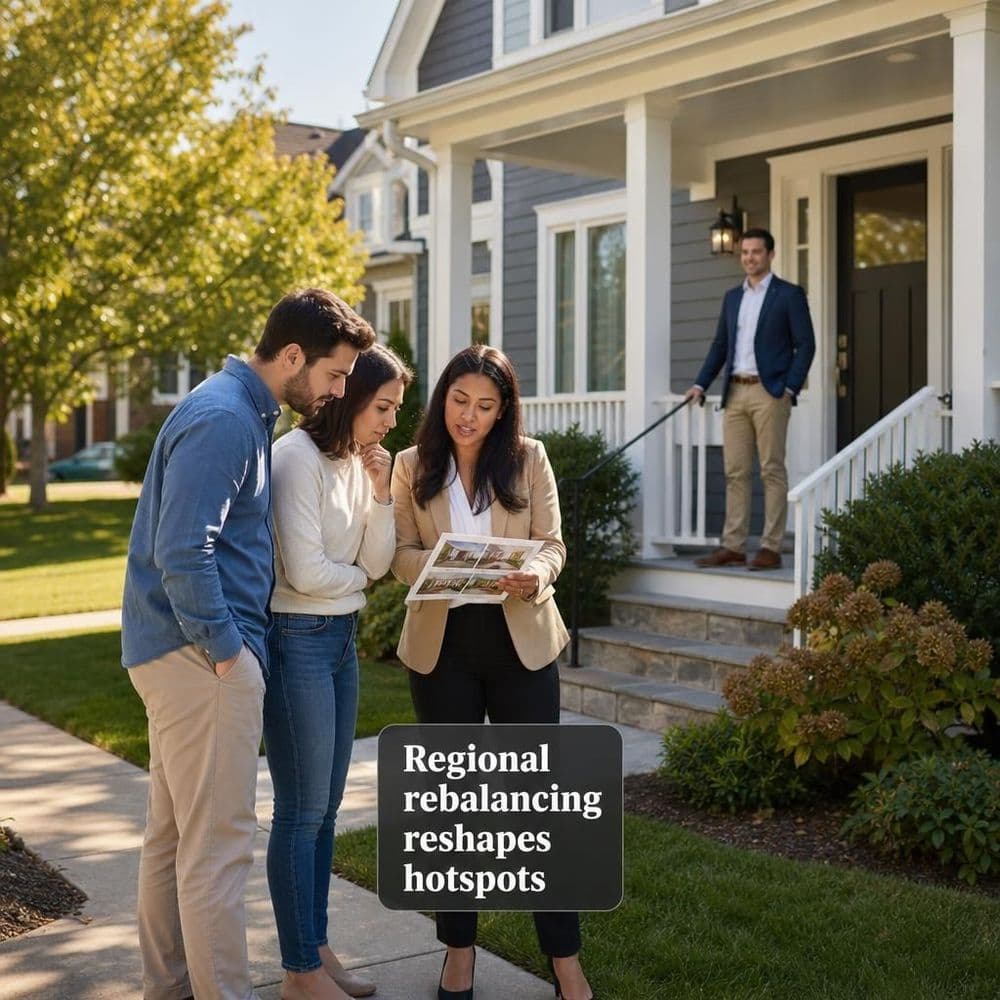
The national story is turning into many local stories
A single national home-price headline is getting less useful. New releases and local market snapshots point to a market that’s rebalancing unevenly: some regions are still strong enough to set new price records, while others are cooling as inventory improves and buyers push back. Cotality describes this period as a new phase of ‘regional rebalancing,’ with price growth varying meaningfully by geography. [businesswire.com]
The practical implication: you can’t assume your market is doing what the national average is doing. You have to look at inventory, time on market, and how many listings are sitting without offers — because those are the mechanisms that determine whether prices keep climbing or start to soften.
Where prices are still rising or setting records
Some markets are still printing record medians in mid-2026, reflecting the basic math of tight supply meeting steady demand. Even if the broader market slows, constrained inventory can keep pushing the median higher — especially for move-in-ready homes in commutable areas.
This dynamic also shows up in ZIP-level ‘hotspot’ lists, where demand concentrates in specific neighborhoods rather than spreading evenly across a metro. In Realtor.com’s ‘hottest markets’ coverage (as summarized by Fox Business), the tightest pockets tend to be defined by a combination of limited supply and quick turnover. [foxbusiness.com]
Where cooling is showing up first
Cooling isn’t always a crash — it often starts as a shift in leverage. In Las Vegas, Realtor.com reported the median single-family sale price dipped to $480,000 in July 2026, down 1% year over year and about 2% from the earlier-summer peak. The same report described inventory near four months of supply and thousands of listings without offers, conditions that can slow price momentum. [realtor.com]
In Fresno County, local coverage described home sales improving as sellers adjusted pricing. The underlying message is that buyers are still present, but affordability pressure makes them more selective — and less willing to bid up listings that start out overpriced. [abc30.com]
Affordability is increasingly ‘engineered’ market by market
As the market becomes more local, affordability solutions are also getting more targeted. Housing New Mexico launched a pilot that offers qualified buyers a permanent 1 percentage-point mortgage-rate reduction on eligible newly built homes. Tools like this don’t change the sticker price, but they can change monthly payment math enough to widen the buyer pool for certain new-construction listings. [organmountainnews.com]
Local governments are also using direct subsidies to lower purchase prices for income-qualified buyers. In Bend, Oregon, the City awarded $650,000 to offset development and construction costs at a specific project, with the stated goal of lowering purchase prices for buyers at or below 80% of area median income. [ktvz.com]
Action checklist for buyers, sellers, and investors
Here’s a practical way to operate in a rebalancing market:
- **Buyers:** focus on current active inventory and the most recent closed comps; ask how many similar listings have no offers; negotiate price, credits, or rate buydowns where supply is improving.
- **Sellers:** price to sell from day one and monitor competing listings weekly; the ‘list high and cut later’ strategy can backfire if conditions are softening.
- **Investors:** underwrite conservatively; expect slower appreciation where supply is building and faster absorption (but tougher entry pricing) in hot ZIP pockets.
The bottom line: 2026 is increasingly about micro-markets. Two places can both be ‘healthy’ — one with record medians and another with flatter prices — because the local balance of supply, affordability, and demand sets the clearing price. [businesswire.com]
Comments