
Blog
Regulators Escalate Crackdown on Alleged Landlord Rent Collusion, With and Without Algorithms
7 min read
December 23rd, 2025
A nationwide wave of rent‑collusion enforcement
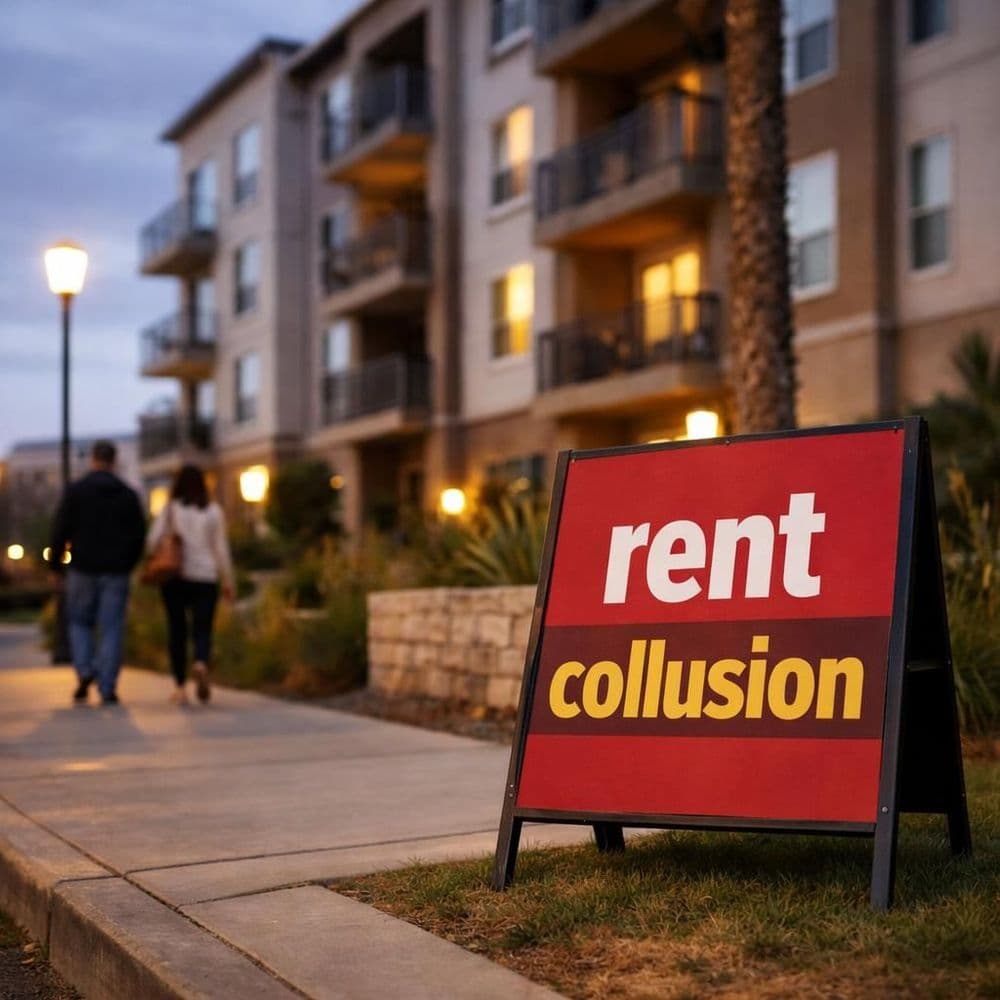
Over the past year, a growing list of state and local enforcement agencies has turned its attention to alleged rent collusion among large landlords. The early headlines focused on RealPage, a major provider of revenue management software for apartment operators, but recent cases make clear that regulators are just as interested in the conduct of landlords themselves.
In Washington, D.C., officials announced a settlement with William C. Smith & Co. (W.C. Smith), which owns more than 9,000 units in the District. The agreement requires the company to pay over $1 million and prohibits it from using RealPage’s revenue management system after allegations that it shared non‑public rent data with competitors and helped fix prices affecting more than 50,000 apartments in large multifamily buildings.[oag.dc.gov]
North Carolina recently secured its own settlement with Cortland Management, one of the state’s largest landlords and owner of more than 5,000 units in the Triangle. The deal bars Cortland from using AI‑driven tools like RealPage that rely on confidential landlord data to set rents and was negotiated as part of a broader federal case challenging RealPage’s practices.[wral.com]
New Jersey has taken a more sweeping approach, filing suit against 10 large landlords along with RealPage. The complaint alleges the firms shared confidential, proprietary rent information and used the software’s "anticompetitive algorithm" to push prices higher, forming what the state describes as a rent‑setting cartel.[newjerseymonitor.com]
California’s enforcement arm has likewise announced a settlement with Greystar, one of the country’s largest apartment operators, over similar allegations of using RealPage to coordinate rents across hundreds of properties in the state.[latimes.com]
Taken together, these actions signal a wider crackdown on coordinated rent hikes, whether they occur through an algorithmic platform or more traditional information‑sharing.
How RealPage and revenue management software drew scrutiny
RealPage’s revenue management products use detailed rent, occupancy, and leasing data from participating landlords to generate daily pricing recommendations for multifamily units. According to enforcement agencies, that data often includes non‑public, competitively sensitive information about nearby competitors, which can be used to align asking rents across a market.[theverge.com][reuters.com]
Federal officials alleged that, as landlords followed those recommendations, the software effectively replaced normal competition with coordinated price increases, nudging owners to raise rents in tandem and discouraging discounting. RealPage has denied wrongdoing but agreed to significant limits on how its products can use data to set rents.[theverge.com][reuters.com]
Under a recent federal settlement, RealPage must stop using recent non‑public data from landlords to power its rent‑setting algorithms, limit certain "hyperlocalized" pricing features, and redesign or remove functions that tend to keep rents from being lowered even when demand softens.[theverge.com][reuters.com] The company will also operate under a multiyear monitoring regime and tighter oversight of its data practices.[reuters.com]
These changes are intended to reduce the risk that software‑driven recommendations can be used as a vehicle for coordinated rent hikes, even when competing landlords never communicate directly.
Case studies: DC, North Carolina, New Jersey, and California
District of Columbia: W.C. Smith
In the District, officials accused W.C. Smith of participating in a price‑fixing cartel by feeding RealPage confidential rent, occupancy, and leasing data from its portfolio and following the software’s revenue‑maximizing recommendations. The settlement requires W.C. Smith to pay $1,050,000 in penalties, tenant relief, and fees, and to overhaul its rent‑setting practices.[oag.dc.gov][oag.dc.gov]
Going forward, W.C. Smith is prohibited from using revenue management software that relies on non‑public or confidential data from other landlords, and from encouraging others to adopt such tools. The case is notable because it targets the landlord’s conduct directly while a separate lawsuit continues against RealPage and other owners.[oag.dc.gov]
North Carolina: Cortland Management
North Carolina’s settlement with Cortland Management focuses on the use of AI tools to inflate rents on more than 5,000 units in the Triangle region, representing roughly one‑third of all 1‑ to 3‑bedroom rentals there.[wral.com] The state alleged that landlords using RealPage’s software allowed rents to be set in competition with "ghost" prices generated by the algorithm rather than true market conditions.[wral.com]
Under the agreement, Cortland is barred from using RealPage or similar platforms to set rents in the state and must rely on independent pricing methods that do not depend on competitors’ non‑public data. The case underscores that even a single large landlord can face major restrictions if its pricing practices are found to rely on coordinated data‑sharing.
New Jersey: suit against 10 landlords and RealPage
New Jersey’s lawsuit sweeps in RealPage and 10 of the state’s largest landlords, including several national multifamily operators. The complaint alleges that, by pooling confidential rent rolls and occupancy data into RealPage’s system and following its algorithmic recommendations, the defendants caused rents to "balloon" for thousands of renters and contributed to a statewide shortfall of affordable units.[newjerseymonitor.com]
Unlike the DC and North Carolina matters, which have already produced settlements with individual landlords, the New Jersey case remains active. For operators with regional or national portfolios, it illustrates how participation in shared pricing platforms can generate exposure in multiple states at once.
California: Greystar
In California, officials announced a settlement with Greystar, the nation’s largest apartment operator, in connection with a broader federal case targeting RealPage and several big landlords.[latimes.com][propublica.org] Greystar manages nearly one million apartments nationwide and roughly one‑third of a million units in California that previously relied on RealPage’s pricing software.[latimes.com]
Under the agreement, Greystar will stop using rent‑setting software offered by any company, including RealPage, if it depends on competitively sensitive data from other landlords to align rents. The firm also agreed to cooperate in ongoing litigation against RealPage and other owners, making it a key player in the broader enforcement push.[latimes.com][propublica.org]
What this means for landlords, investors, and renters
For landlords, the main lesson from these cases is that rent‑setting is no longer just a back‑office operations issue—it’s a live compliance risk. Using systems that ingest non‑public competitor data or mechanically following algorithmic rent targets can be characterized as coordinated pricing, especially when multiple large operators rely on the same platform.
Operators that continue to use pricing tools should understand exactly what inputs those systems rely on, document independent judgment when accepting or rejecting software recommendations, and avoid any arrangement that involves sharing confidential rent or occupancy data with direct competitors. Legal and compliance teams should treat revenue management vendors the same way they would any other high‑risk third party.
Investors and lenders may also need to revisit assumptions about rent growth and pricing power in markets where RealPage and similar tools were heavily used. If enforcement actions and new data restrictions limit future rent increases, pro formas based on aggressive rent growth tied to algorithmic pricing could prove optimistic.
For renters, these cases could bring some relief at the margins, especially in buildings or markets where landlords stop using tools that encouraged coordinated rent hikes. But the broader affordability challenge—driven by limited supply, high construction costs, and strong demand—will still depend on new construction, preservation of existing affordable units, and local policy choices beyond the scope of these enforcement actions.[theverge.com][reuters.com]
Comments