
Blog
Renting vs. Buying in 2026: Why Monthly Ownership Costs Now Beat Rents in Many Metros
6 min read
September 8th, 2026
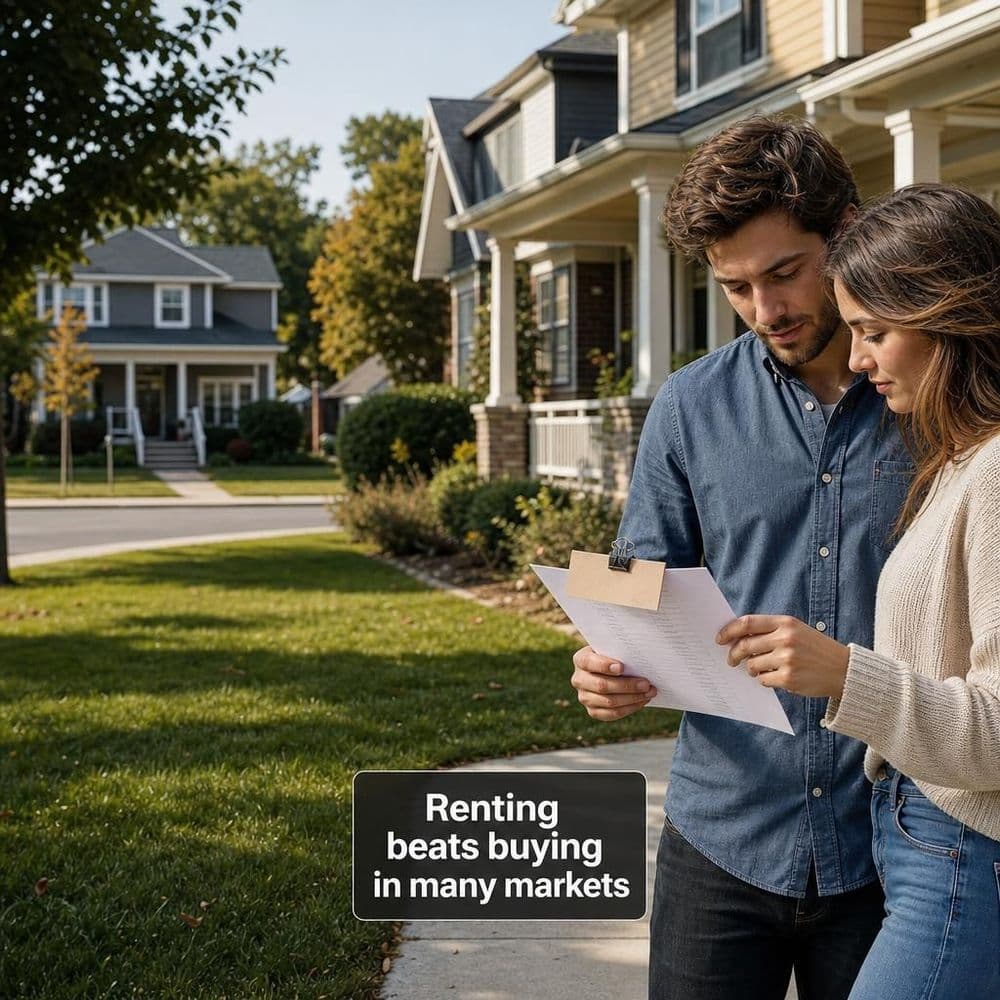
What changed: the monthly payment shock
The core reason the rent-versus-buy math feels different in 2026 is simple: financing costs stayed high even as home prices remained elevated. Freddie Mac’s Primary Mortgage Market Survey shows the average 30-year fixed rate at 6.71% as of 2026-09-03, keeping monthly payments expensive for new buyers. [freddiemac.com]
That rate environment means the *same purchase price* translates into a much larger monthly obligation than it did when rates were near 3%. When you add property taxes, homeowners insurance and ongoing maintenance, the all-in monthly cost to own can easily exceed market rent in many metros. [briefs.co]
What the latest rent-vs-buy models say
Zillow’s 2026 rent-versus-buy analysis still finds that buying can beat renting nationally — but not right away. For the typical U.S. single-family home, Zillow estimates a buy-versus-rent breakeven of about 5.9 years with 5% down and about 6.0 years with 20% down under then-current market conditions. [zillow.com]
Critically, the breakeven timeline varies dramatically by market. Zillow highlights several high-cost metros where renting remains ahead even across a full 30-year horizon — a reminder that “buying is always better” is not a universal rule. [zillow.com]
Why renters still have leverage (for now)
Even as rent growth has re-accelerated, renters in many areas are still seeing deals. Zillow reports that the typical U.S. asking rent was $1,962 in July 2026, and 39.8% of rentals on Zillow offered a concession that month. Concessions can reduce the effective monthly rent — which widens the gap versus owning when mortgage rates are high. [investors.zillowgroup.com]
Zillow also notes that comfortably affording the typical rental requires about $78,488 in annual income, compared with nearly $99,800 to afford a typical mortgage payment — a gap of more than $21,000. [investors.zillowgroup.com]
How to use this in a real decision
The most important inputs aren’t just today’s rate or today’s rent — they’re your *time horizon* and *risk tolerance*. If you might move within a few years, the up-front costs of buying (down payment, closing costs and eventual selling costs) can make renting the lower-cost choice even if the monthly payment is close. [zillow.com]
If you expect to stay put longer than the breakeven window and you have a healthy cash buffer after closing, buying can still build wealth over time in many markets — but the timeline is longer than many households got used to in the low-rate years. [zillow.com]
A practical way to ground the decision is to compare apples to apples: would you be renting a comparable single-family home (often pricier, but closer to a purchase substitute) or an apartment? In 2026, Zillow reports single-family rents running higher than multifamily rents, reflecting different supply dynamics. [investors.zillowgroup.com]
**Takeaway:** In 2026, renting is increasingly the cheaper *monthly* choice in a lot of places. Buying can still be the better long-run financial move in some markets, but you should treat the breakeven timeline as a key constraint, not a footnote. [zillow.com]
Comments