
Blog
How Accidental Landlords and Wall Street Investors Are Rewriting the U.S. Rental Market
7 min read
December 12th, 2025
What is an “accidental landlord”?
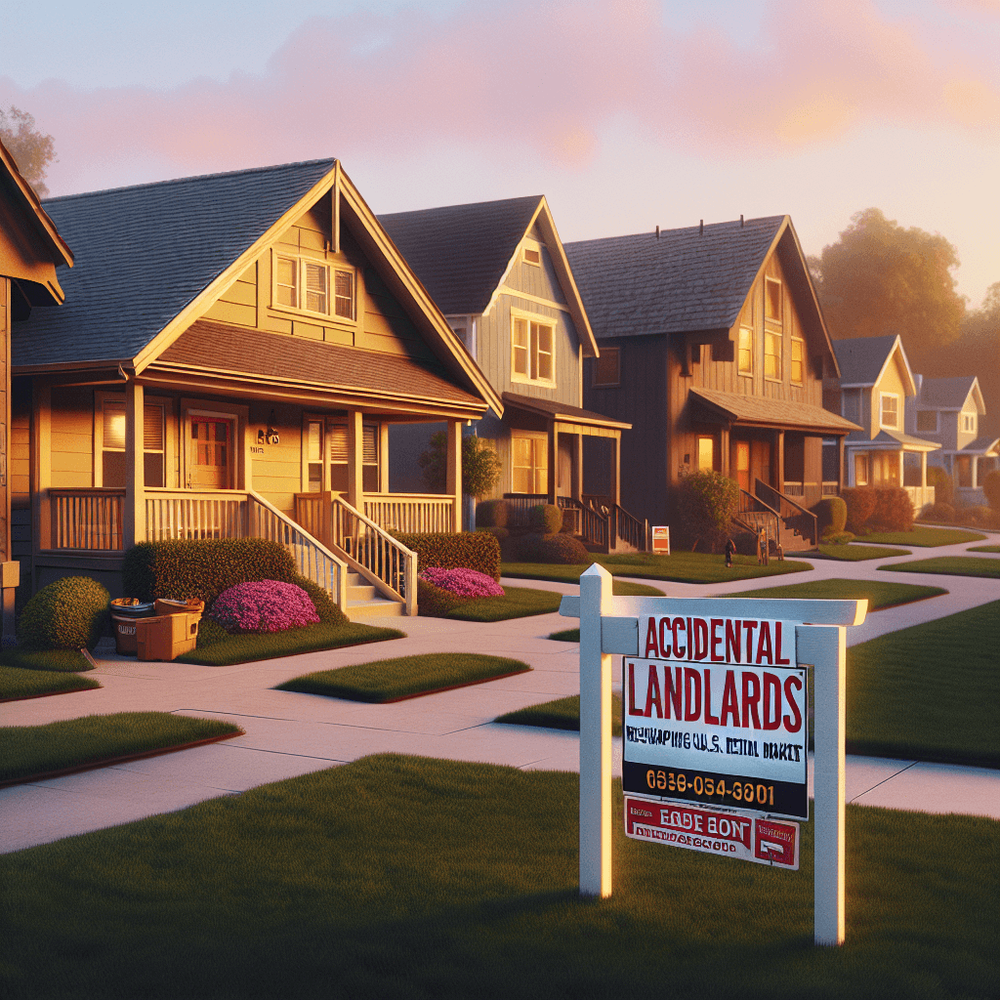
In 2025, more U.S. homeowners are finding themselves renting out properties they never bought as investments. These “accidental landlords” might have outgrown a starter home, moved for work, or combined households — but instead of selling, they list the old place for rent.
The biggest driver is the gap between today’s mortgage rates and the ultra-low loans many owners locked in from 2020–2021. Owners with fixed rates in the 2%–3% range often can’t replicate those payments on a new home, so selling feels painful. Keeping the old house and renting it out lets them keep the cheap debt while someone else helps service it.
Reporting suggests this trend is strongest in markets that saw big price run-ups during the pandemic and now face slower sales — Sun Belt metros, popular migration destinations and some Western suburbs.[nytimes.com] In these areas, renting instead of selling can be the easier, faster way to cover costs when buyers have become more price-sensitive.
How accidental landlords change local rental supply
Accidental landlords typically add scattered, small-scale rentals — often single-family homes, townhomes or condos — into neighborhoods that were once dominated by owner-occupants. That increases choices for renters who want a yard, a garage or access to specific school districts but don’t want or can’t afford to buy.
In some metros, this shift is colliding with a second force: the continued growth of large companies that buy single-family homes to operate as rentals at scale. NPR’s Planet Money has highlighted how private equity-backed firms have accumulated large numbers of homes in certain subdivisions and metro areas, shaping both rents and who can realistically compete to buy homes there.[npr.org]
The influx of accidental landlords can work in two directions. In neighborhoods where institutional investors were already active, more individual owners renting out homes may slightly increase supply and soften rent growth for some property types. But these small landlords can also become future sellers to those same large buyers when they burn out on managing tenants and maintenance.
From a renter’s perspective, the experience can be very different. Corporate landlords may offer more standardized processes, online portals and 24/7 maintenance lines, but also more rigid policies and fees. Accidental landlords, by contrast, might be more flexible on terms but less professional in screening, repairs and compliance.
Rent growth, inflation and affordability pressures
Even with new supply from both small and large landlords, rents remain historically high. NerdWallet, using data from the Bureau of Labor Statistics, notes that in the September consumer price index report, rent was 3.5% higher year over year, while the broader shelter index rose 3.6%, both still above overall inflation.[nerdwallet.com]
Zillow’s rental market analysis, cited in the same report, estimates that typical asking rent was $1,979 in September, up 2.3% from a year earlier and about 35% above pre-pandemic levels.[nerdwallet.com] Rent growth has cooled sharply from the 2021–2022 spikes and is now closer to — or slightly below — pre-2020 norms, but the level of rents remains a major burden. NerdWallet reports that the typical renter household now spends roughly the high‑20s percent of income on rent.[nerdwallet.com]
At the same time, landlords are increasingly offering concessions. Zillow data shows more than a third of rental listings nationally advertised perks like one free month or reduced deposits, with especially high concession rates in metros such as Memphis, Denver, Houston, Orlando and Las Vegas.[nerdwallet.com] That suggests local oversupply or intense competition among landlords, even while national indexes still show rents rising faster than inflation.
Winners and losers in the new rental landscape
For small owners, becoming an accidental landlord can look like an easy win: keep a low-rate mortgage, collect rent and let time and inflation work in your favor. In practice, many underestimate the costs of vacancies, repairs, property taxes, insurance and professional management. They also may not fully understand local landlord-tenant regulations or fair housing rules, which can create legal and financial risks.
Large institutional landlords bring scale advantages — centralized maintenance, data-driven pricing and access to cheaper capital — but also face scrutiny over fees and renewal hikes. Research and reporting on markets where private equity has bought large blocks of homes shows a mixed picture: some findings suggest these firms can stabilize or even modestly reduce rents in certain neighborhoods by investing in distressed properties and maintaining consistent standards, while others highlight concerns about higher fees and barriers to homeownership.[npr.org]
Renters are caught in the middle. In neighborhoods with a surge of both accidental and institutional landlords, they may have more options and more negotiating power up front — especially where concessions are common — but still face high baseline rent levels and uncertainty about future increases. In tighter markets with little new construction, any extra single-family rentals can relieve pressure at the margins but won’t fully solve broader affordability challenges.
What to watch next in single-family rentals
Looking ahead, the fate of accidental landlords depends heavily on interest rates, home prices and local labor markets. If mortgage rates fall meaningfully, more of today’s accidental landlords may decide to sell and trade up, reducing single-family rental supply but potentially easing purchase prices for would-be owner-occupants. If rates stay elevated, renting the old home could remain the default choice after a move.
Institutional buyers are watching the same variables. When borrowing costs drop or distress increases, bulk acquisitions of single-family homes can ramp up quickly, especially in Sun Belt and Midwestern metros with strong population growth. That could mean more professionalized rentals — and more competition for both buyers and small landlords.
For now, renters should assume a world where rent growth is slower but still positive, and where single-family rentals are a more permanent fixture of the U.S. housing landscape. Whether that ultimately improves affordability will depend less on the split between accidental and corporate landlords and more on fundamentals: how much new housing gets built, how quickly wages grow, and how successfully local policies support a balanced mix of owned and rented homes.
Comments