
Blog
Rents Keep Climbing While Landlords Say They’re Squeezed: What’s Really Happening in the U.S. Rental Market?
9 min read
December 25th, 2025
Rents Are Still Rising Faster Than Inflation
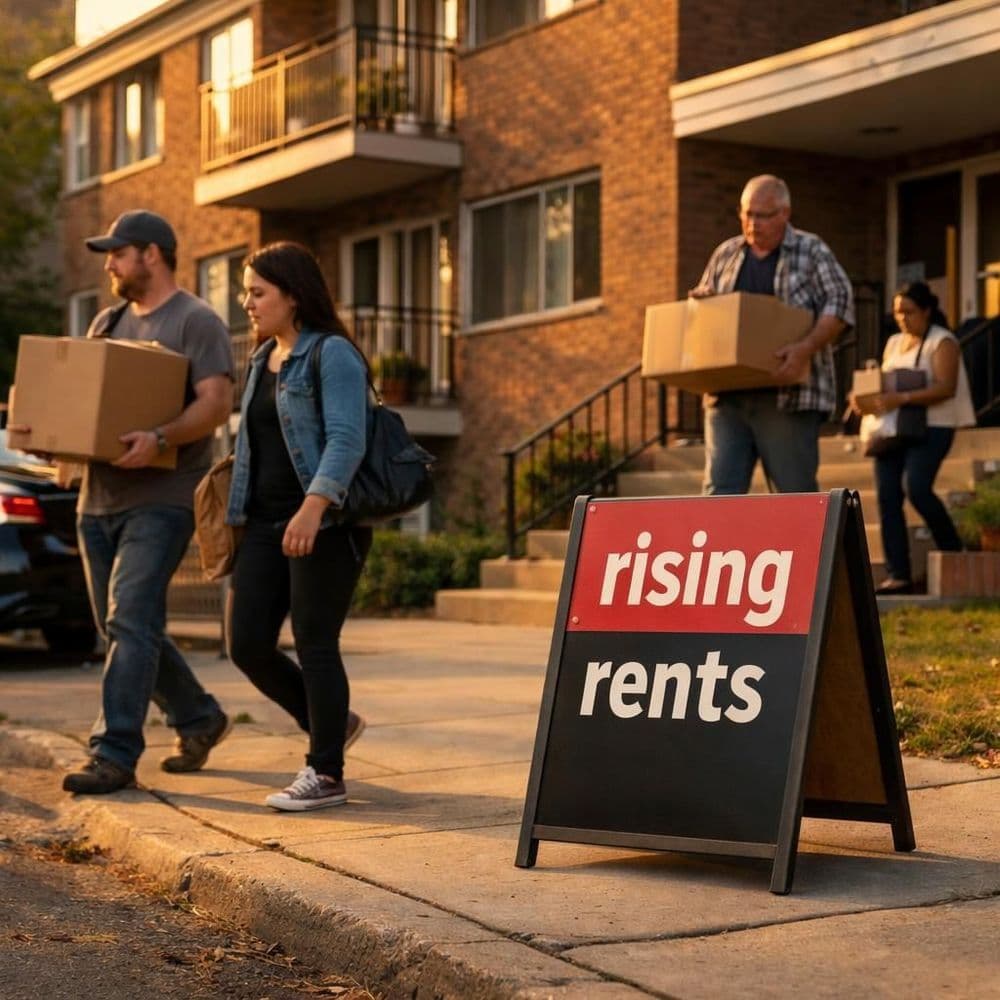
Nationally, asking rents have cooled from the double‑digit spikes seen during the pandemic, but they are still growing faster than overall consumer prices. NerdWallet notes that recent consumer price index data shows rent inflation running ahead of headline inflation, meaning housing costs continue to eat a bigger share of household budgets even as other items stabilize or fall.[nerdwallet.com]
That aggregate trend hides big differences by metro and property type. In some coastal and Sun Belt markets, new supply has taken a bit of heat out of the market, while in others—especially job-rich coastal areas with limited new construction—tight vacancy keeps upward pressure on rents. Regardless, for many renters, the math is simple: incomes have not kept pace with cumulative rent increases since 2020, so even “moderate” annual hikes feel punishing.
When Subsidies Can’t Keep Up: Cleveland and Tulsa Voucher Strains
The tension between rising rents and limited ability to pay is especially stark in the voucher market. In Cuyahoga County, the Cuyahoga Metropolitan Housing Authority (CMHA) recently asked landlords who rent to Housing Choice Voucher holders not to raise their contract rents, warning of a potential voucher budget shortfall by year’s end.[signalcleveland.org] CMHA administers roughly 16,000 vouchers, and officials cautioned that higher landlord payment requests could force the agency to terminate assistance contracts or shift more of the rent burden onto low-income tenants.
The agency’s letter framed the issue as a trade‑off: if many landlords raise rents at once, CMHA may have to cut back on the number of families it can serve or require existing tenants to shoulder larger out‑of‑pocket payments. For a household already spending close to its limit, even a modest rent increase can translate into missed bills or the need to move in a tight market.
A similar strain is playing out in Tulsa. Local coverage of the Tulsa Housing Authority (THA) describes more than 10,000 residents who rely on rental assistance facing uncertainty as some landlords request substantial rent hikes while THA confronts funding cuts.[ktul.com] When the authority cannot approve the full requested increase, some owners have declined to renew contracts at current payment levels. The result: tenants receive notices that their assistance will end at a given property and are forced to search for new housing that will accept their voucher before the clock runs out.
These stories underscore a key structural problem: voucher payment standards adjust more slowly and are capped, while landlord costs can jump quickly due to insurance hikes, tax reassessments or major repairs. When that gap widens, landlords may exit the voucher program, and tenants lose rare sources of deeply affordable housing.
Tight Coastal Markets: Marin County’s Harrowing Apartment Hunt
On the West Coast, a first‑person report from Marin County, California, illustrates how tight conditions feel from the tenant side. The writer describes spending weeks searching for a reasonably priced apartment in a county where supply is constrained, competition is fierce and even solid applicants are repeatedly turned down.[pacificsun.com] Many listings drew multiple qualified renters, leaving little room to negotiate on price or terms.
Landlords and property managers in Marin, meanwhile, point to their own challenges. They cite sharply higher insurance premiums, rising property taxes and the cost of bringing older buildings up to current safety and habitability standards as reasons they push for higher rents when units turn over.[pacificsun.com] Some owners also mention that local limitations on short‑term rentals have nudged them to keep more units in the long‑term market, but often at rent levels they believe are necessary to cover costs and compensate for added regulatory risk.
This mix—low vacancy, high-income demand, and expensive, highly regulated housing stock—helps explain why Marin’s rents remain elevated even when regional rent growth slows. Tenants experience the outcome as a series of rejections and bidding wars; small landlords experience it as a constant need to weigh higher asking rents against the risk of extended vacancy and stricter compliance obligations.
San Francisco’s ‘Landlord’s Market’ and Uneven Rent Gains
Nearby San Francisco offers another window into the current cycle. The San Francisco Chronicle reports that, in 2025, higher‑end apartments in desirable neighborhoods are renting for roughly 7% to 8% more than a year earlier, while smaller and older units are seeing little to no growth.[sfchronicle.com] Property managers describe what they call a “landlord’s market” for well‑located, updated units, with some listings attracting multiple applications and occasional bidding wars.
At the same time, the article notes that not every landlord is thriving. Owners of older, rent‑regulated or less centrally located buildings may struggle to achieve similar increases, especially if they face major repair needs or higher insurance and utility bills.[sfchronicle.com] For them, the gap between what the market will bear and what it costs to operate the property has narrowed, even as headline statistics suggest landlords as a group are benefiting from rising rents.
That divergence within a single metro is a useful reminder: “the rental market” is not monolithic. A professionally managed, amenity‑rich building serving higher‑income renters may be able to raise rents and still lease units quickly, while a small owner with an aging triplex on the edge of town competes on price and absorbs many of the same cost pressures.
Are Landlords Really Squeezed—or Just Passing on Costs?
Across these examples, a common pattern emerges. On the revenue side, rents are up—in many cases outpacing inflation and income growth.[nerdwallet.com] On the expense side, landlords report higher line items for insurance, property taxes, labor and materials for repairs, utilities and compliance with local safety and rental rules.[pacificsun.com][sfchronicle.com] The net impact on margins depends heavily on property type, financing, and whether a landlord can actually collect higher rents given local demand and legal limits.
For voucher units in Cleveland and Tulsa, rising landlord costs run into hard program caps.[signalcleveland.org][ktul.com] Authorities have limited flexibility to approve large jumps in payment standards in a single year, especially when federal funding is flat or declining. In those cases, landlords may feel legitimately squeezed—but the practical consequence is that tenants with the least ability to pay face displacement risk if owners exit the program.
In high‑cost coastal markets like Marin and San Francisco, small landlords describe a different squeeze: regulations and fixed costs feel heavier, even as market conditions allow some rent growth.[pacificsun.com][sfchronicle.com] Renters there face intense competition and high asking rents, which feeds a public perception that landlords are uniformly “winning.” Yet when a roof replacement, seismic retrofit or insurance renewal comes due, a single expense can erase years of incremental rent increases for a small owner.
For industry participants, the challenge is not to pick a side but to understand the full pro forma. Sustainable solutions—whether they involve adjusting voucher payment standards, offering targeted tax or insurance relief for small landlords who keep units affordable, or streamlining compliance without weakening tenant protections—depend on recognizing that both tenants and many owners are operating close to the edge.
For renters and investors alike, the takeaway is to look beyond headline rent trends. Ask how quickly local payment standards and wages are moving, how concentrated rent growth is within certain submarkets, and how rising operating costs are reshaping which units stay in the affordable stock. That’s where today’s “landlord’s market” looks far more nuanced than the averages suggest.
Comments