
Blog
ROAD to Housing Act signing pause: what’s in the bill and why uncertainty matters for housing supply
8 min read
June 26th, 2026
What changed in late June 2026
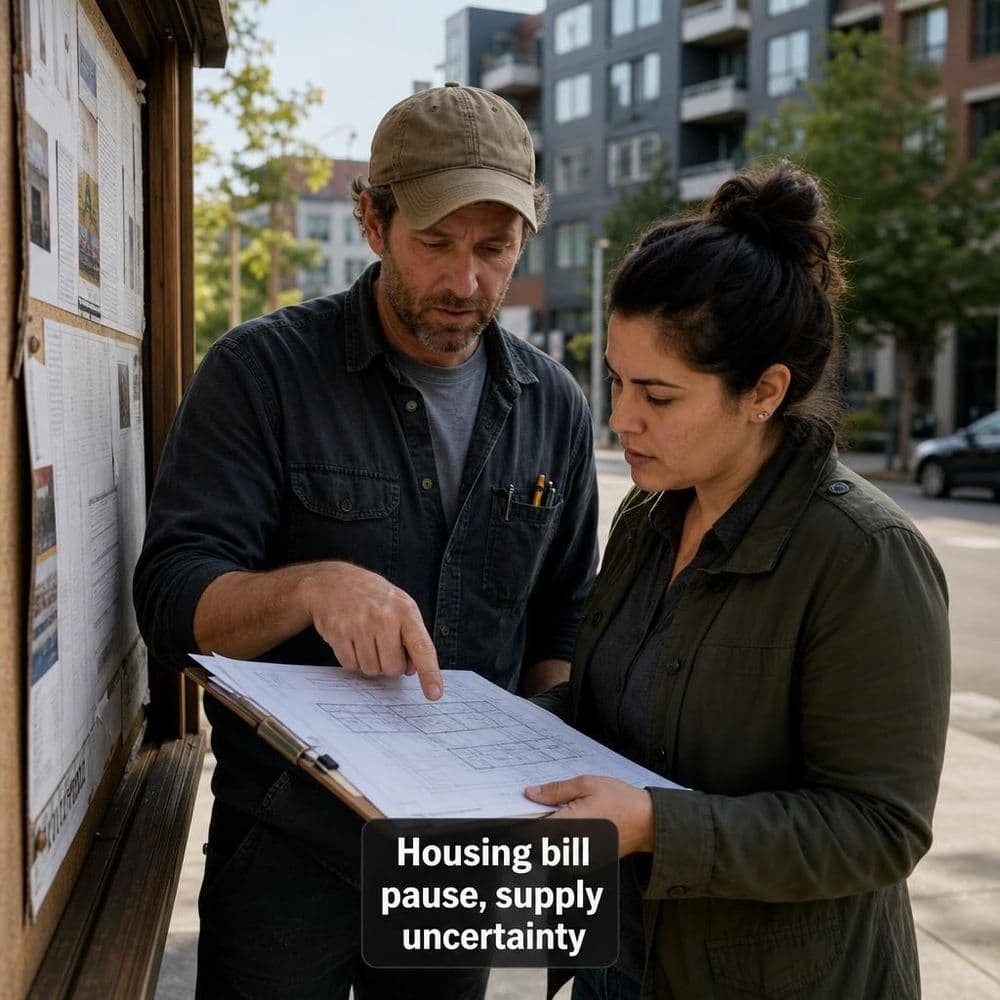
In late June 2026, Congress advanced a large housing affordability package known as the 21st Century ROAD to Housing Act, but the planned signing was paused. For housing markets, that matters most because it creates an unclear timeline for rules and programs that builders and local agencies were beginning to factor into plans. [abcnews.com]
Coverage also emphasizes that even if the package ultimately becomes law, affordability effects would take time to show up. Builders can’t instantly add inventory, and agencies still have to translate legislative language into guidance and program details. [abcnews.com]
Why a pause can slow housing supply
Housing supply responds to a mix of financing conditions, labor and materials, and—crucially—certainty about timelines. When policies aimed at streamlining construction or expanding financing are "possible but not yet real," some projects get re-underwritten under current rules and set aside if they no longer pencil out. That dynamic hits smaller infill and entry-level projects hardest because they’re most sensitive to carrying costs and delays. [abcnews.com]
Manufactured housing provisions to watch
Manufactured housing is a key affordability channel because it can deliver lower-cost homes—especially in markets where land and labor make site-built starter homes difficult. One local industry-focused report says the package would remove a long-standing requirement tied to steel chassis frames, and cites estimates of roughly $8,000–$10,000 in per-home savings associated with that change. [kplctv.com]
The same report argues the bigger impact could come through financing and valuation. Manufactured homes are often financed as personal property (chattel), which can carry higher rates than traditional mortgages. If rules and market practice shift more units toward real-property style financing, the buyer pool can expand and monthly payments can fall for qualified borrowers—though that depends on implementation and lender uptake. [kplctv.com]
Separately, an official press release describing provisions associated with the package says it would empower FHA to expand statutory loan limits for manufactured homes and ADUs by an average of 107% across loan types. If that change is implemented, higher FHA caps could increase access to government-backed financing in lower-cost segments where current limits can be binding. [pappas.house.gov]
ADUs and small-scale infill supply
Accessory dwelling units (ADUs) are another "incremental supply" lever: they don’t solve a regional shortage alone, but they can add units in built-out neighborhoods where new multifamily development is difficult. Coverage of the package highlights themes of broadening financing access for homeowner-created rental units. [abcnews.com]
The practical caveat is timing. Even with supportive policy, most ADU additions are household-by-household decisions, and permitting capacity, contractor availability, and neighborhood rules still shape how fast they appear. [abcnews.com]
Investor purchase limits: what they can and can’t do
The package is also framed as limiting large investor purchases of single-family homes. In markets where investor demand is concentrated, targeted limits could reduce competition for certain entry-level homes. But effects would likely vary by metro, and they may not offset the larger affordability drivers if supply remains constrained. [abcnews.com]
What to monitor next
Until the timeline is clear, the risk is that uncertainty delays the very pipeline the bill is designed to speed up. Practical watch items:
- Whether and when the package becomes law
- Any early agency guidance that clarifies effective dates
- Whether local governments position themselves to use any incentives tied to permitting or zoning reforms
If the pause extends, the biggest near-term consequence may be "inventory later," rather than any immediate change in today’s listing prices or rents. [abcnews.com]
Comments