
Blog
Southern cities are losing their affordability edge: how migration, supply, and rates are reshaping housing costs
6 min read
June 30th, 2026
Why the South’s affordability story changed
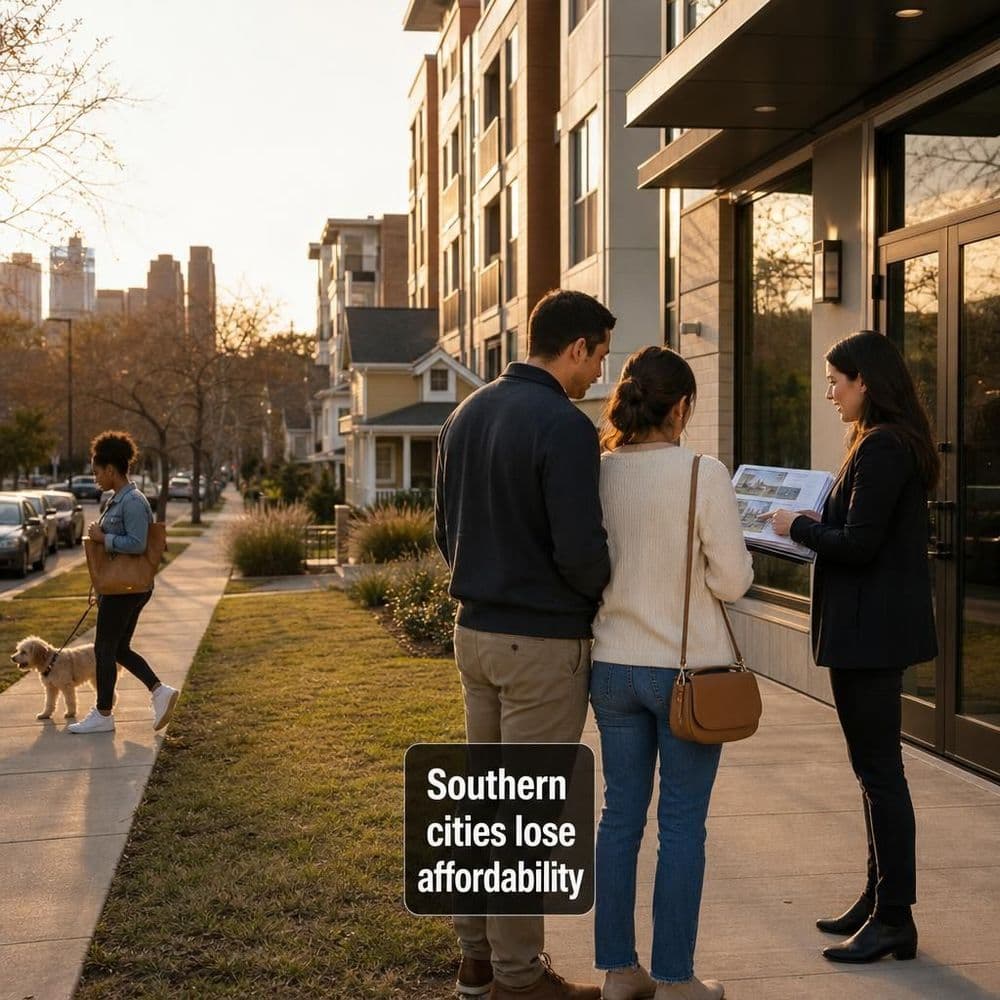
For years, many Southern metros were magnets for households seeking a lower cost of living. That reputation is now colliding with sustained in-migration and housing costs that have risen faster than many local paychecks—particularly in fast-growing, amenity-rich neighborhoods.
One macro signal of that demand: the U.S. Census Bureau’s Vintage 2025 population estimates show the South grew 6.0% from April 1, 2020 to July 1, 2025, compared with 3.1% for the U.S. overall. [census.gov] When a region adds people faster than it adds housing—especially entry-level homes and mid-priced rentals—affordability can deteriorate quickly.
The monthly payment problem: prices plus rates
Even where price growth has cooled, borrowing costs remain a major barrier. Freddie Mac’s Primary Mortgage Market Survey shows the average 30-year fixed rate at 6.49% as of June 25, 2026. [freddiemac.com] In that rate environment, small changes in price translate into meaningful changes in monthly payment, which is why markets can feel unaffordable even without fresh headline-grabbing price spikes.
Another factor is resale inventory behavior. When many existing homeowners have much lower mortgage rates than what’s available today, fewer owners want to move, which can keep the pool of existing homes for sale tighter than would otherwise be expected—pushing more demand toward new construction or rentals.
Rents and the supply wildcard
Rental markets often absorb the shock when buying gets harder. If more households stay renters longer, that can support rent growth—particularly in submarkets with low vacancy.
But supply can flip the script. Redfin has highlighted Austin as an example where asking rents fell sharply, with the median asking rent down 16% year over year to $1,399 in January 2025. [redfin.com] The lesson isn’t that every Sun Belt metro will follow Austin; it’s that markets delivering substantial new inventory can see faster relief than those with constrained pipelines.
Practical takeaways for 2026
**Buyers:** anchor your search on the monthly payment (rate + price + insurance + taxes) and compare neighborhoods on total carrying cost, not reputation.
**Renters:** watch vacancy rates and concessions at the building level; they often shift before citywide averages do.
**Investors and operators:** the most important variable may be the local supply pipeline and absorption—because the same broad migration backdrop can produce very different rent outcomes depending on deliveries.
Bottom line: the South still has strong demand, but its affordability advantage is no longer automatic. In-migration and mortgage rates can raise the bar quickly when the market can’t add enough housing at the right price points. [bloomberg.com]
Comments