
Blog
Starter Homes Are Scarce, and New Builds Are Shrinking: What It Means for Entry-Level Buyers
6 min read
August 28th, 2026
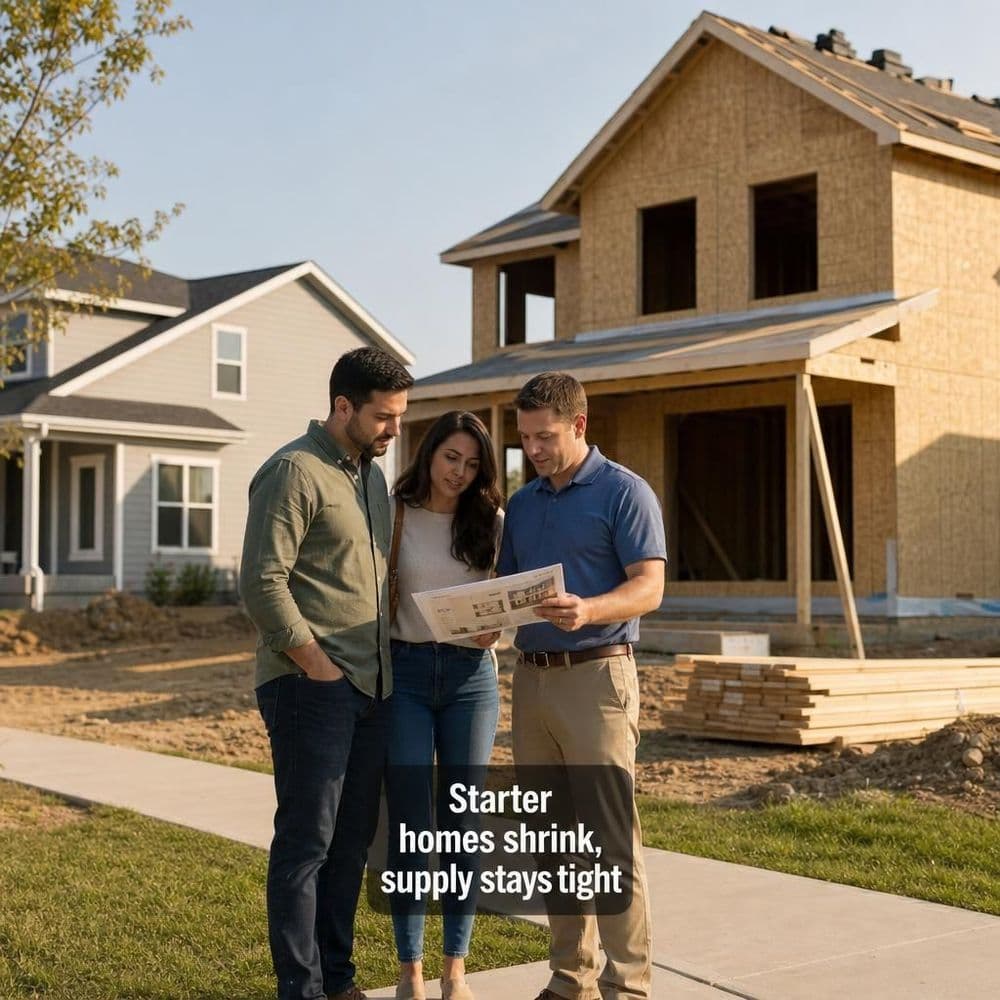
Why starter homes feel impossible to find
The starter-home crunch isn’t just about high prices—it’s about how few homes are actually trading. When turnover is low, entry-level buyers compete for a smaller pool of listings, and prices can stay firm even if sales volumes look soft. Axios highlights this mid-2026 pattern: existing-home sales are weak while many markets remain near price highs. [axios.com]
A key mechanism is “rate lock.” Many homeowners have mortgage rates far below what a new loan would cost today, so moving often means a payment jump. That keeps potential move-up sellers on the sidelines and reduces the flow of homes that can become tomorrow’s starter inventory. [axios.com]
New-home shrinkflation: what the size data shows
Builders can’t control mortgage rates, but they can adjust product. One common lever is square footage: smaller plans, smaller lots, and more standardized options to keep the headline price from rising as fast.
The NAHB’s Eye On Housing, using U.S. Census Starts and Completions data, reported a 2Q 2026 median new single-family floor area of about 2,185 square feet and an average of about 2,426 square feet. [eyeonhousing.org]
A separate consumer-facing lens looks at homes sold over time: USA TODAY (republished by AOL) cited analysis showing the average size of new single-family homes sold declined about 11.6% from 2015 to 2025 (2,724 to 2,409 square feet). [aol.com]
These can both be “true” because they draw from different datasets and time windows. NAHB also notes that the mix of what gets built and completed matters; if higher-end demand holds up better than entry-level demand, the average size of starts/completions can tick up even while entry-level product stays constrained. [eyeonhousing.org]
Affordability math: total price vs $/sq ft vs payment
A smaller home can lower the total purchase price, which helps with down payment and financing needs. But shoppers should also check price per square foot. If $/sq ft rises faster than size falls, you can pay more for less space. The USA TODAY/AOL analysis underscores that price-per-square-foot costs have risen even as homes shrink. [aol.com]
Then comes the monthly payment. When rates are elevated, payment sensitivity is high: small differences in price, taxes, or HOA dues can materially change what a first-time buyer can qualify for.
How to shop smarter in the entry-level segment
To compare a smaller new build against an older resale, focus on all-in cost:
- **Monthly payment, not just list price** (include HOA dues and estimate taxes realistically).
- **Price per square foot** as a quick “value check,” recognizing condition and location still matter.
- **Incentives**: confirm whether a rate buydown is temporary and what the payment becomes afterward.
- **Alternatives**: townhomes, condos, or older single-family stock can sometimes offer better location or space value even if finishes are dated.
Bottom line: smaller new homes are a rational response to affordability pressure, but they’re not a guarantee of affordability. Entry-level buyers need to compare payment, $/sq ft, and tradeoffs with clear eyes.
Comments