
Blog
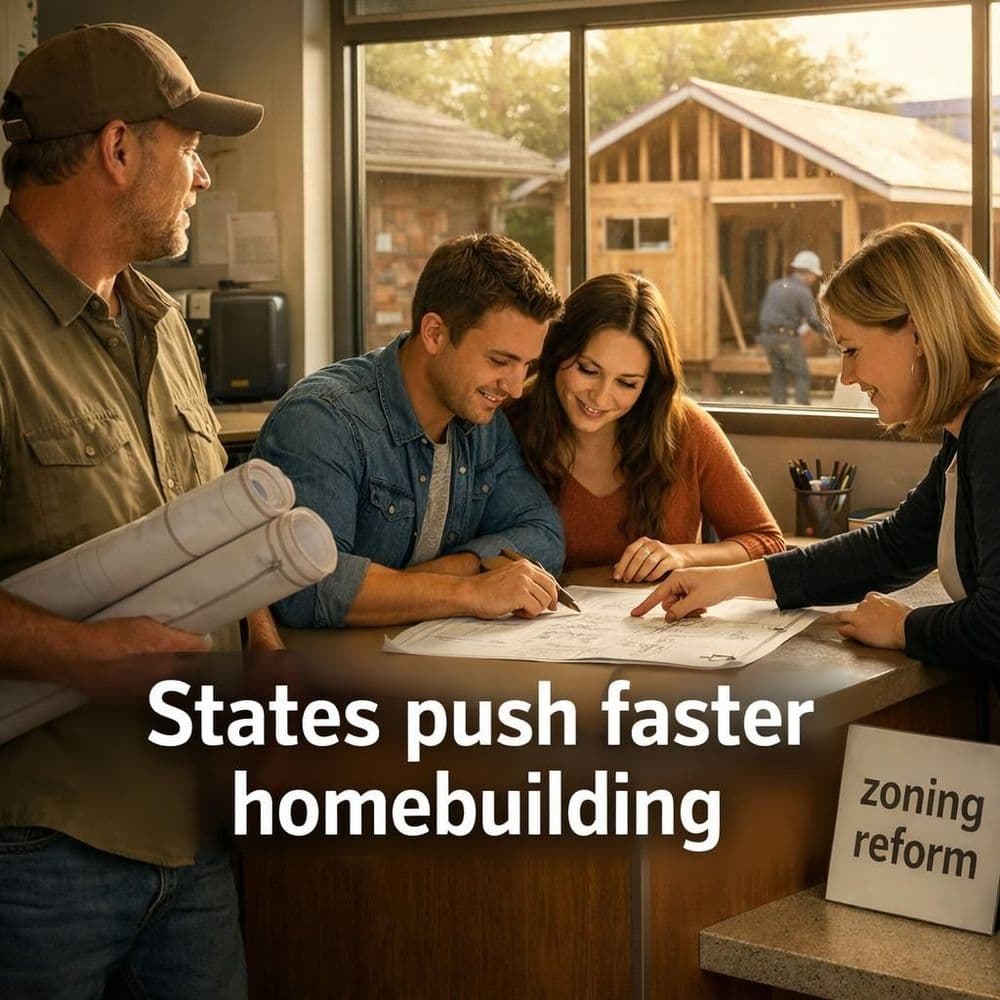
States advance pro-building policies to boost housing supply and lower per-unit costs
6 min read
February 19th, 2026
Why the supply-side agenda is accelerating
Housing affordability remains a binding constraint, and builders are still signaling a tough environment. In February 2026, the NAHB/Wells Fargo Housing Market Index (HMI) registered 36, and NAHB’s commentary emphasized affordability headwinds alongside the need for policies that expand attainable supply and reduce cost drivers. [nahb.org]
A related idea running through pro-building arguments is that years of home-price gains far ahead of incomes reflect a shortage dynamic—so the path back to affordability runs through more units and lower per-unit costs, not simply higher prices. [aei.org]
What ‘pro-building’ looks like in 2026
Across different states, many proposals converge on a similar toolkit—small, repeatable ways to add units:
- **ADUs and second units**: State-level pushes to allow or streamline so-called “granny units” show up as a common supply strategy. [news.bgov.com]
- **Manufactured housing**: Some proposals aim to limit local exclusion of manufactured homes where other single-family housing is permitted, widening lower-cost options. [wvtf.org]
- **Gentle density**: Packages that legalize duplexes in some areas historically limited to detached single-family homes are being framed as a way to add supply without dramatically changing neighborhood form. [gophouse.org]
Cutting costs by changing the rulebook
Much of the total cost of a home is embedded in land use rules and compliance. Michigan proposals highlighted in both statehouse and local reporting include several cost-focused levers:
- **Parking**: Capping mandatory parking requirements (for example, limiting minimums to one space per dwelling) to reduce land and site costs. [gophouse.org]
- **Setbacks**: Standardizing smaller setbacks to use lots more efficiently. [gophouse.org]
- **Minimum sizes**: Limiting minimum dwelling size rules (for example, 500 square feet) to legalize smaller starter homes and cottages. [gophouse.org]
In Michigan reporting, one cited estimate was that regulations can add roughly 24% to the cost of new homes—an argument used to support reforms that trim red tape. [wwmt.com]
Funding and capacity: small programs, real leverage
Rule changes don’t automatically produce projects, particularly for small builders and community-scale developers. Some jurisdictions are pairing policy shifts with capacity and funding:
- **Local attainable-housing funds**: Clark County, Nevada reported an additional $20 million allocation to its Welcome Home Community Housing Fund (created in 2022), with a focus on units affordable to households at 50% of AMI or below. [news3lv.com]
- **Training and technical assistance**: Vermont’s “Homes for All” initiative emphasizes tools and training to help residents and communities navigate financing, permitting, design, and construction barriers. [vermontbiz.com]
What could limit results
Even within a pro-building agenda, the details matter. Some measures are structured as “local option,” which may slow adoption and reduce near-term supply impact. [wvtf.org]
There are also non-regulatory constraints. HousingWire has flagged insurance availability and cost as a potential friction point for new construction in some markets, which can affect closings and total monthly payments. [housingwire.com]
**Bottom line:** The emerging 2026 playbook is consistent—legalize more small units, reduce land- and process-driven cost adders, and pair reforms with targeted funding or know-how. The key question is speed: how fast these changes translate from statutes and ordinances into completed homes. [nahb.org]
Comments