
Blog
Tiny Homes and Modular Housing Are Back in Focus — What Actually Drives Affordability
7 min read
July 21st, 2026
Why factory-built housing is resurfacing
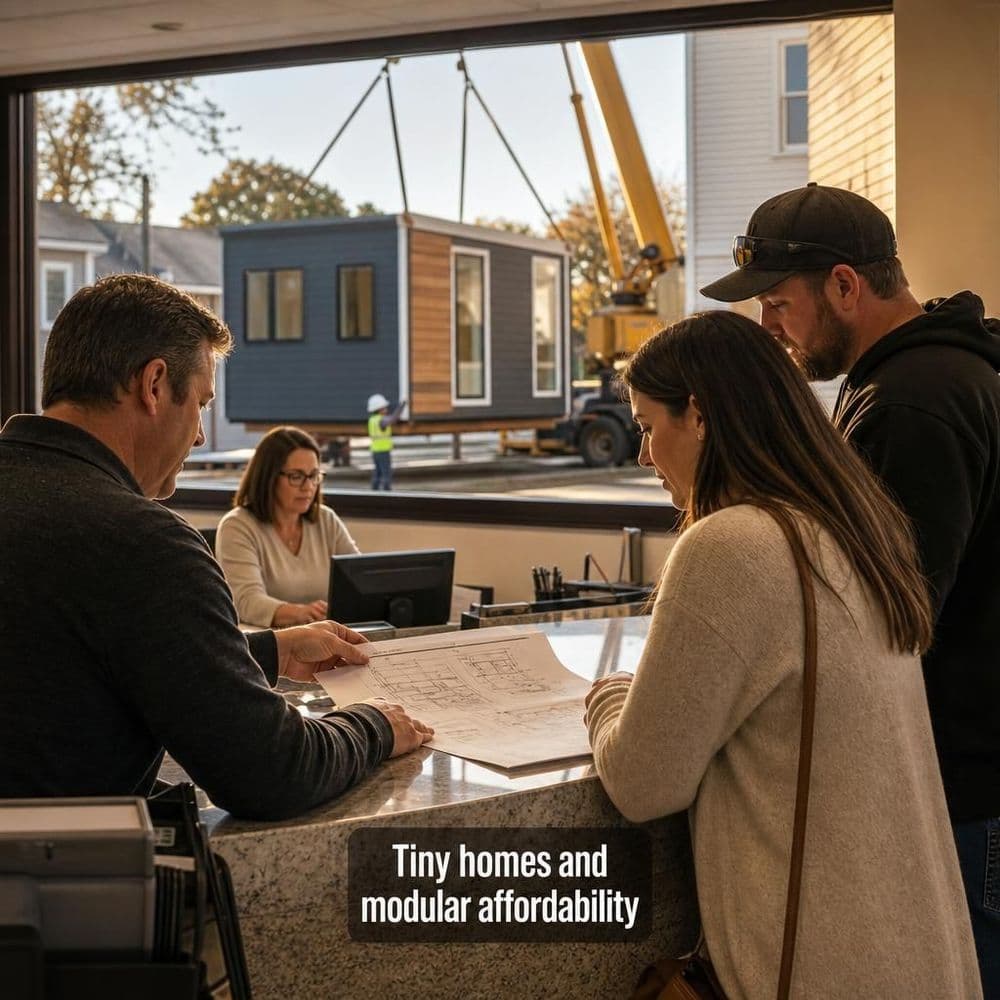
Tiny homes and modular (factory-built) housing are moving from a niche idea to a more practical affordability strategy. The underlying logic is that factory settings can improve repeatability, reduce weather delays, and potentially lower per-unit build costs through standardization and scale. Investor interest is also a signal: Boxabl’s move into public markets underscores how much capital and throughput matter if factory-built housing is going to meaningfully contribute to supply. [boxabl.com][reviewjournal.com]
Financing: the quiet constraint (and what’s changing)
Financing has long been a friction point for factory-built housing because production, inspection, and collateral can differ from conventional site-built construction. Recent housing legislation has been framed as modernizing parts of the financing pipeline for manufactured housing and property improvements, and as encouraging modular construction as a supply tool. [riverbender.com]
The practical takeaway is that even small policy shifts—such as clearer eligibility rules or higher loan limits for certain programs—can expand the pool of buyers and developers who can pencil these projects. But the benefits show up only if local rules allow placements and the homes qualify under the relevant lending definitions.
Local zoning and permitting: where projects succeed or stall
Local code is still the gatekeeper. A city-level proposal to permit tiny homes illustrates the real-world questions that determine whether units can be built and occupied: how “tiny home” is defined, where it’s allowed, and what standards apply for foundations, utilities, and inspections. [thecourier.com]
In practice, the biggest swing factors are often not the factory build itself, but sitework and compliance: utility connections, permitting timelines, impact fees, and design constraints that reduce standardization.
Affordability math: build cost vs monthly payment
Even when a unit is cheaper to produce, monthly affordability depends on financing terms. Freddie Mac’s PMMS shows 30-year fixed mortgage rates in the mid-6% range as of mid-July 2026, which can keep payments elevated even if construction costs moderate. [freddiemac.com]
That’s why factory-built affordability often works best where the land component is managed (infill lots, land-lease communities, master-planned communities) or where projects are structured as rentals rather than individual mortgages.
What to watch next
- **Permitting standardization**: jurisdictions that create clearer, repeatable pathways for modular and small-footprint units.
- **Loan product fit**: lenders offering smaller-balance and construction workflows that align with factory-built timelines.
- **Factory throughput**: capacity, delivery logistics, and local market partnerships that turn prototypes into real unit counts.
Factory-built housing is gaining momentum, but the affordability outcome will be decided less by the idea itself and more by the plumbing: zoning, permitting, site costs, and financing.
Comments