
Blog
Cash-on-Cash Is Just Year One — Why Tracking Return on Equity Matters
4 min read
June 20th, 2026

When you're buying, one number gets all the attention: cash-on-cash return. It tells you what your money should earn in year one. But that number quietly expires the moment you close.
Once a property is in your portfolio, the question changes from "is this a good deal?" to "is my money still working as hard as it could be?" Answering that takes a different metric — and it takes tracking over time.
Cash-on-Cash Is a Snapshot. Your Returns Are a Moving Target.
Cash-on-cash is a first-year projection based on the day you bought, and it never updates. Your investment, though, doesn't stand still:
- Your loan balance pays down and the property appreciates, so your equity grows every year
- Rents rise, expenses creep up, and cash flow drifts — sometimes up, sometimes down
- Taxes, insurance, and interest rates all change
A couple of years in, your real return looks nothing like that original cash-on-cash figure.
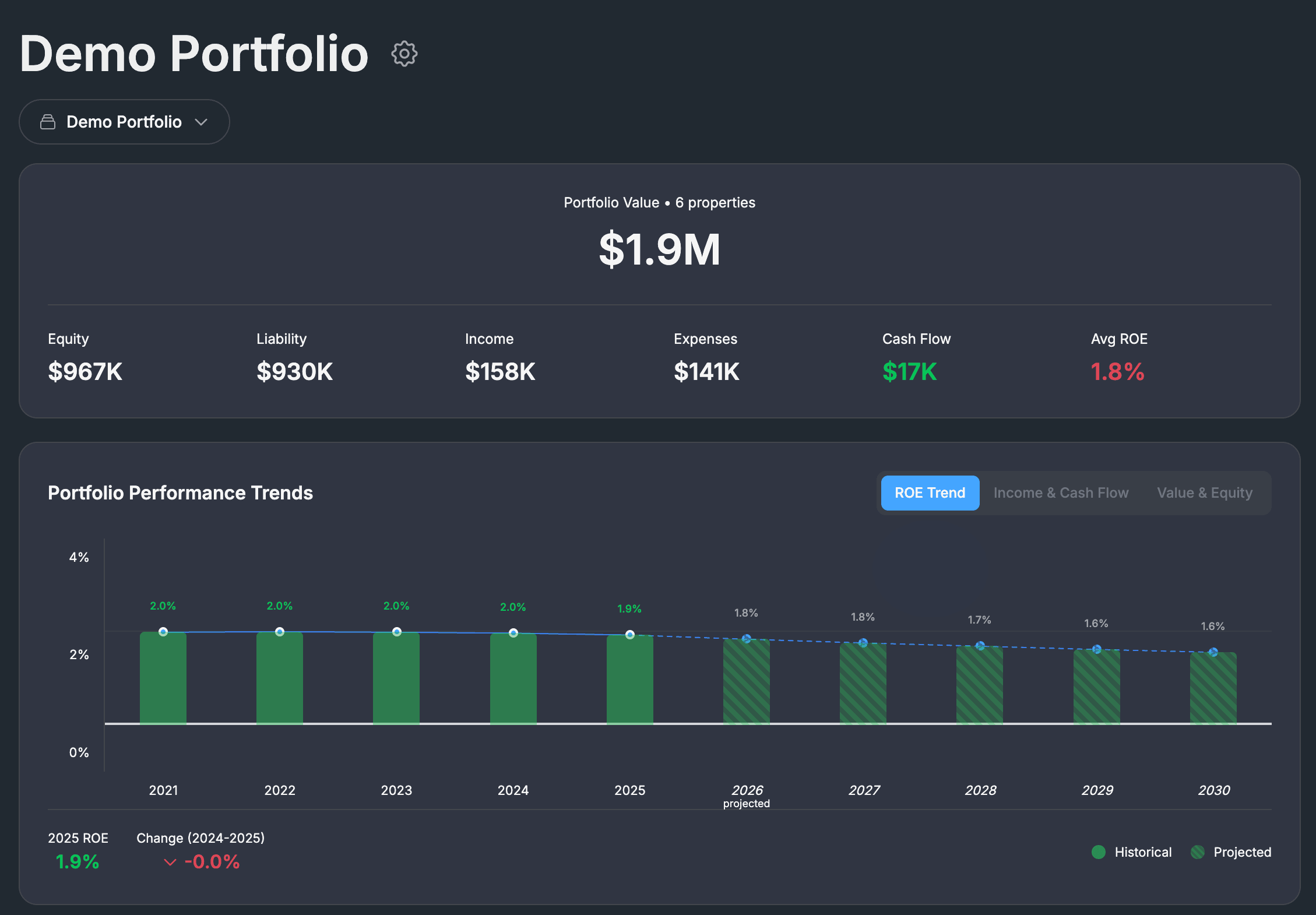
Return on Equity Is the Number That Keeps Up
Return on equity (ROE) measures your annual return against the equity you actually have in a property today — not the cash you put in at purchase. That difference is everything.
As equity piles up, that capital often earns a smaller and smaller return just sitting in the walls. A property that was a 10% cash-on-cash deal at closing can quietly slip to a 4% return on equity a few years later — and you'd never know it without tracking.
The Real Payoff: Knowing What to Tune
Tracking ROE isn't busywork. It's how you actively manage a portfolio instead of just holding it. When you can see each property's current return, you can act on the laggards:
- Improve cash flow — raise rents to market, trim expenses, or refinance to a better rate
- Pull trapped equity out with a cash-out refinance and redeploy it into a higher-returning property
- Sell an underperformer and buy something that puts your equity back to work
With one property you can keep this in your head. Across five or ten, on the same up-to-date basis, you can't — and that's exactly when the gap between your best and worst performers costs you the most.
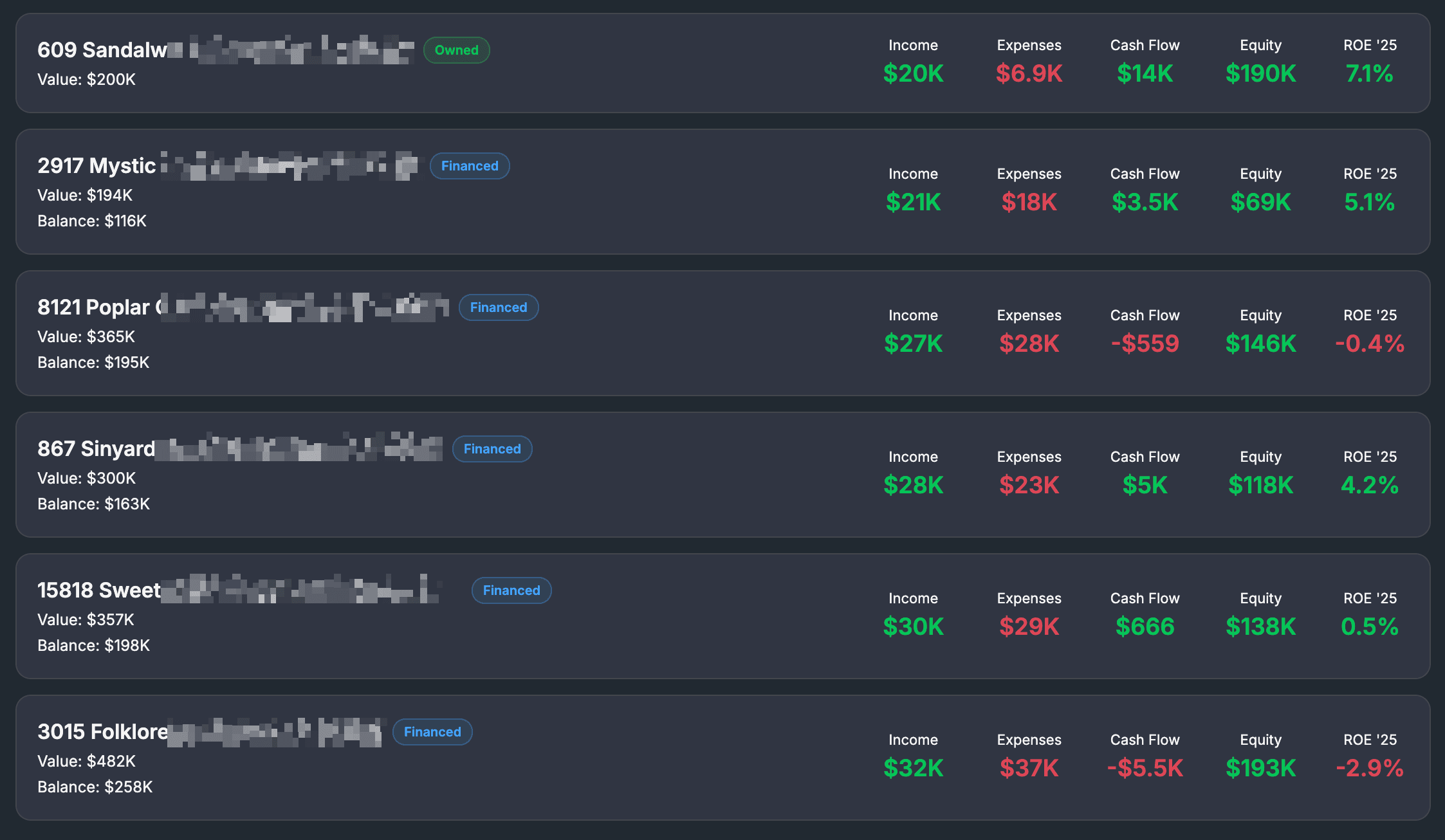
Stay Ahead With Monthly Summaries
The hardest part of tracking is remembering to do it. A monthly portfolio summary closes that gap — a regular pulse on how your equity, cash flow, and returns are trending across every property, so you always have a clear read without digging for it.
Your Portfolio Deserves the Same Rigor as Your Next Deal
You analyze every purchase carefully. The properties you already own deserve the same attention — that's where most of your capital actually lives. Track your return on equity, watch how it changes, and steadily tune your portfolio toward higher returns.
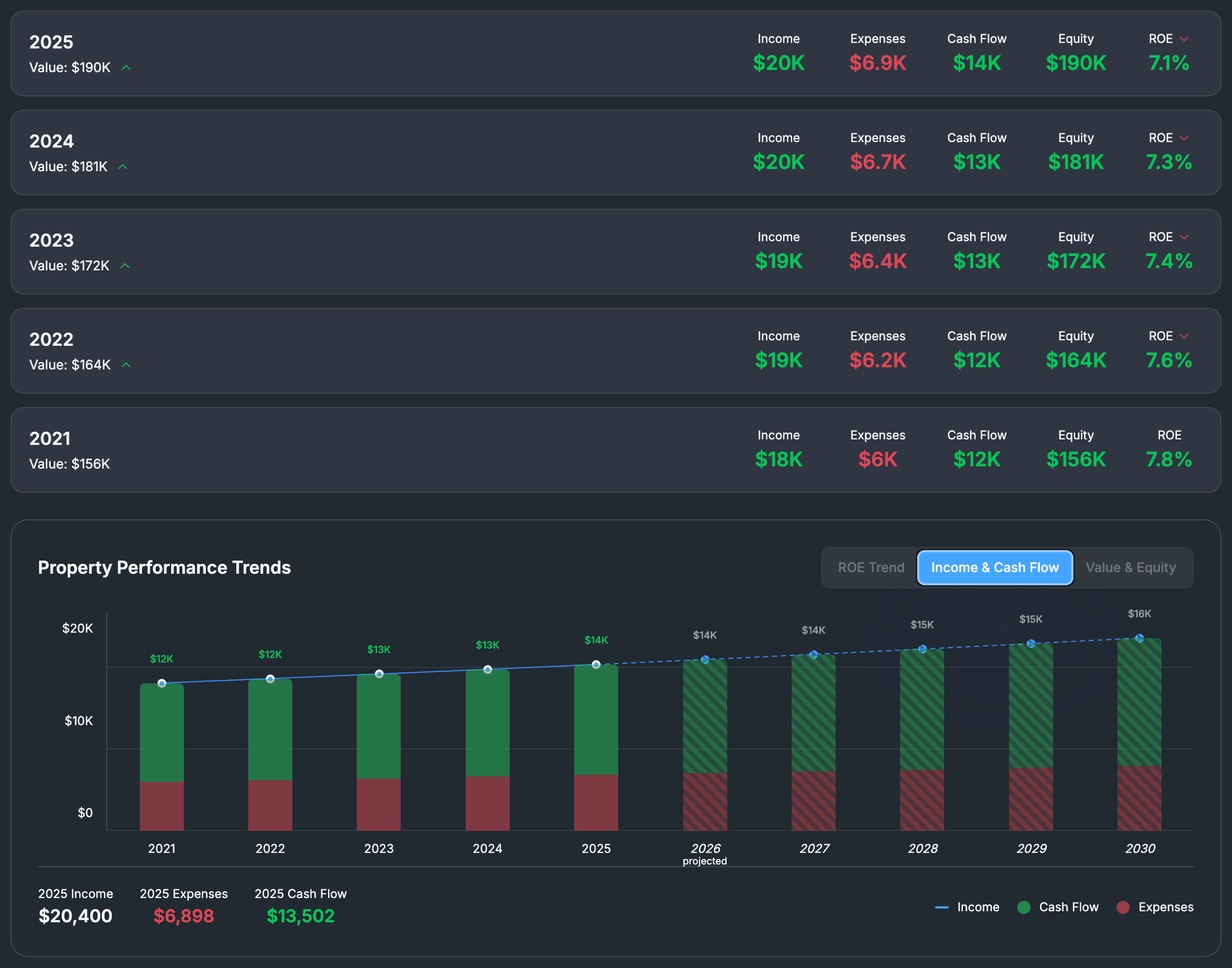
Reading about it is one thing — seeing it on your own properties is another. Add your properties to REI Lense, plug in your numbers, and watch your equity, cash flow, and return on equity update year after year.
Comments