
Blog
Home Prices Cool While Rents Rebound: What the Split Means for Buyers and Renters
6 min read
October 30th, 2026
What’s happening right now
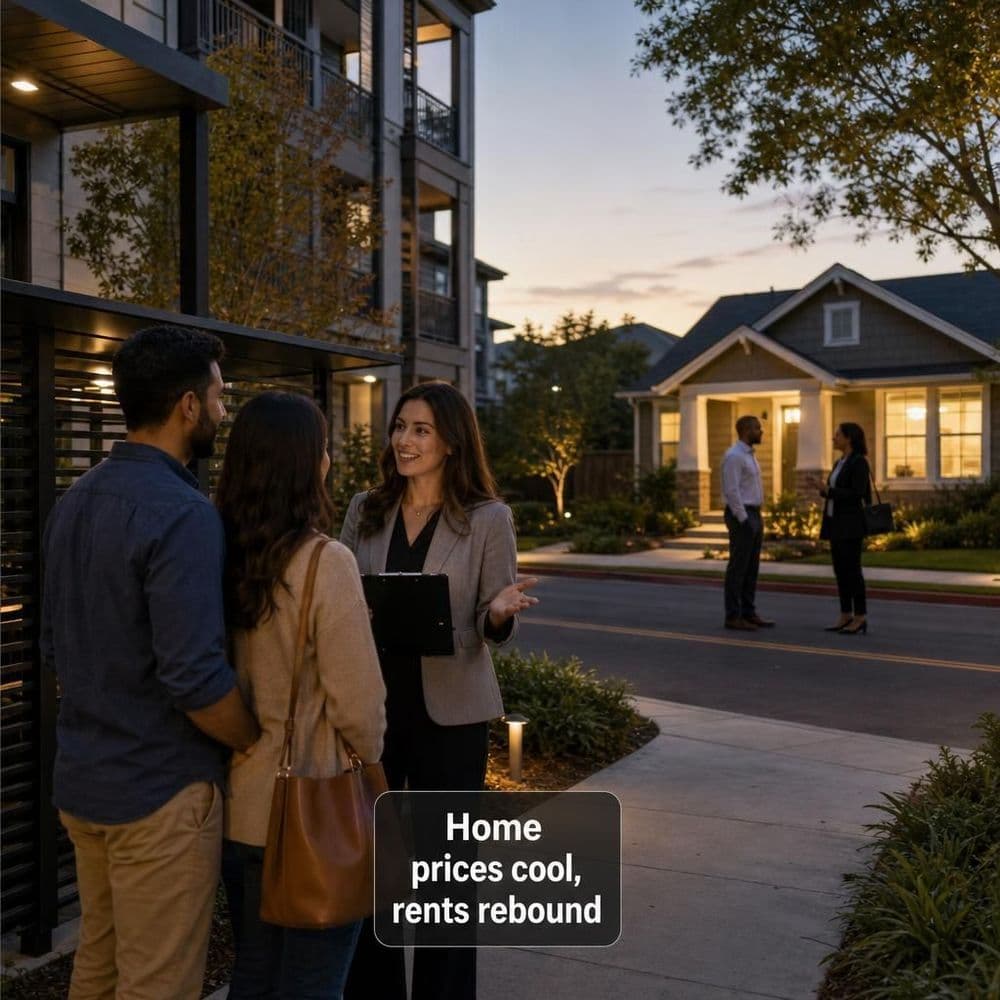
Two signals that rarely move in opposite directions are diverging: for-sale home prices are flattening (and in some weekly readings, dipping slightly year over year), while rents have edged back into positive annual growth. In late October, Redfin reported the median home-sale price down about 0.1% year over year—its first annual decline in more than three years—alongside historically weak pending sales activity.[redfin.com] At the same time, Apartment List reported the national median rent up 0.1% year over year to $1,384, also the first annual increase in more than three years.[globest.com]
This combination changes where affordability pressure shows up. Buyers may encounter more price reductions and concessions in some markets, but renters may feel less relief than they did earlier in the cooldown phase.
Why home prices can dip nationally while most metros still rise
A flat or slightly negative national number doesn’t mean prices are falling everywhere. NAR’s Q3 metro report shows the national median single-family existing-home price up 1.7% year over year to $432,900, with prices rising in 78% of metro areas.[nar.realtor][globenewswire.com] Regionally, NAR data show the West as the only region with a year-over-year decline (down 0.6%), while the Northeast and Midwest posted stronger gains.[globenewswire.com]
One reason these headlines can coexist: different datasets capture different slices of the market (weekly contract-and-close timing, mix shifts, and which metros are moving). Another reason is behavioral—prices often adjust slowly because sellers can wait, rent out, or simply not list unless they have to.
Rents: small positive growth, still a competitive leasing environment
The return to positive annual rent growth is modest, but it’s meaningful as a direction change. Apartment List’s October reporting frames the backdrop as a wave of new multifamily supply that’s gradually being absorbed, with vacancy around 7% recently—high enough to keep leasing competitive even as year-over-year rent growth improves.[globest.com][apartmentlist.com]
In practice, this can look like: renewal increases that reappear even if new-lease deals still come with discounts or concessions in some buildings. The takeaway is less ‘rents are surging’ and more ‘rent relief is no longer broad-based everywhere.’
Practical takeaways for buyers, sellers, and renters
**For buyers:**
- Expect more negotiation in markets where pending sales are weak and listings sit longer, but don’t assume every metro is declining. Use local comps and track price reductions.
- Rate sensitivity is still huge. Freddie Mac’s Primary Mortgage Market Survey put the average 30-year fixed rate at 7.24% for the week of October 29, 2026.[freddiemac.com]
**For sellers:**
- If demand is thin in your submarket, pricing to the market upfront matters more than ever. A stale listing can invite deeper cuts later.
**For renters:**
- If you’re renewing, ask what’s happening with vacancy and concessions in your specific building or submarket. A national +0.1% doesn’t tell you what your renewal will be.
- If you’re moving, keep an eye on new deliveries nearby—new supply can still create negotiating windows even when national rent growth turns positive.
Bottom line
National housing conditions look mixed: the for-sale market is losing momentum under high borrowing costs, while rent growth is stabilizing and turning slightly positive again. The right strategy depends on local inventory, competition, and how long you plan to stay put.
Comments