
Blog
Home prices are cooling in some markets, but affordability is still getting worse
6 min read
October 23rd, 2026
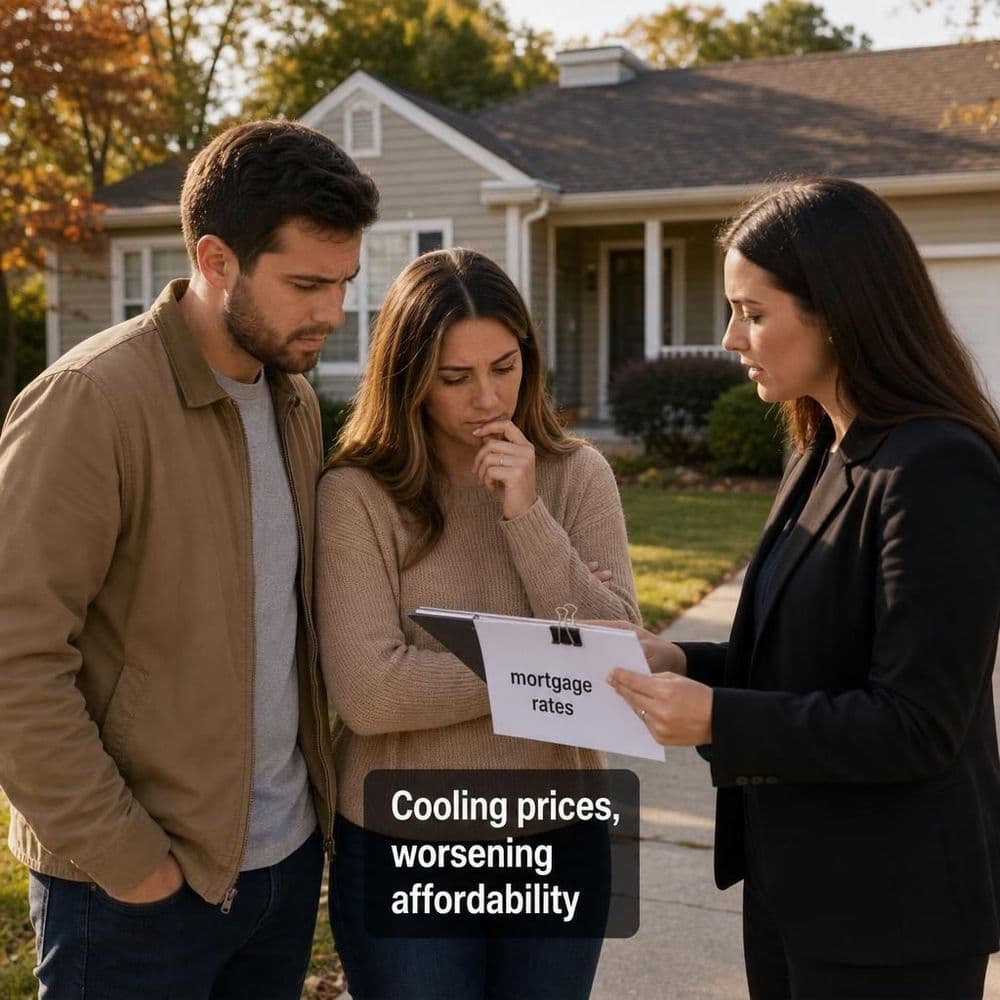
Cooling isn’t the same as affordable
Home shoppers are starting to see something that was rare during the post-2020 run-up: price reductions and a growing need for sellers to price realistically. In certain markets, that shift is real — but it hasn’t been enough to restore affordability in the way many buyers expect.
The reason is simple: monthly payments are still being set by high mortgage rates, so even modest declines in sale prices can be overwhelmed by financing costs.
A local example of ‘realistic pricing’
In the Asheville, North Carolina area, brokers told WLOS that the market is finding a more balanced footing, with longer selling times and more negotiation. One listing they highlighted went under contract in two days after being priced about $15,000 below nearby comparable homes — a reminder that in a slower market, strategy matters more than ever. [wlos.com]
That kind of adjustment can help a specific home sell, but it doesn’t automatically fix the underlying affordability problem for the broader buyer pool.
County-level data: affordability remains strained
ATTOM’s Q3 2026 U.S. Home Affordability Report puts hard numbers behind what many buyers feel. ATTOM found that in 570 of 583 counties analyzed, major ownership expenses on a median-priced home exceeded historical norms. Nationally, the median home sales price in Q3 2026 was $368,000, down from $375,000 a year earlier — yet homes were still considered unaffordable in 98% of counties in ATTOM’s analysis. [attomdata.com]
The report also notes that at the end of Q3 2026 the average 30-year fixed mortgage rate used in its payment calculations was about 7.3%, a level that can keep payments high even when prices soften. [attomdata.com]
And for the hardest-hit places, the gap is extreme: ATTOM said that in 30.9% of the counties studied, a median-priced home would consume more than 43% of typical wages (their ‘seriously unaffordable’ benchmark). [realestatenews.com]
Houston new homes: softer sales, rates still the constraint
Houston is another example of ‘cooling’ that doesn’t automatically translate to comfort for financed buyers. HomesUSA.com’s Texas New Home Sales Report (as summarized by citybiz) noted September new-home sales averaging 1,733, down 6.9% from August and down 13.6% year over year. The summary also quotes HomesUSA.com’s CEO pointing to mortgage rates pushing around 7.5% as a key headwind for both builders and buyers. [citybiz.co]
Even when builders can adjust pricing, rate-driven payment levels can keep demand constrained — which often shifts competition from ‘who will bid the most’ to ‘what incentives reduce the monthly payment enough to close.’
What to do with this as a reader
**If you’re buying:**
- Run the payment first, not the list price. A small price cut may not move your monthly cost much if rates stay elevated.
- Use the cooling to negotiate inspection repairs, closing credits, and price — especially on listings that have sat longer than expected.
**If you’re selling:**
- In a slower environment, ‘testing’ a high price can be costly. The Asheville example shows that realistic pricing can still create urgency. [wlos.com]
- Be prepared for buyers to focus on payment relief: credits, rate buydowns, and flexible terms can matter as much as headline price.
**If you’re watching the market:**
- Pay attention to county-level affordability measures tied to wages, not just national medians. They help explain why demand can stay weak even when price growth cools. [attomdata.com]
Bottom line: some local markets are bending, but until financing costs come down meaningfully (or incomes rise faster), affordability is likely to remain the dominant constraint in U.S. housing. [attomdata.com]
Comments