
Blog
Why Nursing Homes Are Becoming Last-Resort Housing for Unhoused Seniors in the U.S.
7 min read
September 28th, 2026
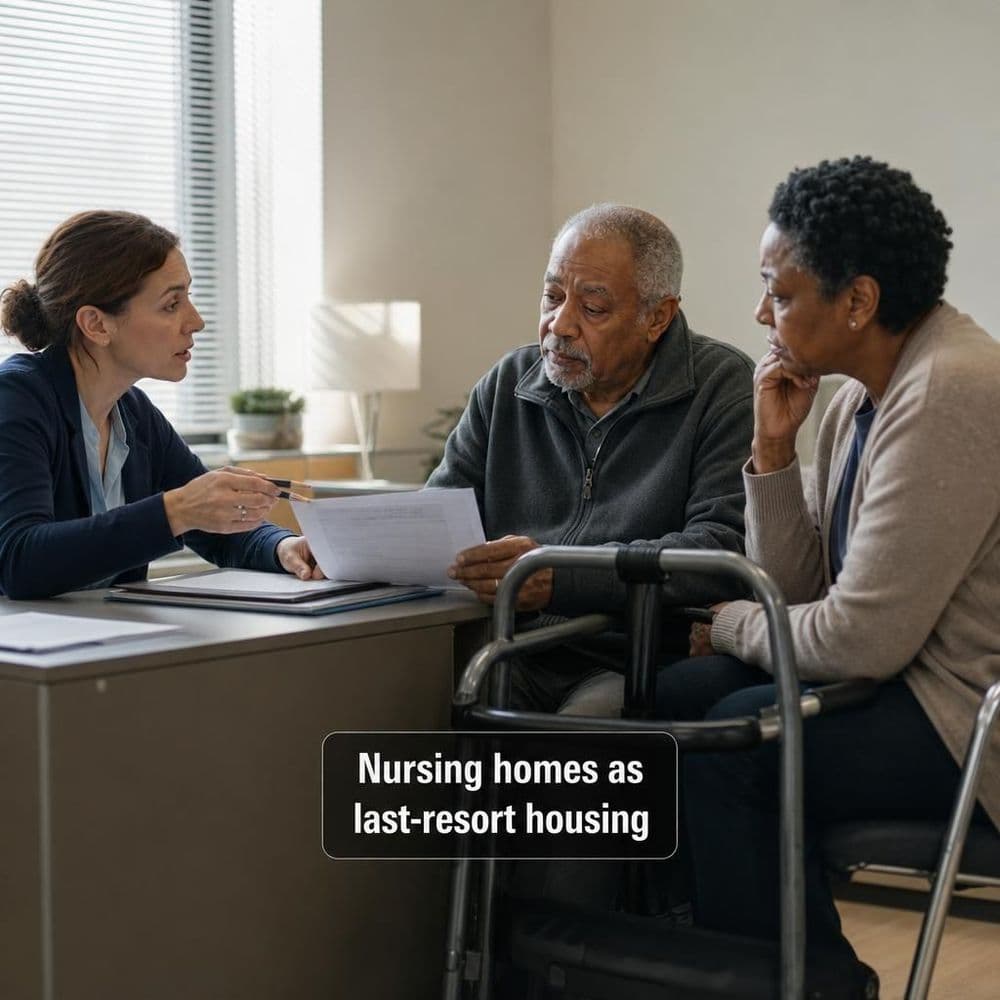
Nursing homes are filling a housing gap
A growing number of older adults are being routed into nursing homes not because they need round-the-clock skilled care, but because they have nowhere else to go. A serious illness or hospitalization can trigger missed rent, the loss of a lease, and a housing emergency. When discharge planners can’t find an accessible, affordable unit fast enough, the "available bed" is sometimes a nursing home. [time.com]
This is a housing story as much as a healthcare story: many emergency shelters and transitional options are not designed for people with mobility impairments, and congregate settings can be hard to navigate for older adults. That pushes some seniors toward institutional placements even if they could live safely with lighter supports. [time.com]
Low-care residents: a sign of a mismatched system
TIME cites research summarized by America’s Health Rankings (United Health Foundation) indicating that about one in 11 nursing-home residents have low-care needs, with wide state variation. [time.com][americashealthrankings.org]
From a housing perspective, this group looks less like a clinical long-term-care population and more like people who need an accessible apartment plus help with medications, transportation, meals, or follow-up care. When those supports aren’t available through housing, nursing homes can become the default. [time.com]
The price tag: expensive care setting vs supportive housing
The cost gap is hard to ignore. TIME cites an average annual cost of $119,340 for a nursing home stay, compared with roughly $16,000 per person per year for subsidized permanent supportive housing that includes some services. [time.com]
For broader context, Genworth’s Cost of Care Survey (as republished by third-party aggregators) shows private-room nursing home costs commonly running well into six figures annually in many markets. [medicaidplanningassistance.org]
The bottleneck: supportive housing capacity and accessibility
The practical barrier is speed and supply. TIME highlights average waits of more than two years for permanent supportive housing and notes that even subsidized housing can fail older adults if units and common areas aren’t designed for limited mobility. [time.com]
HUD’s Annual Homelessness Assessment Report (AHAR) program provides a national framework for counting sheltered/unsheltered homelessness and tracking system inflows and outflows—useful context when communities assess whether seniors are being diverted into higher-acuity settings because housing options are missing. [huduser.gov]
Bottom line
When the affordable, accessible rung of the housing ladder is missing, communities end up paying for housing in the most expensive setting left. Expanding age-friendly supportive housing—and aligning it with discharge planning—can reduce unnecessary institutionalization while preserving autonomy for seniors who don’t need skilled nursing to live safely. [time.com]
Comments