
The "frozen" housing market: how high rates are throttling turnover (and reshaping housing spend)
6 min read
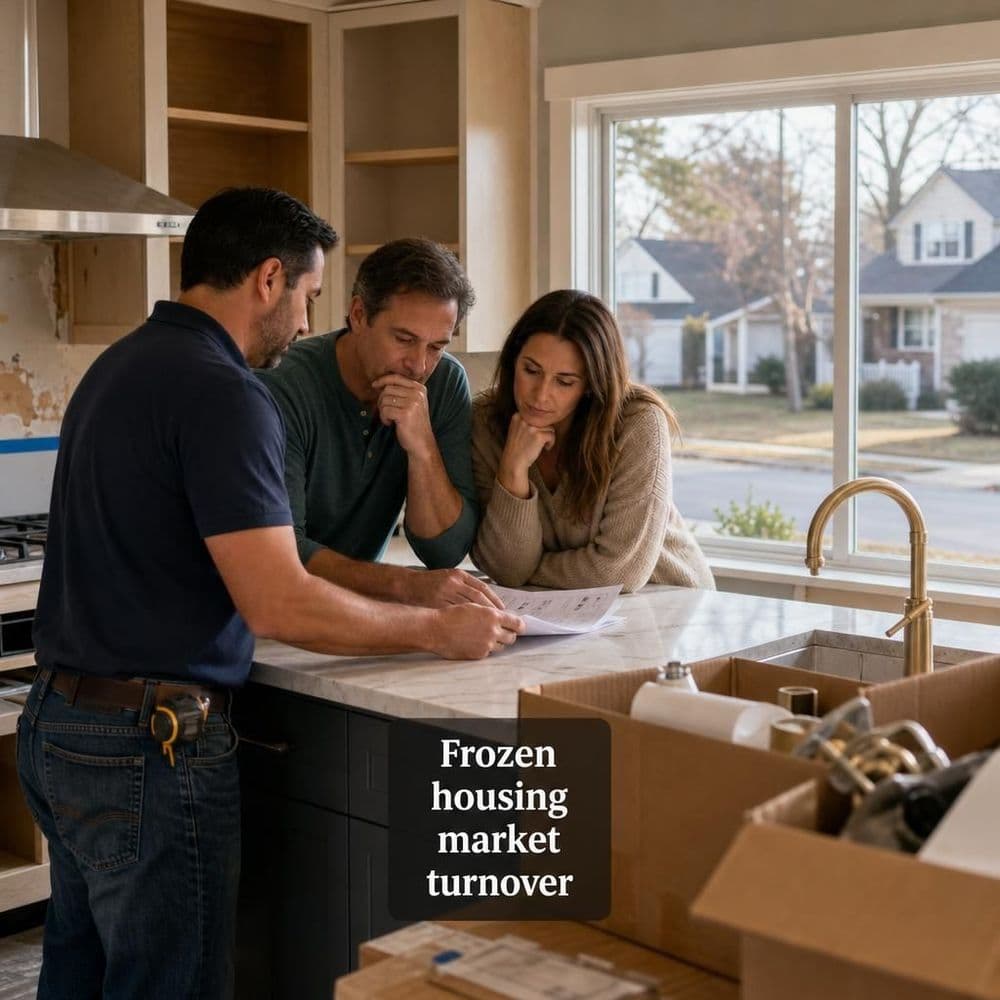
What "frozen" really means in 2026
The defining feature of today’s market isn’t a sudden wave of forced selling—it’s a lack of movement. Homeowners who refinanced or bought when rates were near historic lows have a powerful incentive to stay put. Home Depot’s finance chief described the result as "frozen housing market conditions" and said turnover has "never been lower as a percentage of the housing stock" [thestreet.com].
Freddie Mac’s weekly survey helps quantify why this lock-in matters. The 30-year fixed rate averaged 7.24% as of Oct. 29, 2026 [freddiemac.com]. Even small differences in rate translate into meaningful monthly-payment gaps, which makes trading up—or even laterally—hard to justify for many households.
Prices aren’t collapsing, but affordability is binding
A market can be stagnant without turning into a crash. One reason: prices have remained surprisingly firm across much of the country. In the third quarter of 2026, home prices rose in 78% of U.S. metro areas, and the national median existing single-family home price was $432,900, up 1.7% year over year, according to NAR data summarized by ConsumerAffairs [consumeraffairs.com].
That combination—high mortgage costs plus prices that won’t meaningfully reset—keeps affordability tight, especially for first-time buyers. ConsumerAffairs reported first-time buyers were spending more than 36% of income on mortgage payments in the NAR data set it cited [consumeraffairs.com].
Second-order impacts: platforms and retailers
Low turnover doesn’t just change the buyer/seller experience; it changes the revenue math for housing-adjacent companies. The Wall Street Journal reported Zillow third-quarter traffic declined, with average monthly unique users down 3% to 215 million and visits down 5% to 2.3 billion [wsj.com].
For retailers, fewer moves usually means fewer large, immediate projects that follow a purchase. TheStreet reported Home Depot has pointed to weaker move-related demand, even as some long-term owners fill part of the gap by renovating instead of relocating [thestreet.com].
What to watch next
If rates drift lower, activity can thaw at the margin—but the bigger unlock is sustained improvement that makes the payment shock of moving feel manageable. Until then, expect a high-cost, low-volume housing market where remodeling competes with moving as the primary way households adjust their housing situation.
Comments